
Tired of lugging around a bulky camera? Our guide to the best compact cameras helps you capture stunning, professional-level photos without the weight. Ditch your smartphone for the superior image quality of a powerful travel camera that fits right in your pocket. We’ve done the hard work to help you find the perfect point-and-shoot for your adventures. Let’s dive into our top picks to find the ideal model for you.
Contents
- Top 5 Compact Cameras:
- 1. Fujifilm X100VI – Best Compact Camera Overall
- 2. Sony RX100 VII – Best Compact Zoom Camera
- 3. Sony ZV-1F – Best Compact Vlogging Camera
- 4. OM SYSTEM Tough TG-7 – Best Compact Waterproof Camera
- 5. GoPro HERO12 Black – Best Compact Action Camera
- Things to Consider Before Buying a Compact Camera:
- The Myth of Megapixels: What You Really Need
- Understanding ISO Sensitivity and Low-Light Performance
- The Importance of Focal Length Choices for Various Scenarios
- How Aperture Affects Depth of Field and Light Capture
- Essential Features: Image Stabilization and Autofocus Systems
- Optional Add-ons: Wi-Fi, GPS, and Creative Filters
- Size and Weight: Balancing Portability with Functionality
- User Interface and Controls: Importance of Intuitiveness
- Estimating Longevity and Future-Proofing Your Purchase
- Summing up
Top 5 Compact Cameras:
1. Fujifilm X100VI – Best Compact Camera Overall

If you’ve been thinking of a small camera that thinks big, the Fujifilm X100VI is about to capture your heart — and maybe your weekend schedule. With a retro body and cutting-edge guts, it’s the kind of gear you want to grab whenever you step out the door.
At the heart of the show is its 40.2MP X-Trans CMOS 5 HR sensor, producing stunningly sharp details and colors that appear to have jumped from a professional edit. Combine that with up to 6 stops of in-body image stabilization, and you can kiss your shaky shots goodbye, even when you’re fueled on coffee and no sleep.
Bright conditions? No problem. The built-in 4-stop ND filter is like a pair of sunglasses for your lens that lets you open up those apertures or do those long exposures without totally washing everything out. And, for when you need to move around for a better perspective, the digital teleconverter’s 1.4x and 2x modes allow you to frame tighter without the need to switch lenses (because who wants to change glass while chasing a moment?).
But here’s the thing: This is not just a spec monster. The X100VI is fun. It’s portable, intuitive, and it insists you try things out. Whether you’re exploring street photography, immersing yourself in new worlds while traveling, or striving to document transformative experiences, the new Canon EOS M200 is there to capture the moment, the way you want to remember it.
The Fujifilm X100VI makes every one of those pictures look like they belong on the wall at your local Camera District store.
2. Sony RX100 VII – Best Compact Zoom Camera

If you want a small camera that doesn’t skimp on features, the Sony RX100 VII is speaking to you. The pocket-sized powerhouse for adventurers who want pro-level performance without the pro-level weight.
Sporting a 1-inch stacked sensor, the RX100 VII produces clear, colorful images that puts your average compact to shame. And better yet, it can fire at a scorching 20 frames a second, providing the speed necessary to capture action shots — whether that’s a sprinting athlete, a playful pup or crashing waves at golden hour — all without the rolling shutter putting a damper on the moment.
Versatility is its middle name. The 24–200 millimeter zoom lens offers a wide focal range, allowing this single lens to cover a variety of shooting situations, from wide-angle and standard to telephoto. And when you want a little extra flair, the pop-up viewfinder and flash are there to bring just a little bit of firepower before you shoot your shot.
Now here’s the rub: battery life is not quite so legendary. The fix? Tuck a few spares in your bag and you are ready to go. And yes, it hovers on the pricey side, but if you’re on a budget, older RX100 models offer a strong image-quality jump over basic compacts.
If you’re after a camera that embodies both portable practicality and professional-grade features, the RX100 VII demonstrates that great things truly do come in smaller packages.
3. Sony ZV-1F – Best Compact Vlogging Camera

The Sony ZV-1V is the vlogging camera for you if you’re ready to take your content to the next level — and you’re tired of carrying multiple bags of bulky equipment. Made for creators like you, this small camera demonstrates that great things do come in small packages.
At its heart, the Q Ball system is designed around a super wide 20mm lens – wider than your arm’s reach but not too wide to distort reality. Combine that with a hefty 1-inch sensor and an F2 lens and you have the ability to capture sharp details and smooth background bokeh even in less-than-ideal lighting conditions. Nighttime images, moody coffee shops, or sunrise vlogs? You’re covered.
Eye-AF and autofocus tracking means you can keep focus crisp with no fuss. And your face remains front and center, even if you’re roaming around, meaning you can concentrate on storytelling, rather than fiddle with settings. Throw in the side articulating touchscreen, and you can frame your shots, review your framing, or tweak on the fly—while maintaining that natural on-camera look.
Audio is the other make-it-or-break-it aspect of a vlog and Sony didn’t half-ass this. Their built-in directional 3-capsule mic enables you to record your voice, and the windscreen accessory also prohibits the elements from intervening with your recording.
If you’re looking for a vlogging camera that will help you easily output polished, professional-looking content with minimal difficulty, the ZV-1F is ready to roll with you. The smart, compact and lightweight camera, tailor-made for creators everywhere.
4. OM SYSTEM Tough TG-7 – Best Compact Waterproof Camera

If you pine for a camera that chuckles at a splash, a splash of mud, and the occasional tango with gravity, the OM System TG-7 is designed to take a tumble or two on your most extreme adventures. This tough little broad doesn’t just face the elements—it embraces them, every mud-caked, sweat-soaked, blood-stained adventure, making it all worth the trip.
One of its coolest tricks? A microscope mode built in, for when you want to play explorer. All of a sudden, the smallest of details — the veins on a flower, the wings of an insect, the patterns on a seashell — are magnified big time. Combine that with the Field Sensor System, which tags your shots with GPS coordinates and ambient temperature, and you have adventure tales imprinted with character.
For the filmmaker-in-waiting, the TG-7 bring its A-game, with 4K video at 30fps and creamy Full HD at 120fps. Translation? That means that you can dazzle your friends with your highlight in slow motion after the action had taken place. Throw in the 25-100mm optical zoom lens and you get even more wide:capture expansive landscapes, zoom in to track faraway action, or get up close and personal taking pictures without missing a beat.
And forget about fumbling — the beefy grip and internal zoom design keep your camera locked and loaded when action calls. If your exploits call for grit and glam, the TG-7 provides both in a single tough little number.
5. GoPro HERO12 Black – Best Compact Action Camera
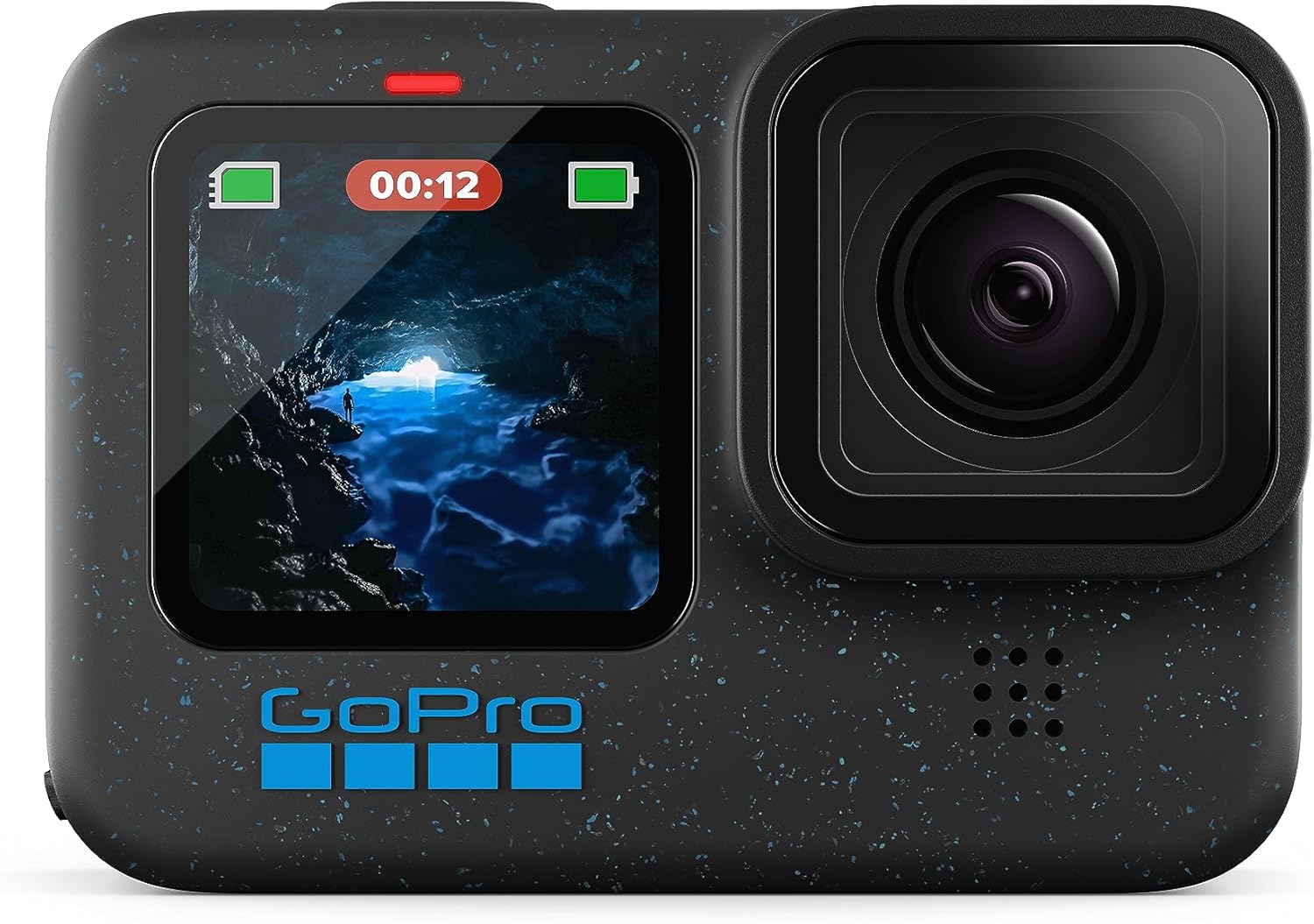
If your adventures require a camera that can handle your every leap, splash and wipe out, the GoPro HERO12 Black is the ultimate sidekick. This small giant is designed to make all your craziest moments be filmed in eye-opening fashion and does so with ease.
Let’s start with HDR magic. And whether you’re filming pre-golden hour or mid-day under harsh sun, the HERO12 Black’s ability to balance to the shadows and highlights like a pro I’d say is definitely something you don’t want to miss. That means your 5.3K videos and 27Mp photos look truly cinematic. And at a resolution that trounces 1080p by 665%, you’re packing at pro level detail in a pocket-sized body.
Sure, things can get shaky out there: Mountain biking, skiing, or chasing your hyperactive dog. That is where HyperSmooth 6.0 comes in. This Emmy Award-winning stabilization system eliminates the bumps without getting rid of your shot, so your footage looks as smooth as a Hollywood movie, even with all the bumps, dips and drops of a bumpy ride.
And because adventure does not end at the waterline, this little beast is waterproof down to 33 feet. Put a lens cover that repels raindrops and glare and your shots are still sharp despite whatever Mother Nature can throw at you.
If you’re hungry for high-quality content that’s eaten dust for days, HERO12 Black is primed to go the distance (and no, it really doesn’t mind getting tossed around a little). Hook it up, jump in, strap on, and let everything epically live on forever.
Things to Consider Before Buying a Compact Camera:
Things you should evaluate before buying a compact camera include how you plan to use it, sensor size and resolution, lens aperture and zoom range, image stabilization, low-light performance, autofocus speed, build quality, connectivity and battery life; assessing these factors helps you choose a model that meets your photographic needs and workflow.
The Myth of Megapixels: What You Really Need
Marketing pushes higher MP, but you usually need only 12–24MP for social sharing, 8×10 prints, and moderate cropping; higher counts help large prints or heavy cropping. A 20MP 1-inch sensor will outperform a 24MP 1/2.3″ sensor in shadow detail and noise. Check lens sharpness, anti-aliasing filter, and sample crops at 100% to evaluate usable detail.
Understanding ISO Sensitivity and Low-Light Performance
Higher ISO increases sensor gain but also noise; on many 1-inch compacts ISO 800–1600 yields usable JPEGs, ISO 3200 becomes grainy but workable in RAW, while 1/2.3″ sensors often degrade noticeably above ISO 400. Look for native ISO range (e.g., 100–12800), not just expanded values, and consider aperture and stabilization—faster glass and OIS let you keep ISO lower.
Test real-world samples: compare ISO 400, 800, 1600, and 3200 at 100% to inspect luminance and color noise, shadow lifting, and detail retention. RAW shooting typically recovers more shadow detail at high ISO than JPEG, but processing matters—Sony RX100-series and Canon G7X-series show decent ISO 1600 performance on a 1-inch sensor, whereas 1/2.3″ compacts often introduce chroma noise by ISO 800. Note dual native ISO exists mainly in larger-sensor bodies and can halve noise at a higher sensitivity; optical stabilization and wider apertures (f/1.8 vs f/2.8) effectively give you 1–2 extra stops before needing to raise ISO.
The Importance of Focal Length Choices for Various Scenarios
You should match focal length to scenes: 24–35mm (full-frame equivalent) for sweeping landscapes and interiors, 35–50mm for street and documentary work, 85–105mm for flattering portraits, and 200mm+ for wildlife or distant subjects. Compact cameras often advertise 24–200mm or 24–600mm equivalents; the wider ranges give versatility but expect smaller maximum apertures and more optical compromise at extremes, so pick the range that fits the majority of your shooting.
How Aperture Affects Depth of Field and Light Capture
Your aperture controls subject separation and exposure: wide apertures like f/1.8–f/2.8 create shallow depth of field and excel in low light, while smaller apertures such as f/8–f/11 increase depth of field for landscapes. Many compact zooms are variable-aperture (e.g., f/2.8 at wide, f/5.6 at tele), so anticipate reduced low-light performance and shallower background blur as you zoom in.
Each full-stop change doubles or halves the light: f/2 to f/2.8 halves light, f/2.8 to f/5.6 is two stops (four times less light). Smaller sensors in many compacts (1-inch or 1/2.3″) produce inherently greater depth of field, so achieving creamy bokeh requires wider apertures plus longer focal lengths and closer subject distance; also avoid tiny apertures (beyond f/8–f/11) on small sensors to prevent diffraction softening.
Essential Features: Image Stabilization and Autofocus Systems
Optical image stabilization (lens-based) typically delivers about 2–4 stops of shake reduction, while sensor-shift (IBIS) can reach 4–5 stops on some compacts, giving you usable 1/10–1/5s handheld exposures in low light. Autofocus has evolved to phase-detect or hybrid AF with hundreds of AF points and eye-detection; continuous AF at 10–20 fps (on advanced models) lets you track fast subjects. Prioritize the IS/AF pairing if you shoot indoors, events, or motion.
Optional Add-ons: Wi-Fi, GPS, and Creative Filters
Wi‑Fi and Bluetooth enable instant JPEG transfers and remote control via smartphone apps, while GPS adds automatic geotags for travel logs but can increase battery draw by roughly 10–30%, so many manufacturers offer phone-assisted geotagging instead. Creative filters—Fujifilm film simulations, Canon Picture Styles, in-camera HDR or toy-camera modes—let you produce shareable looks without desktop editing, useful for bloggers and social-first shooters.
If you want fast workflow, choose models with Bluetooth Low Energy plus 802.11ac Wi‑Fi: expect 1–5 MB/s for JPEGs over Wi‑Fi and much slower RAW transfers, and note some apps restrict RAW downloads. Pairing GPS through your phone avoids constant satellite polling and preserves battery life; offline route logging is handy for multi-day trips. Creative modes save editing time—apply film sims or HDR in-camera to batch-export ready-to-post JPEGs for tight deadlines.
Size and Weight: Balancing Portability with Functionality
Decide if pocketability or zoom range matters more: 1‑inch‑sensor compacts (Sony RX100 series) stay pocketable but often top out at 24–200mm equiv., while larger bodies that house longer zooms or bigger sensors add 50–150g and bulk. Fixed‑lens APS‑C compacts like the Ricoh GR III (≈257g) trade zoom for ergonomics and image quality. Factor lens protrusion and whether the camera fits your jacket or daily bag.
User Interface and Controls: Importance of Intuitiveness
Look for a layout that matches how you shoot: physical dials and an AF joystick speed manual exposure changes, while responsive touchscreens simplify menus and focus point selection. Models differ—RX100s pair a control ring and pop‑up EVF, G7X models emphasize touchscreen simplicity—so pick the interface that lets you change aperture, shutter, and ISO quickly without menu diving.
Test five tasks in store: set aperture, change shutter speed, toggle ISO, switch AF mode and review an image; time yourself and note hand movements. Check for assignable Fn buttons, presence of a dedicated Q/menu button, joystick or touchscreen latency, and whether the control ring is programmable. Also verify battery/SD access and whether single‑handed operation is feasible for your shooting style; online hands‑on reviews and teardown photos can reveal persistent ergonomics issues before purchase.
Estimating Longevity and Future-Proofing Your Purchase
Mechanical shutters on compact cameras are commonly rated around 100,000 actuations; batteries typically show capacity decline after 300–500 full cycles. You should check firmware update history—many manufacturers provide 2–4 years of active updates—and prioritize models with USB-C charging, 4K/30+ video, and RAW support to extend practical lifespan.
To future-proof, target a 1″ sensor or larger, lens speed of f/1.8 or faster, and built-in stabilization if you shoot handheld; 4K/60p is becoming standard for video-capable compacts. Consider weather sealing and proven models (Ricoh GR III for street, Fujifilm X100V for APS-C fixed-lens) and inspect shutter count and battery health when buying used to avoid early replacements.
Summing up
Conclusively, weigh sensor size, lens versatility, image stabilization, low-light performance, autofocus speed, ergonomics, battery life, and connectivity against your shooting needs and budget; test handling and image samples so you can choose a compact camera that fits your style and delivers consistent results.
Leave a Reply