
Finding the best fishing kayaks shouldn’t be a struggle when you just want to catch more fish. Many anglers worry about unstable boats that ruin a peaceful morning on the water. You deserve a rock-solid platform that keeps your gear organized and your casts smooth. This guide highlights top-rated models that offer breathtaking performance and ultimate comfort. Discover the gear that will transform your next trip into an unforgettable adventure. Let’s explore the top picks for your needs.
Top 8 Fishing Kayaks:
1: Lifetime Tamarack Angler 100

With a weight of only 52 pounds, the Tamarack is the lightest kayak on this list, making solo car-topping a realistic possibility.Important features include a 10-foot length, a 275-pound weight capacity, a level bottom with stability chine rails, two sealed hatches, and three rod holders, one of which is a swivel bow mount.It has rock-solid stability on flat water and tracks straighter than the majority of 10-footers thanks to the stern skeg.
Here’s what they leave out: the 275-pound maximum is soon met when gear is loaded, the stock seat pad needs replacement, and attachments require drilling because there are no gear tracks.Lightweight novices on placid lakes and ponds are the ideal candidates. Avoid if you desire a drill-free personalized fit or if you’re a heavy fisherman with a full load of gear.One of the lineup’s lighter options.
2: Pelican Catch Classic Angler
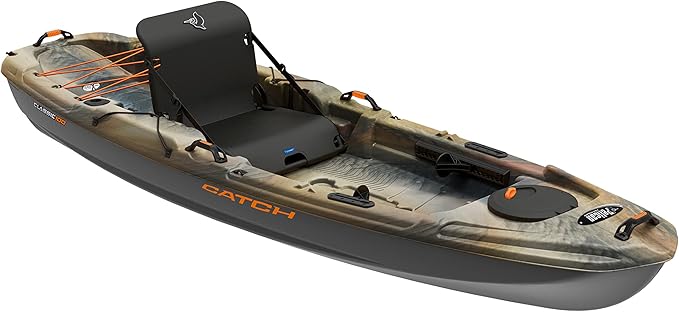
Here are several benefits of the Pelican that the Lifetime lacks, which you can have for an additional.Notable features include a tunnel hull, a 10-foot length, a 350-pound capacity, two rod holders flush-mounted, two accessory rails, and the ERGOCAST dual-position seat with high and low positions.Compared to the Tamarack’s thin pad, the high-low seat provides much better stability for stand-up casting, and the tunnel hull is an actual improvement in that regard.
The facts: you’ll have to make frequent adjustments to account for wind, the 350-pound maximum reduces to about 245 useful pounds when loaded, and 58 pounds is still more than enough to compete with single car-toppers.When you desire accessory rails and stand to cast, this is the rod for you. Open, windy water or paddlers carrying heavy loads are not recommended.Better seat, more capacity, and accessory rails—a wiser Tier 1 purchase.
3: Pelican Catch Mode 110

The Mode 110 changes how you paddle in open water by adding a retractable stern skeg, which is something neither of the Tier 1 kayaks have.Features: anti-slip deck carpet, retractable skeg, two 4-inch gear tracks, an ERGOBOOST three-position seat, and a capacity of 375 pounds.Compared to other Tier 1 options, the eight additional inches of hull greatly enhance straight-line tracking, and the three-position seat provides unparalleled adaptability.
The catch is that you can only manually hoist the skeg from shore, the suspension seat moves laterally when you paddle, and the footrests can only accommodate a maximum of 6 feet 2 inches.Who it’s best for: intermediate fishermen looking for a more comfortable seat and improved tracking. Any paddler taller than 6 feet 2 inches or seeking pedal propulsion should not attempt this.
4: Perception Kayaks Outlaw 11.5

When compared to the other paddle kayaks in our series, the Outlaw has the best sight-fishing vantage point thanks to its ability to lift you 16 inches off the deck.Here are some important specs: the boat has a capacity of 425 pounds, a 16-inch elevated fold-away seat, a walking open deck, two double-barrel rod holders, three Solo Mount recesses that don’t require drilling, and a stern well that can fit a 35-liter cooler.
The biggest capacity of any paddle kayak here is 425 pounds, and the stand-up transitions are straightforward because to the walkable deck and fold-away seat.Cons: the boat doesn’t have a dry hatch, the fixed footrests make it hard for those who aren’t normal height to sit comfortably, and the 77-pound weight is too much to car-top on your own.Sight fisherman and larger anglers requiring a 425-pound capacity will find this the best.Not recommended for paddlers who are taller than usual.
5: Reel Yaks Raptor Modular Fishing Kayak
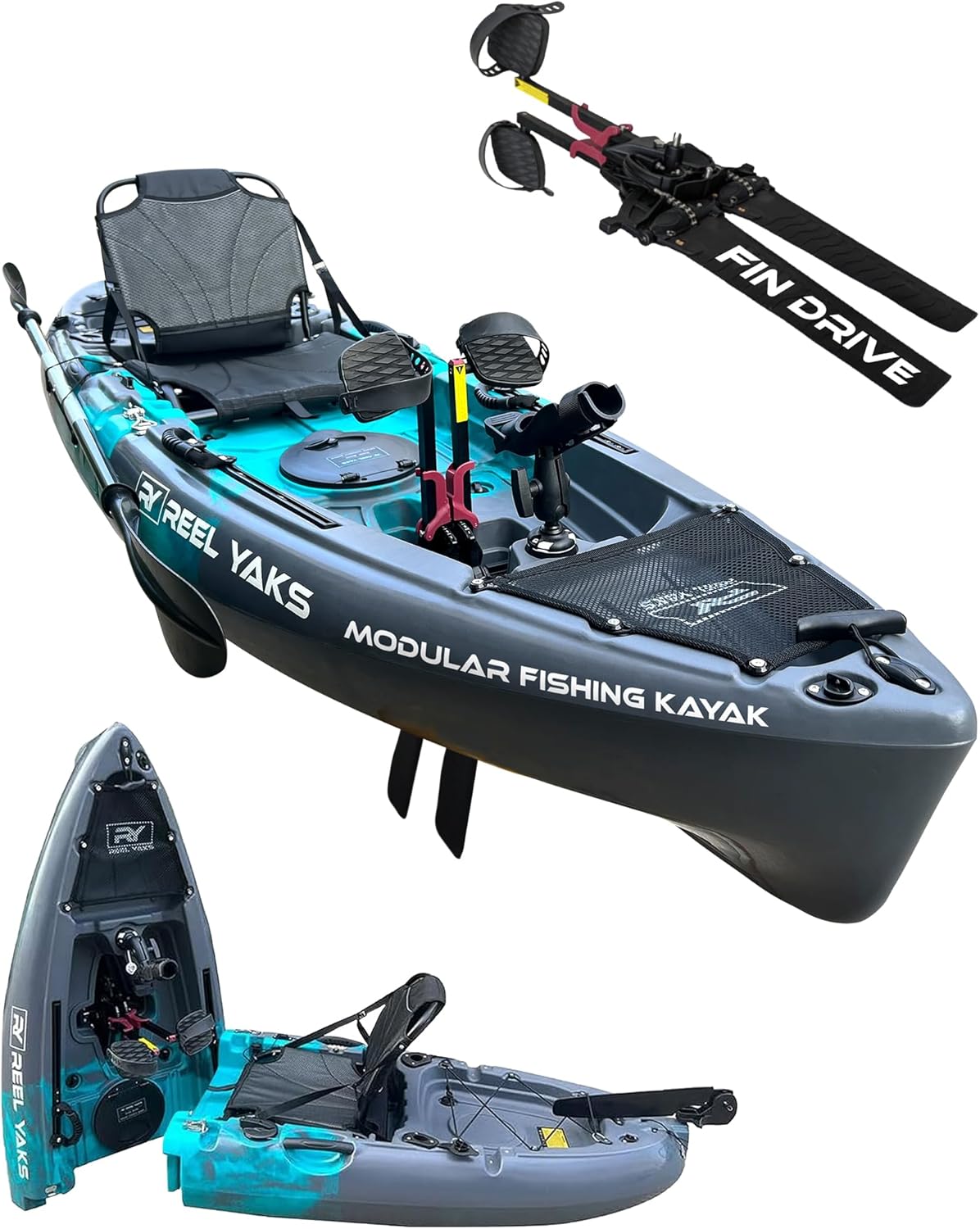
And that’s it. Personally, I prefer this one.Crucial details include a 9.5-foot modular 2-piece hull, a total weight of 62 pounds (31 pounds per part), a capacity of 380 pounds, a fin drive pedal system, gear tracks, and USA manufacture.Without a roof rack, trailer, or truck, this pedal kayak is the only one in its class that can fit in a vehicle’s trunk. At just 31 pounds per half, the fin drive is so light that even fisherman with back problems can handle it alone. It’s also incredibly silent in shallow water.
Important details: the narrow hull slows down in strong winds, the latches must be tightened before every launch, and there are only two configurations for the seat.Ideal for non-trucking urban fishermen and those who value a silent pedal drive for their freshwater fishing adventures.Discontinued for customers that require long-term parts support or who fish in open water.Nothing else on this page addresses all three of these buying pitfalls simultaneously: portability, pedal drive, and American manufacturing.
6: Pelican Catch HDII Premium Angler

Pelican offers pedal drive, a tried-and-true alternative to the Raptor’s modular construction, in case you’re worried about that.Features such as a 10’6″ frame, 67 lb weight, 350 lb capacity, HyDryve II pedal system, rudder controlled by hand, four gear tracks, three flush-mount rod holders, and an ERGOCAST G2 seat are important characteristics.The HyDryve II is more refined and, when pushed to its limits, can reach speeds of about 5 mph. Support for Raptor parts is not yet available through Pelican’s service network.
The hull isn’t designed for standing, so the fish-finder wire is visible; rudder cables have noticeable flex in crosswinds; and there is no integrated transducer mount, so standing stability is poor.On placid freshwater, a well-known brand is ideal for first-time pedal customers. Do not use if you are an angler who stands while fishing or if you value a neatly wired fishfinder.Strong seating area with little room to move around.
7: Reel Yaks Raider Modular Fishing Kayak
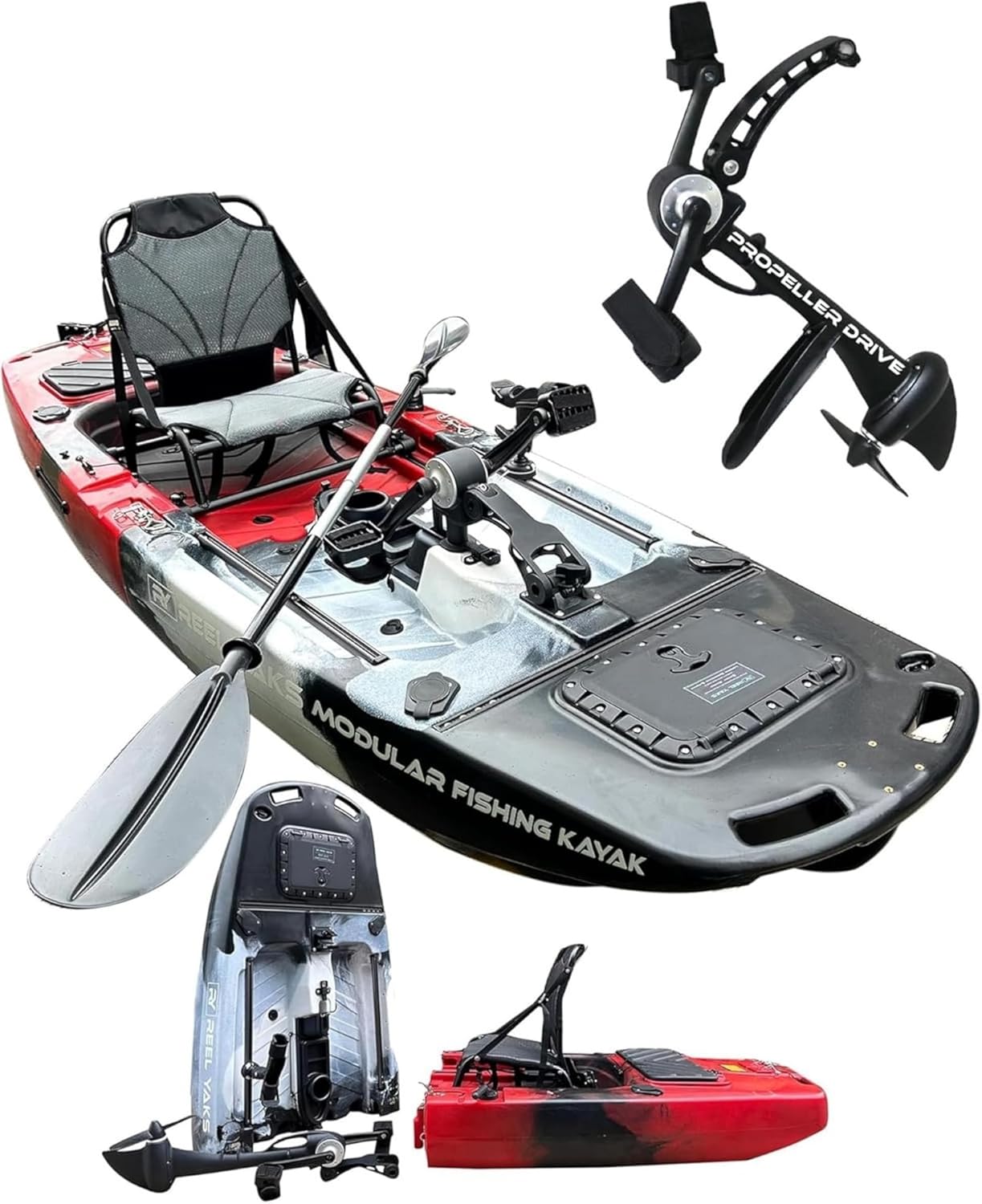
Besides being 14 feet long, convertible for two, and equipped with reverse, the Raider is identical to the Raptor in every way.Important features include a 530-pound capacity, a 14-foot modular 3-piece hull, two drives, two seats, five gear tracks, and six flush-mount rod holders. The propeller drive has reverse.When out on broad water, the 14-foot hull out-tracks the Raptor, and when docked or doing tight river maneuvers, the prop drive reverse really comes in handy.
The negatives include a 46-pound central piece compared to the Raptor’s 31-pound halves, prop drive tangling in dense weeds, and the risk of parts availability from this newer company.Those looking for a car-portable tandem pedal kayak should consider this option. Avoid: fishing alone in weedy, shallow water.No trailer required to ride tandem.
8: Old Town Sportsman 106

When it comes to fishing kayaks, this one is head and shoulders above the rest.The boat’s important features include a rotomolded construction in Maine, USA, a 10’6″ DoubleU pontoon hull, 77 pounds of weight, a capacity of 500 pounds or more, a quality Textilene seat with a high-low profile, a universal transducer attachment, two 18-inch gear tracks, EVA foam deck pads, and a changeable skid plate.A new level of stability is provided by the DoubleU hull. With the universal transducer mount, you can install your fishfinder cleanly and without drilling—a level of preparedness that is unmatched by anything else on this site.
Truthfully, this is not an open-water kayak, the low bow gets flooded in waves over a foot high, and adjusting the seat necessitates retying straps while you’re out on the water.A fish-finder-ready platform is ideal for freshwater fisherman. Avoid open ocean or areas with rough waves.Compact fishing kayaks go-to model.
Things to Consider Before Buying a Fishing Kayak:
Kayak fishing requires careful thought before making a purchase. The right kayak can enhance your experience on the water. Assess factors such as the kayak’s stability, storage options, and ease of transport to ensure you choose one that meets your fishing needs effectively.
Sit-on-Top vs. Sit-Inside Configurations
Choose between sit-on-top and sit-inside kayaks based on comfort and accessibility. Sit-on-top models offer easier entry and exit, ideal for warm weather fishing. In contrast, sit-inside kayaks provide better protection from the elements, making them suitable for colder conditions.
Comparing Paddle, Pedal, and Motorized Drives
Paddle kayaks are traditional, requiring physical effort, while pedal kayaks allow for hands-free travel. Motorized kayaks provide speed and ease but can be heavier and more expensive. Assess your fishing environment and determine which drive suits your needs best.
Stability Ratings and Hull Dimensions
Focus on stability ratings and hull dimensions that suit your fishing style. A wider hull generally offers better stability, while narrower designs facilitate speed and tracking. Consider how these factors align with your preferences.
Maximum Weight Capacity and Load Distribution
Evaluate maximum weight capacity and load distribution to ensure safety and comfort. Exceeding weight limits may lead to instability and performance issues. Distributing weight evenly can enhance your kayaking experience.
Understanding both maximum weight capacity and load distribution influences how well your kayak performs on the water. Choosing a kayak that accommodates your gear while keeping weight evenly distributed can prevent capsizing and improve maneuverability, ultimately enhancing your fishing experience.
Durability and Impact Resistance of Polyethylene
Polyethylene kayaks are renowned for their durability and impact resistance, making them ideal for rocky waters and casual paddlers. They can withstand scrapes and bumps, allowing you to focus on fishing without worrying about damaging your vessel.
Performance Benefits of Lightweight Composites
Lightweight composite kayaks enhance speed and agility on the water, perfect for reaching fishing spots quickly or navigating through tight spaces. Their design allows for better tracking and stability, providing a smoother paddling experience.
Choosing lightweight composites means you enjoy reduced drag and greater efficiency while paddling. These materials often incorporate advanced technology, maximizing hull shape for quick acceleration and responsive handling, crucial for both serene lake fishing and challenging river conditions.
Assessing Your Primary Fishing Environment
Identify the type of fishing locations you frequent. Freshwater lakes, rivers, and saltwater coasts each demand different kayak features, such as stability and maneuverability. Understanding your primary environment helps narrow your choices effectively.
Conducting On-Water Demo Trials and Stability Tests
Try multiple kayaks on the water to assess comfort and stability. Pay attention to how easily you can maneuver and whether the kayak feels secure in various conditions.
Testing kayaks on the water provides invaluable insights. Feel how they respond to your weight and movements. Additionally, simulate fishing positions to evaluate stability while casting or reeling in. A good demo helps ensure your kayak choice matches your fishing style, enhancing the overall experience.
Integrated Accessory Tracks and Rod Management
Accessory tracks provide a flexible platform for mounting fishing rods, tackle boxes, and electronics. These tracks enable efficient organization and quick access, ensuring everything you need is within arm’s reach while you focus on the fishing experience.
Seating Systems and Ergonomic Adjustability
Investing in a kayak with adjustable seating systems improves comfort during extended outings. Ergonomic designs support proper posture, reducing fatigue and allowing for a more enjoyable day on the water.
Choosing a kayak with a high-quality seating system is necessary for comfort and performance. Adjustable seats enable you to find the perfect position, whether you’re paddling long distances or casting lines for hours. Look for features like lumbar support and breathable materials to enhance your overall experience and maintain focus on your catch.
Logistics of Transportation and Storage
Transportation and storage of your kayak should be a priority. Assess your vehicle’s capacity for transport. If you have limited storage space, consider options that are easy to lift and store vertically or on a rack. Ensure you have the correct accessories for safe transport and protection from the elements.
Budgeting for Essential Safety Gear and PFDs
Budgeting for safety gear and Personal Floatation Devices (PFDs) is necessary. Allocate funds not only for the kayak but also for necessary accessories to keep you safe. Quality PFDs, paddles, and emergency gear should be part of your overall budget to ensure a secure and enjoyable fishing experience.
Essential safety gear includes items such as whistle, signaling devices, and a first-aid kit. Investing in a reliable PFD that fits well is equally important, as it should be comfortable enough for extended periods on the water. Incorporate these costs into your total budget to avoid surprises and ensure your fishing trips are both safe and enjoyable.
Final Words
To wrap up, consider your fishing needs, kayak size, stability, and storage options before purchasing. Evaluate your budget and the kayak’s material for durability. Take the time to test various models to find the one that suits your style and comfort. Making an informed choice will enhance your fishing experiences.
Leave a Reply