
Best Underseat Subwoofers bring big bass to cars with no trunk space, solving weak low-end and tight-fit headaches. Our car audio experts tested compact and powered subwoofer options to find models that install fast and boost punch without bulk. You’ll feel powerful, heart-thumping bass that makes every drive thrilling. Read on for clear picks and simple buying tips to choose the perfect fit.
Top 8 Wireless Multi Room Speakers:
1: Amazon Echo Dot (newest model)
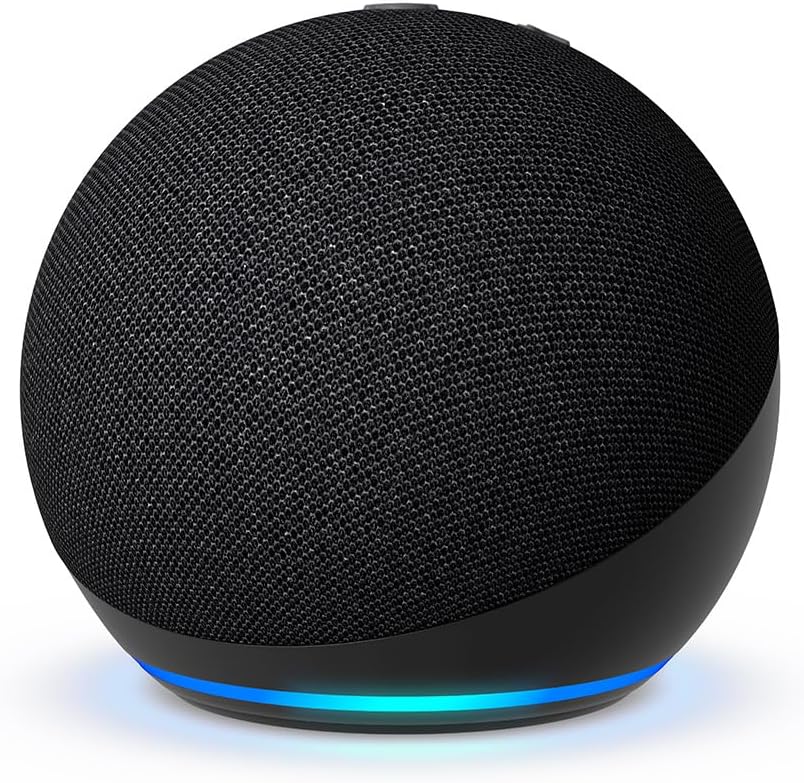
The most affordable option for connecting a single room to a whole-house system is the Echo Dot.Highlighted features include a front-firing driver, built-in Alexa+, WiFi and Bluetooth, sensors for motion and temperature, and the ability to organize your Echos across many rooms.Echo devices in a group remain in sync from room to room, and voice commands work regardless of background noise.
They leave out the fact that the multi-room feature is compatible only with other Echo devices, that it does not support AirPlay or Chromecast, and that the little driver cannot provide enough bass in a large room.Where it really shines is in the bedroom, hallway, and bathroom of an Alexa household. Those who are likely to swap platforms or those in the main listening chamber should not listen.The least expensive way to get in, and the simplest to outgrow.
2: Amazon Echo Dot Max (newest model)

The identical environment begins to mimic the sound of a real speaker after you shell out a bit more cash.Notable features include adaptive room tuning, near-triple the bass of the regular Dot, an integrated smart home hub, Omnisense sensing, and the ability to interface with Echo devices.The true improvement is room tuning, which fills a living room to an extent where the regular Dot strains.
The bad news is that it is still only compatible with Alexa multi-room, that the smart home hub is more useful than the audio, and that if you want stereo, you’ll have to buy an additional one.Alexa homes wishing to have a single well-acoustic room within the system are the best candidates. If you’re making something that relies on AirPlay, you won’t be able to use this.Still setting a low standard for this company, the finest Echo for music.
3: WiiM Sound Lite

At this point, the category is no longer limited to smart speakers but rather just speakers in general.Impressive features include high-resolution streaming at 24-bit/192 kHz, a 100-watt peak amplifier, a 4-inch woofer, two 1-inch silk-dome tweeters, artificial intelligence room fit tuning, WiFi, Ethernet, and Bluetooth.A home rarely settles for just one platform because very few speakers are compatible with WiiM, Google Cast, and Alexa multi-room groups.
Cons: the WiiM app is more feature-packed and less established than popular alternatives, the brand is younger and has a less established track record, and the app only supports casting rather than voice assistants.Those looking for high-resolution audio without ecosystem lock-in may consider this option. People who prefer to converse with their speaker should not use this.
4: Sonos Era 100

Finally, this is the one that sells the best.Features such as a 47 percent quicker CPU, two angled tweeters, a 25 percent larger midwoofer, Trueplay room adjustment, a USB-C line-in, WiFi, Bluetooth, and Alexa are critical specifications.When you add a second one, the app automatically couples them for full stereo or makes them surrounds for a Sonos soundbar, so it’s easy to expand.
The caveat is that you won’t get the line-in converter, and despite recent updates, the Sonos app remains the brand’s Achilles’ heel. On top of that, everything is powered by Sonos’s proprietary system.Those just starting out should consider adding rooms and speakers one by one. App update haters and high-resolution purists should steer clear.This is the most secure way to grow inside this field.
5: JBL Authentics 300

Unlike anything else on this site, the Authentics 300 actually goes outside.Here are the important specs: 100 watts, two 1-inch tweeters, a 5.25-inch woofer, a 6.5-inch passive radiator that fires downwards, eight hours of battery life, and support for AirPlay and Chromecast.This is the only speaker in the house that can run both Google Assistant and Alexa simultaneously, so it’s perfect for multi-generational households. The low end feels substantial for a handle-equipped device thanks to the passive radiator.
Downsides: 8 hours isn’t long compared to real portables, the cabinet is cumbersome to move about, and when on batteries, WiFi multi-room is disabled and Bluetooth is used instead.Ideal for: homeowners with a combination of Alexa and Google Home who’d like to cover their patio. Customers looking for a covert design or a battery life that lasts all day are not our target.Nothing else on this site can do what those two aides and a handle can.
6: Sonos Era 300

And that’s it. My lineup choice is this one.Features such as six front, side, and upward-firing drivers, Dolby Atmos Music, bespoke waveguides, Trueplay tuning, WiFi 6, and Atmos surround functionality with Sonos soundbars are important specifications.With their upward-firing motors, that hourglass cabinet does more than just add width to a room; it also adds height. The ceiling is covered in spatial tracks, which transform into a back channel when a soundbar is brought in.
You should be aware that the form causes division among users, that the line-in adaptor is not included, and that Atmos libraries are quite thin outside of a few streaming tiers.Ideal for: a single event-ready main room; home theater setup to follow. Beware: standard-stereo listeners and small bedrooms.This speaker is both the most comprehensive and the most equipped for the future.
7: Sonos Five

The Five completely disregards all of the ten-year trends – no assistance, no microphones, no Atmos.Among its most notable features are its three sealed-cabinet high-excursion woofers, three tweeters (one in the center, one on each side), orientation sensor for mono or stereo playback, 3.5 mm line-in, and AirPlay 2.At volumes that fill an open-plan room, the bass lands tight and controlled rather than boomy, thanks to the sealed cabinet that separates it. If you stand two of them upright, they will form a right or left channel, respectively.
Where it falls short is in the following areas: lack of voice control, Bluetooth, Atmos, and uneven and thin supply.Ideal for: that one space where the music takes center stage, complete with turntable. Avoid if you’re looking for spatial audio or live in a home with voice control.An enthusiast-level music speaker in a market segment that has ceased production.
8: JBL Authentics 500

Plus, this is the speaker to use if you need someone to cover every base.Notable features include a built-in subwoofer, 270 watts of 3.1-channel sound, two voice assistants, AirPlay, and three 1-inch tweeters and 2.75-inch woofers.The unique selling point is its integrated subwoofer, which eliminates the need for a bulky floor box while still producing full-on bass. It maintains its composure at the point where little speakers begin to constrict.
The facts are that it’s bulky and heavy for a bookcase, that handle belies the lack of a battery, and that the retro design is too much for a contemporary space.For the best results, use a single spacious area for all of your entertainment needs. People whose main objective is to cover more rooms should not buy this.The showpiece— for the time being, at least—if confined to a single room.
Things to Consider Before Buying a Wireless Multi Room Speaker:
Many factors influence your decision when selecting a wireless multi-room speaker. Understanding your specific needs, audio quality preferences, and compatibility with existing devices can help ensure your investment enhances your listening experience throughout your home.
Wi-Fi vs. Bluetooth-based mesh networks
Wi-Fi systems deliver higher quality audio, while Bluetooth systems focus on portability. Mesh networking can extend Wi-Fi coverage, mitigating dead zones for a more immersive experience across multiple rooms.
Proprietary ecosystems vs. open-standard platforms
Brands often develop proprietary ecosystems to create a seamless user experience. While this may ensure optimized performance within a specific range of devices, it limits expansion options. Open-standard platforms, conversely, permit the integration of various manufacturers’ speakers and components, leading to more customized audio setups tailored to personal preferences.
Choosing between proprietary ecosystems and open-standard platforms hinges on your long-term audio plans. For those who appreciate flexibility, open-standard platforms allow integration of diverse brands, while proprietary options guarantee optimized functionality. Many users find themselves leaning toward open systems when considering future upgrades and compatibility across devices, ensuring their investments remain versatile over time.
Audio fidelity and driver configuration
Choosing the right speaker involves assessing its audio fidelity, which directly influences sound clarity and depth. Driver configuration also plays a role, as larger woofers typically provide richer bass while tweeters enhance higher frequencies.
App interface and software stability
User experience relies heavily on the app interface and its stability. A well-designed app simplifies setup and control, while software updates contribute to long-term performance.
Consider how often software updates are issued by the manufacturer and how intuitive the app is to navigate. A user-friendly interface ensures that you can quickly access features like volume control, equalizer settings, and room grouping. Frequent updates can address bugs and introduce new functionalities, keeping your speaker relevant over time.
Assessing Room Acoustics and Coverage Needs
Evaluate your room size and shape to determine acoustic properties. Hardwood floors and high ceilings may enhance sound, while carpets and heavy drapes can dampen it. Coverage needs differ based on your environment; open layouts require more speakers for even sound distribution.
Determining Budget for Initial and Future Expansion
Establishing a budget is crucial before purchasing. Account for your initial investment, but also consider potential future upgrades. This foresight ensures you select a system that can expand with your needs.
Setting a budget involves considering multiple factors, including both hardware and installation expenses. While it’s easy to focus solely on upfront costs, factoring in the potential for future enhancements is equally important. For example, if you plan to add speakers later, choose a system with budget-friendly expansion options. A good strategy could include allocating a percentage of your budget specifically for future upgrades, enhancing versatility over time.
Managing network bandwidth for high-resolution streaming
Allocating sufficient bandwidth is important for streaming high-resolution audio. Consider using a wired connection for your main audio source and implementing Quality of Service (QoS) settings on your router to prioritize music streaming traffic.
Strategic speaker placement for balanced soundstages
Positioning speakers effectively can dramatically improve sound quality. Aim for a symmetrical arrangement, avoiding corners that can produce echoes, while ensuring speakers are at ear level for optimal playback.
Testing different placements will reveal the ideal setup for your space. Consider placing speakers approximately one-third away from the walls; this positioning helps reduce bass buildup and disperses sound evenly throughout the room. Listening from various spots while adjusting the angles can further refine the listening experience, leading to immersive sound that fills the environment harmoniously.
Conclusion
Evaluating your needs, budget, and the compatibility of your devices is necessary when purchasing a wireless multi-room speaker system. Consider sound quality, ease of use, and available features like voice control. A considered approach will ensure your selection meets your expectations and enhances your listening experience across multiple rooms.
Leave a Reply