
Best Vacuum Sealers can stop freezer burn and slash food waste fast, improving food preservation and meal prep. Frustrated by spoiled groceries? Our expert-tested reviews and hands-on comparisons show which models keep food fresh longer, save money, and simplify kitchen life. You’ll feel relief and excitement as your pantry stays safe and your bills drop – it’s a game-changer. Read on to find the right vacuum sealer for your needs.
Top 8 Vacuum Sealers:
1: Bonsenkitchen Vacuum Sealer Machine, Multiple Modes For Meal Prep

To determine if sealing is suitable for your kitchen, begin here.Important features include a pulse vacuum, four different modes, a specific port for jars and sous vide bags, the ability to seal thirty bags in fifteen minutes, and a set of five bags.Pulse Vac proves its worth by sealing bread and marinated meat without crushing or draining them—a feat made possible with human control.
The listing doesn’t disclose any suction rating, there’s a three-inch gap in the bag with each closure, and there’s no cutter or roll storage, so you’ll have to keep buying pre-cut bags.Ideal for: casual freezer packs for those making their first purchase. Do not use for weekly bulk sessions or for bags of a specific length.The easiest approach to determine if you’ll actually utilize one.
2: FRESKO Vacuum Sealer Machine with Automatic Bag Detection

You no longer have to second-guess when to start using the FRESKO; it does it automatically.Specifications: 140 watts, 95 kPa suction, 10 pre-cut bags, dry and moist settings, a 0.2-inch wider heating strip, and automatic bag identification.The true improvement is the automatic bag recognition system. This innovation eliminates the mistimed lid-press that damages seals on manual units by sensing when the bag is there and then starting automatically.
Reality check: it’s still small, so there isn’t any space for rolls or a cutter; there are just two speeds without pulse control, which is problematic when handling delicate foods; and the wider strip requires textured bags.Proprietors of small kitchens who are short on counter space but still want real suction might consider this option. Not suitable for: fragile fruits and vegetables or products with specific bag dimensions.Maximum suction available on a budget.
3: Bonsenkitchen Vacuum Sealer with Easy Handle Design
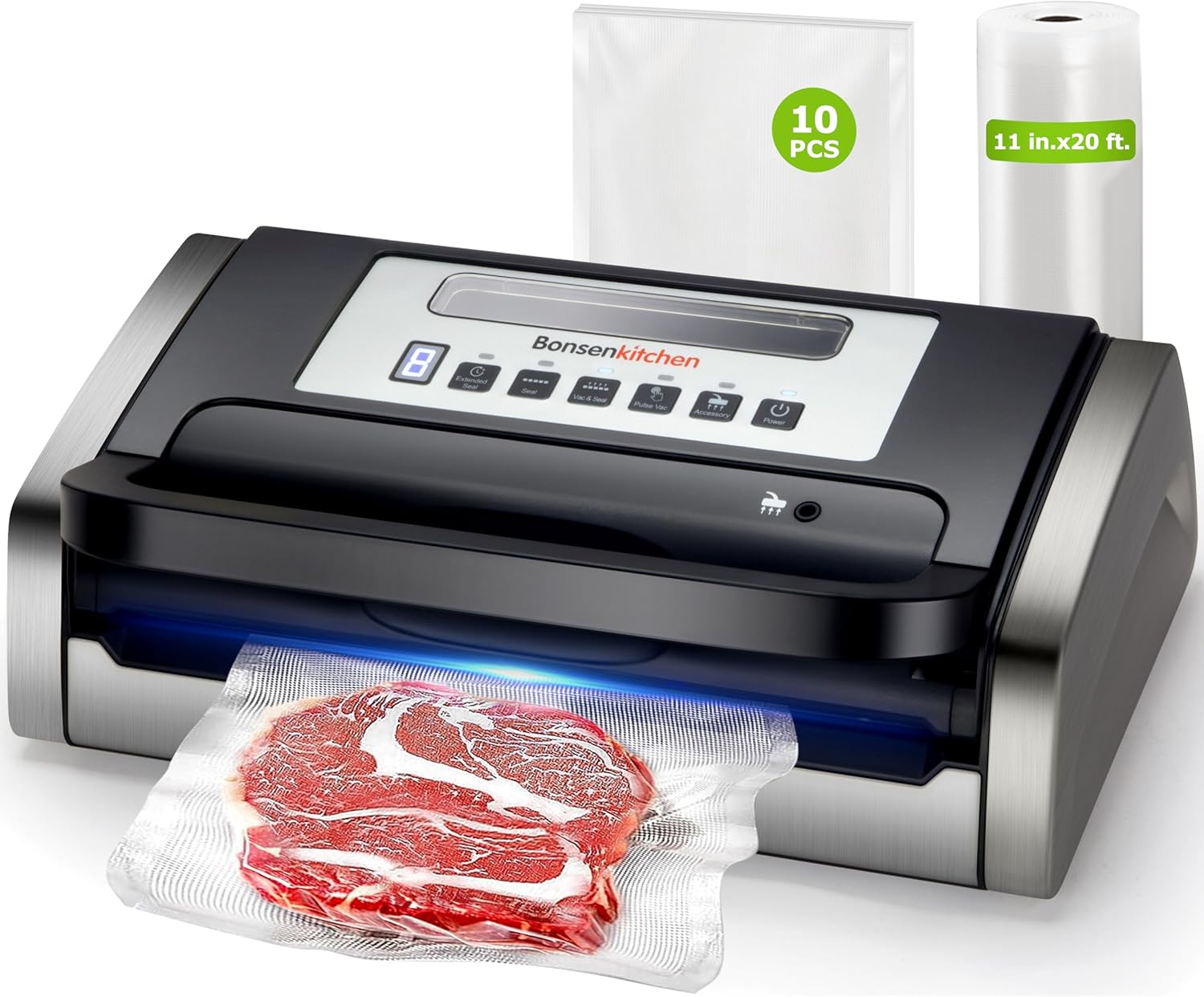
When you upgrade a tier, you have access to two functions that all low-end machines omitted.Product details: includes one roll and ten bags, four vacuum pumps, a Globefish vacuum channel, an easy-lock handle, the ability to produce fifty bags in twenty minutes, and an integrated cutter and roll storage.With the help of an onboard cutter and a roll storage system, sealing becomes a factory line where each bag is custom-cut to fit the contents.
Cons: no kPa figure is given in the listing, sealing only makes use of one heat strip instead of two, liquid mode is absent, and even more bag is wasted due to the mandatory 4-inch gap.Ideal for: warehouse hauls that are divided into pieces and Sunday bulk sessions. Soups, stocks, and other really moist ingredients are not suitable.Created for the afternoon of fifty bags, not the one steak.
4: Gasbye 95kPa Precision Vacuum Sealer Machine
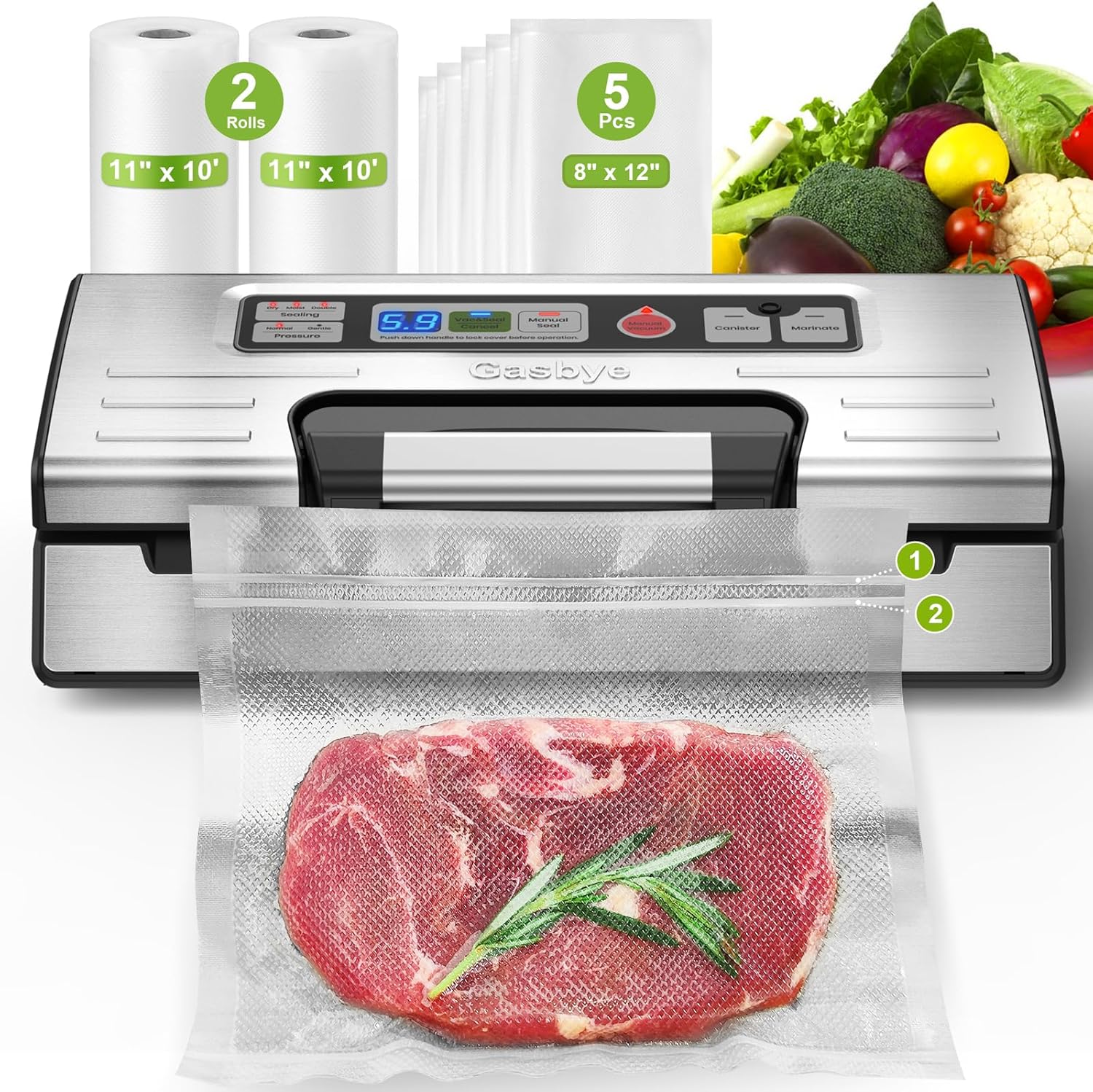
Compared to the Gasbye, no other model in this lineup offers comprehensive specifications.Noteworthy features include a 95kPa suction, a double heat seal, a pulse mode, an easy-lock handle, an integrated cutter, a place to store bags, a progress display, and a retractable drip tray.A brisket that leaks past one strip is caught by the second, and the drip tray gets rinsed clean thanks to two parallel welds that prevent moist-food failures.
Here’s the rub: it’s still an external sealer, so any loose liquid will eventually make its way to the pump; pulse mode is more of a stopgap than a permanent solution; and the brand doesn’t have a historical service network.Ideal for those who like to seal their meat and fish for the week in advance of cooking. Does not work with: broth, sauce, or soup.Without a doubt, this is the most astute exterior sealer available.
5: FoodSaver V4400 2-in-1 Vacuum Sealer Machine
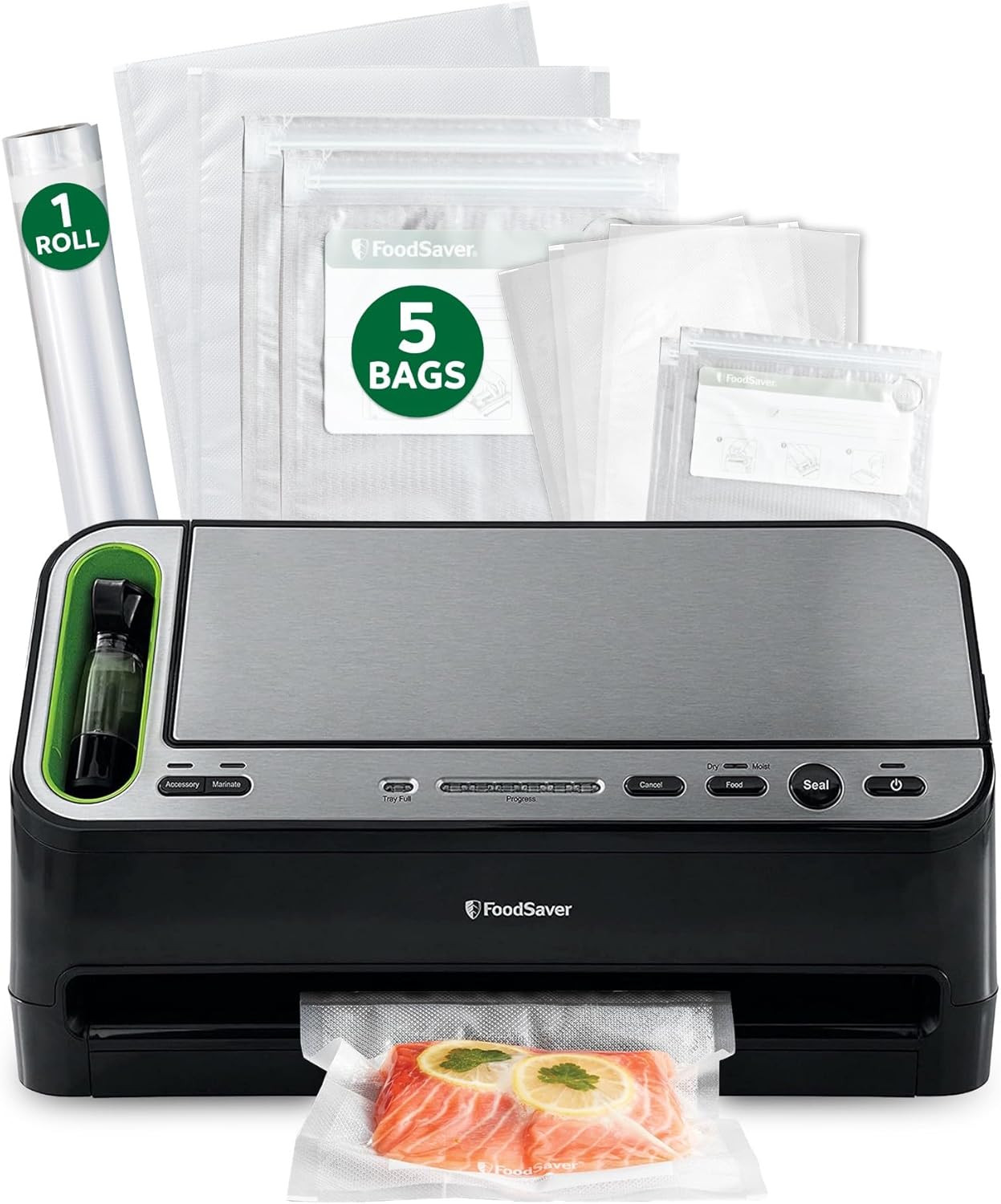
When looking for this name, everyone uses it. What you receive for your money is this.Important features include an 11-inch by 10-foot roll, three quart bags, two gallon bags, and five zipper bags in the starter kit, as well as automatic bag detection, a two-in-one design, built-in roll storage, and a cutter.The real benefit is the beginning kit; you may open it in the morning and seal it in the afternoon. Refill bags are available at food stores all throughout the country.
Problems include the following: no suction figure is published in the listing, no liquid mode is available, and proprietary bags restrict you to a specific refill ecology, which the Gasbye eschews.Buyers who like familiar names and grocery store refills will find this to be the best option. Warning: this is not for the detail-oriented.Experienced and competent—not to be outdone by anyone else in this roster.
6: VEVOR Chamber Vacuum Sealer 320W, 12.6 in Sealing Length

Here, everything shifts. A genuine chamber vacuum, this is not.Stainless steel deep chamber, 180-watt vacuum pump, 10mm dual-lock seal strip, 320-watt heater, and negative 100kPa chamber vacuum are the main features. The sealing length is 12.6 inches.Soup, stock, and marinade all close without trickery because a chamber evacuates the entire box rather than drawing through the bag mouth, preventing liquid from reaching the pump. The longest bar here is 12.6 inches.
Important information: chamber pouches are a distinct consumable that is thicker; the vacuum operates by means of a timer rather than a sensor; and this is a substantial, long-term appliance.Ideal for: sous vide marinating, large-scale cooking, and freezing soup and stock. This product is not suitable for little counters or those that use it occasionally.The most direct way to seal liquids.
7: Avid Armor USV32 Chamber Vacuum Sealer Machine

And that’s it. This one I’ve chosen on my own.The following features are essential: a stainless steel chamber with full pressure equalization, a tempered glass top, a rapid-infusion marinade mode, a sous vide ready setting, and an 11.5-inch dual-wire sealing bar.It differs from the VEVOR in that it uses a dual-wire bar to weld thick pouches, rather of a single heated wire, which weakens the material and causes bulk-freezer bags to rupture months later. You can see the cycle in action through the glass cover.
Negatives include a shorter bar (11.5 inches) compared to the VEVOR’s 12.6 inches, a chamber depth cap that prevents tall objects like bottles from being loaded, and the continued requirement of chamber pouches, rendering an external roll drawer useless.Those looking for a ten-year chamber seal should go no farther than home cooks. Useful for: occasional sealing or packing tall items.Industrial actions within a footprint on a countertop.
8: VacMaster VP230 Chamber Vacuum Sealer

Most people shouldn’t get the VP230 because it is the most serious computer here.Highlighted features include a half-horsepower oil pump, a pressure indicator panel, a 12.25-inch seal bar that can accommodate 12 by 15-inch bags, and a leak-proof double seal. The machine is designed to operate continuously.The borderline between a household appliance and a business one is an oil-lubricated rotary pump; it can pull a deeper vacuum and maintain it through hundreds of cycles. A butcher shop standard, with two welds per bag.
An oil pump requires regular oil changes; the maintenance-free VP210 does not; it is really heavy; and there is no product video available on the listing.Ideal for: those who process a season’s worth of game or who butcher at home. Not recommended for households who seal a few bags every week.Invest once, seal for life.
Things to Consider Before Buying a Vacuum Sealer:
Two main types of vacuum sealers dominate the market: external suction machines and chamber sealers. External suction machines typically draw air out of bags through an opening, sealing them once the vacuum is achieved. In contrast, chamber sealers create a vacuum within a closed chamber, sealing multiple bags simultaneously under low atmospheric pressure. Each machine serves different needs and applications, catering to a range of budgets and food preservation goals.
External Suction Models for Home Use
External suction models are popular for everyday users who seek simplicity and efficiency. These machines fit comfortably on kitchen countertops and operate quickly, allowing for easy sealing of portioned meals or leftovers. A wide range of bags is compatible with these sealers, enhancing convenience when purchasing. Despite their lower cost, they perform reliably for standard kitchen sealing tasks, making them an excellent choice for families managing food storage.
Professional-Grade Chamber Sealers
Professional-grade chamber sealers cater to those who require advanced capabilities, such as food businesses or culinary enthusiasts. These machines handle larger quantities and various food types with ease. They offer features like adjustable vacuum settings and specialized sealing options that ensure airtight seals even for liquid-rich foods. Given their higher investment cost, many professionals find that the benefits of efficiency and durability justify the price for serious kitchen applications.
Benefits of Extended Shelf Life and Bulk Savings
Food preservation through vacuum sealing significantly extends the shelf life of various products, especially meats and produce. This technology helps to maintain freshness and nutrition while allowing bulk purchases without the worry of spoilage. By sealing items, you can purchase larger quantities at discounted prices, ultimately saving money. For families or individuals who frequently buy in bulk, this not only enhances budgeting but also reduces the number of trips to the grocery store.
Potential Drawbacks of Noise and Material Costs
Noise can be a significant drawback when using a vacuum sealer, especially during extended sessions. The sealing process often generates a noticeable sound, which might be bothersome in quiet kitchens. Additionally, while bags and rolls are necessary for the process, they come with ongoing costs that can add up over time. Therefore, understanding both the convenience and expenses associated with these materials is essential for an informed decision.
Seal Bar Strength and Width
Seal bar strength and width play a critical role in the efficacy of vacuum sealing. A stronger seal bar ensures a tight closure, which minimizes air exposure and preserves food quality. Wider seal bars can accommodate larger bags, allowing more substantial items to be preserved at once. Consider models that offer adjustable seal settings for different materials, such as delicate bags versus thicker storage options. This feature can enhance the versatility of your vacuum sealer, making it suitable for various types of food preparation.
Portability and Storage Footprint
Portability and storage footprint are important considerations, especially for kitchen spaces with limited counter area. A lightweight vacuum sealer is easier to move around and store when not in use. Compact designs can fit into small cabinets or drawers, making them a practical choice for home kitchens. While evaluating size, consider the unit’s design for easy handling; some units offer a built-in handle for convenient transport. Recognizing your storage needs will guide you to a vacuum sealer that complements your cooking habits.
Cleaning and Gasket Care
Routine cleaning keeps your vacuum sealer in top condition, enhancing its performance and longevity. Regularly wipe down the exterior with a damp cloth to remove any residue. Pay special attention to the sealing area, where food particles can accumulate. For the gasket, which creates the airtight seal, use a soft brush or cloth to remove debris. Proper care of the gasket not only ensures effective sealing but also extends the lifespan of your machine, preventing costly replacements.
Managing Liquids and Delicate Foods
Vacuum sealing liquids and delicate items requires careful handling to avoid spills and crushing. Consider using a specialized liquid block pouch or placing a paper towel inside the bag to absorb excess moisture. For fragile foods, such as delicate fruits or baked goods, choose a gentle sealing mode if available. These strategies help maintain the integrity of the food while ensuring proper sealing, minimizing waste and ensuring freshness in your pantry.
Preparing Food and Bag Alignment
Aligning the food correctly within the bag is essential for an effective seal. Start by cutting a appropriate-sized vacuum bag, leaving enough space at the top for sealing. Place the food item flat in the bag, ensuring it doesn’t touch the edges, which can hinder sealing. For liquids or powders, use a vacuum canister or freeze the items slightly before sealing. This will help maintain the integrity of the bag and ensure a successful outcome.
Executing the Vacuum and Heat Seal Cycle
Activating the vacuum and heat seal cycle requires careful handling. Close the lid of the vacuum sealer securely, and select the appropriate settings based on the type of food. Press the start button to begin the vacuuming process, allowing the machine to remove air and create a tight seal. Once complete, listen for a beep indicating that sealing is finished. Simple as it may seem, keeping an eye on the bag ensures that food is adequately sealed every time.
Final Words
Considering the various factors before purchasing a vacuum sealer can significantly enhance your food preservation approach. Assess your needs, whether it’s for home cooking or small-scale food storage, and ensure compatibility with your kitchen space. Think about the types of foods you plan to seal, including liquids or delicate items, which require specific sealing methods. Investing in a quality model suited for your needs often results in long-term savings and reduced food waste. Choose wisely to protect both your meals and your budget.
Leave a Reply