
Best Tankless Water Heaters can stop cold showers and cut energy bills fast. If you hate running out of hot water, this easy guide helps you pick an energy-efficient, on-demand water heater that fits your home. Our experts tested top models and trimmed the list to the most reliable, cost-saving choices. Imagine never shivering through a cold shower again-this life-changing advice gets you there. Read on to find the right fit.
Contents
- Top 8 Tankless Water Heaters:
- 1: Rheem 18kW 240V Tankless Electric Water Heater
- 2: Ranein Propane Gas Tankless Water Heater, 4.3 GPM
- 3: Rheem RTEX-24 24kW 240V Electric Tankless Water Heater
- 4: FOGATTI Natural Gas Tankless Water Heater, 8.1 GPM
- 5: Rheem RTG-70DVLN-3 Indoor Natural Gas Tankless Water Heater, 7.0 GPM
- 6: Rinnai RE199iN Natural Gas Tankless Water Heater, 9.8 GPM
- 7: Rinnai RX199iN Condensing Tankless Water Heater, 11.1 GPM
- 8: Rinnai RXP199iN Condensing Tankless Water Heater with Recirculation, 11.1 GPM
- Things to Consider Before Buying a Tankless Water Heater:
- Higher Upfront Costs and Installation Complexity
- Flow Rate and Peak Demand Requirements
- Local Water Quality and Hardness Levels
- Navigating Venting and Electrical Upgrades
- Implementing a Regular Descaling Schedule
- To wrap up
Top 8 Tankless Water Heaters:
1: Rheem 18kW 240V Tankless Electric Water Heater
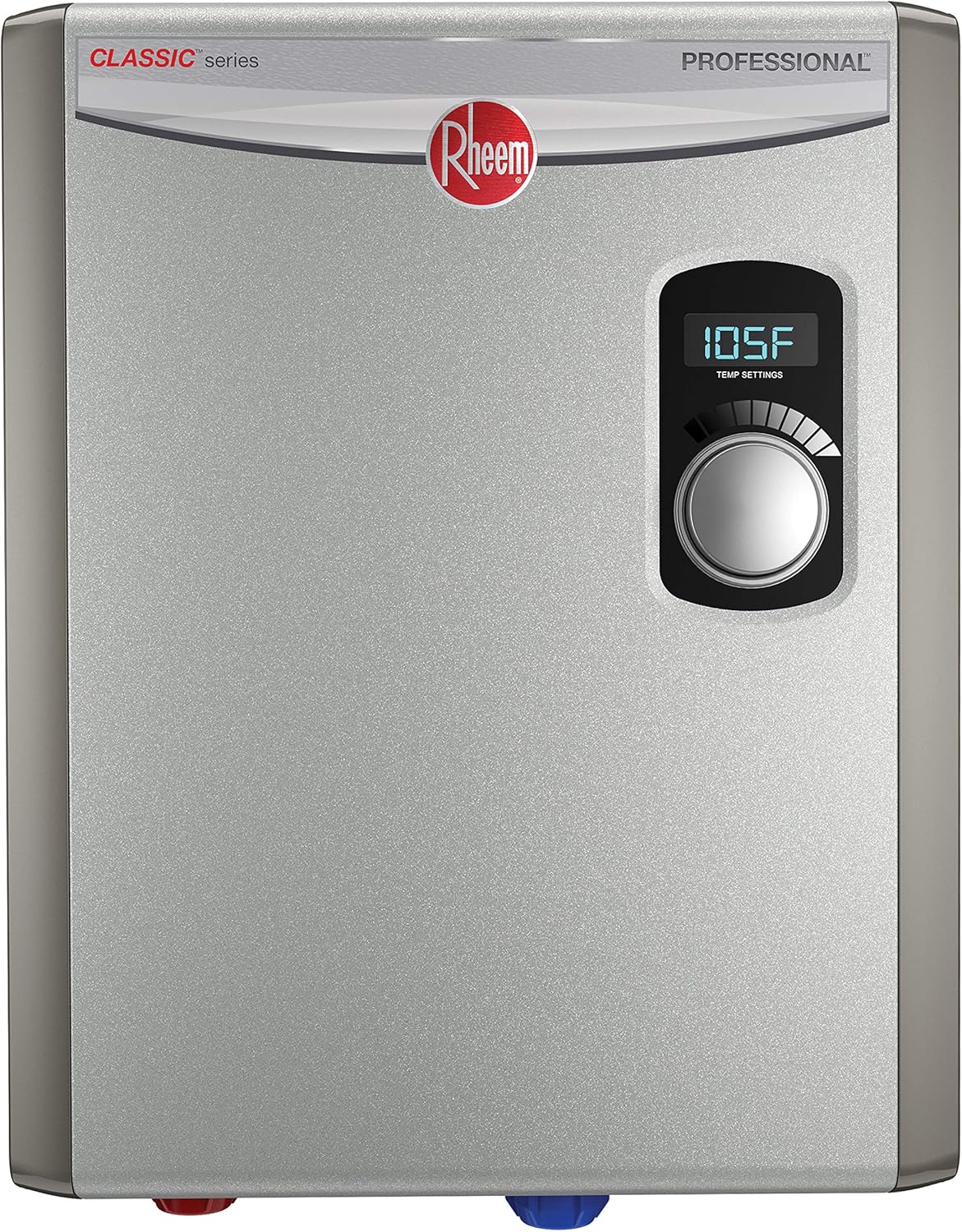
The quickest and easiest tankless setup requires neither a gas line nor venting.The following are the main specifications: 18 kW, 240 V, 4.4 GPM maximum flow rate, 99.8 percent efficiency, digital control with ±1°F LED temperature monitoring, and self-modulating twin copper elements.It adjusts power consumption in response to user demand, allowing for consistent temperatures across multiple fixtures at a reasonable cost thanks to field-serviceable components.
Here’s what they leave out: 4.4 GPM is only valid with warm inlet water, so cold-climate flow lowers quickly; it requires a lot of amperage; and descaling is necessary due to hard water.Houses in warmer climates or smaller households in search of basic, vent-free hot water systems are the best candidates. Homes in the north with ice inlet water are not suitable.Getting started with tankless is simple and affordable.
2: Ranein Propane Gas Tankless Water Heater, 4.3 GPM

Gas, please. With propane, a budget unit may accomplish more for less money initially.Features: anti-freeze up to 14°F, an LED display, a vent pipe, four preset modes, 100,000 BTU, 4.3 GPM, and three or four points of feeding. The heat exchanger is made of oxygen-free copper.Reviewers rave about the preset modes for a personalized shower experience, and the 100,000 BTU burner easily handles cold intake water that an entry electric can’t reach.
Cons: you’ll need venting and gas for the interior propane, performance decreases beyond 2,000 feet, and it needs to be drained during harsh freezes.Those on a tighter budget who still want substantial multi-fixture flow will love this propane system. Homes at high altitudes or those without gas should not use this.This affordable electric has more muscle-to-weight ratio than any other.
3: Rheem RTEX-24 24kW 240V Electric Tankless Water Heater

The electric narrative becomes functional in the north once you climb a tier.Features: digital control from 80 to 140°F, no venting, 24 kilowatts, 240 volts, up to 5.9 GPM, 99.8 percent efficiency, whole-house rated.Buyers have noted that it operates a shower and a sink simultaneously at the point when the 18-kilowatt unit taps out, thanks to the extra kilowatts pushing more hot water via chilly pipes.
However, there is a catch: in order to use it, you will need three 40-amp double-pole breakers and 200-amp service, which means that many older homes will require the services of an electrician and a panel upgrade. Additionally, the use is still limited by extremely cold intake water.Ideal for: Houses in colder climates that desire electric simplicity with actual flow. Older homes with a fully charged panel should not be used.The electric grid that can withstand the harsh winters in the north.
4: FOGATTI Natural Gas Tankless Water Heater, 8.1 GPM

Gas gets you to more fixtures at once for about the same price as other options.Important features include: 8.1 GPM, 180,000 BTU, CSA certification, four-stage combustion, an oxygen-free copper exchanger, a water-servo control that can be adjusted to within ±1°F, and feeds from three to five places.Reviews have noted that even with two showers and the kitchen running, the 8.1 GPM ceiling remains stable, which is rather impressive.
The problems are that it can only be used outside, thus it could be damaged by freezing in colder climates; the temperature panel is located inside on a remote; and the maximum operating altitude is less than 2,000 feet.Ideal for: affordable gas fixtures for 3-5 fixtures in homes with mild climates. Excluded from use: areas subject to harsh frost or installations that are to be done entirely indoors.How to run the entire house on gas for the lowest price.
5: Rheem RTG-70DVLN-3 Indoor Natural Gas Tankless Water Heater, 7.0 GPM

The distinction now lies in the details, as we enter the realm of trusted brands.Important features include 7.0 GPM, 160,000 BTU, compatibility with half-inch gas lines, hot-start programming, universal venting, and indoor installation; ideal for households with two or three bathrooms.The most notable feature is hot-start programming, which prevents the cold-water sandwich by keeping the burner primed for consecutive showers. The half-inch gas-line compatibility reduces installation effort, and buyers love how silent it runs.
The bad news is that it isn’t condensing, therefore its efficiency isn’t up to par with the flagships; 7.0 GPM isn’t very high, and expert venting is an absolute must.For families with two or three bathrooms that value a dependable brand and a lengthy guaranty, this is the best option. Large homes with multiple fixtures turning on at once are not suitable.A prudent and secure way to start using premium gas.
6: Rinnai RE199iN Natural Gas Tankless Water Heater, 9.8 GPM

Here is where things become dicey for households that are always on the go.Among its most important features are a 9.8 GPM pump, 199,000 BTU heat exchanger, an optional WiFi module, and an LED display that shows diagnostic codes and service reminders.It can power numerous appliances and showers at once thanks to its 199,000 BTU output, which is about 10 gallons per minute. According to reviewers, Rinnai is dependable and has onboard diagnostics that make code reading a breeze, eliminating the need for repair calls.
Here are the important details: it’s not condensing and falls short of top efficiency; WiFi requires an additional module; and complete labor coverage is available only after 90 days of registration.Larger homes that value easy diagnostics and name-brand flow are the best candidates. Not for: those seeking the most cost-effective option.Count on a trusted name for big-household flow.
7: Rinnai RX199iN Condensing Tankless Water Heater, 11.1 GPM

Finally, here is where adaptability and efficiency meet.Condensing design, 11.1 GPM, 199,000 BTU, 7 fixture feed, Versa Vent, Smart Sense, 0.98 UEF rating, indoor/outdoor installation, and Quick Flush feature are key specs.It uses less fuel while pushing 11.1 gallons per minute because condensing technology collects heat that non-condensing units release into the atmosphere thru the flue. One type may be installed nearly anywhere, and buyers love that it can run on two different fuels.
Cons: a condensate drain and careful venting are added with condensation, WiFi is a separate module, and a vent cap is required for outdoor installations.Customers seeking maximum efficiency with installation flexibility and whole-home demand should consider this option. Not for: very little houses that won’t ever pay property taxes.The flagship that works in practically any house.
8: Rinnai RXP199iN Condensing Tankless Water Heater with Recirculation, 11.1 GPM
Finally, the solution that eliminates the last drawback of becoming tankless has arrived.Notable features include a built-in Smart-Circ recirculation pump and Control-R WiFi in addition to the condensing, 11.1 GPM, 199,000 BTU, 7 fixtures, and dual-fuel offered by the flagship model.Smart-Circ learns your daily pattern and pre-circulates hot water, so it’s practically there as soon as you open the tap—that internal pump is the whole point. It gets rid of the one gripe that almost every tankless owner has: having to wait.
The truth is that a dedicated return line is necessary for recirculation to work, that the pump adds a little standby demand, and that a vent cap is required for outdoor installations.Ideal for: big houses that need constant access to hot water with no waiting time. Houses with just one bathroom should not be considered.Instantaneous access to limitless hot water—the no-compromise ceiling.
Things to Consider Before Buying a Tankless Water Heater:
Efficient energy consumption is a hallmark of tankless systems, as they heat water only when needed, unlike traditional units maintaining a reservoir of hot water. Their compact design also frees up valuable floor space, making them ideal for smaller homes or utility areas.
Higher Upfront Costs and Installation Complexity
Initial costs for tankless heaters tend to be significantly higher compared to traditional units. Installation can also be complex, often necessitating upgrades to existing plumbing or electrical systems, increasing both time and expenses.
Research indicates that installation complexity can vary widely based on home configuration. For instance, a home with older plumbing may require extensive renovations, which can delay the project and inflate costs. In some cases, hiring a professional plumber or electrician is necessary, further contributing to the investment required for a tankless water heater.
Flow Rate and Peak Demand Requirements
Understanding the flow rate is imperative for ensuring your heater meets household demands. Calculate the simultaneous hot water needs by adding flow rates of all fixtures in use during peak times.
Local Water Quality and Hardness Levels
Water quality significantly impacts the lifespan and efficiency of your tankless unit. Hard water can lead to scale build-up, affecting performance over time.
Testing local water hardness can provide insights into necessary maintenance. A typical mid-sized household with hard water may experience a reduction in efficiency faster than expected, highlighting the importance of periodic descaling. Investing in a water softener could be beneficial for overall system integrity.
Installation of a tankless water heater often involves upgrading existing venting or electrical systems. Some models may necessitate specialized venting materials to safely expel exhaust, while electric units might demand a dedicated circuit to manage energy requirements. Evaluate your current setup to identify any necessary modifications when planning the installation.
Implementing a Regular Descaling Schedule
A regular descaling schedule keeps your tankless water heater functioning effectively, especially in areas with hard water. This process involves flushing the system with a descaling solution to remove mineral buildup, which can impede performance. Follow the manufacturer’s recommendations for frequency based on water quality or usage patterns.
Establishing a routine for descaling is crucial, particularly in regions where water hardness is a concern. Experts suggest scheduling descaling every six months to a year, depending on the mineral content of your water supply. Following this practice can significantly enhance your unit’s heating efficiency and prolong its operational life, saving you from costly repairs or replacements.
To wrap up
Evaluating energy efficiency, water demand, and installation costs is crucial before purchasing a tankless water heater. Considering your household’s specific needs will ensure you choose a system that fits perfectly. By doing thorough research and consulting with professionals, you can make an informed decision that enhances comfort and convenience for years to come.
Leave a Reply