
Best Space Heaters can end cold rooms and high bills-our expert-tested picks bring fast, energy-efficient warmth. If you hate shivering at night or throwing money at central heat, these top portable heaters and electric room heaters give quick comfort and real savings. We tested safety, noise, and heat reach so you get reliable, hassle-free choices. Feel instant cozy relief and peace of mind. Read on to find the right model for you.
Top 8 Space Heaters:
1: DREO Space Heater 2026 Upgraded

Most folks should get the smallest heater here.Technical details: 1500W PTC ceramic, 34 dB silent rating, 70° oscillation, 12-hour timer, 5 modes, remote control, and tilt-detection tip-over sensor.The funnel outlet pushes air farther than flat-front ceramics, and buyers report a modest bedroom warming in under a minute.
What they don’t tell you is that the 34 dB figure only applies on low; on high, reviewers hear a distinct fan hum; the sound only reaches a single tiny room; and the screen remains bright, which wakes up light sleepers.Approved for use under desks, in bedrooms, and home offices. This is not the right choice for basements or open-concept living areas.The go-to option here, and rightfully so.
2: Honeywell Slim Ceramic Tower HCE311V

At this point, a well-known brand no longer indicates a superior heater.Among its most notable features are its small ceramic tower, oscillation, two layers of protection against overheating, a 360-degree tip-over switch, and cool-touch housing.Two overheat cutoffs, a tip-over switch that works in both directions, and a shell that doesn’t get too hot are some of the safety features that buyers rave about.
This is where it falls short: there is no digital thermostat, so you have to guess between high and low; there is no remote control; and according to reviews, the two settings are too extreme for a bedroom and don’t provide enough control over the cooling process.For homes that only need Honeywell safety engineering, this product is ideal. Do not use if you intend to simply turn the heat on and then leave the room.Secure safety hardware encircled a heater that was ten years old.
3: Lasko 1500W Ceramic Tower 751320
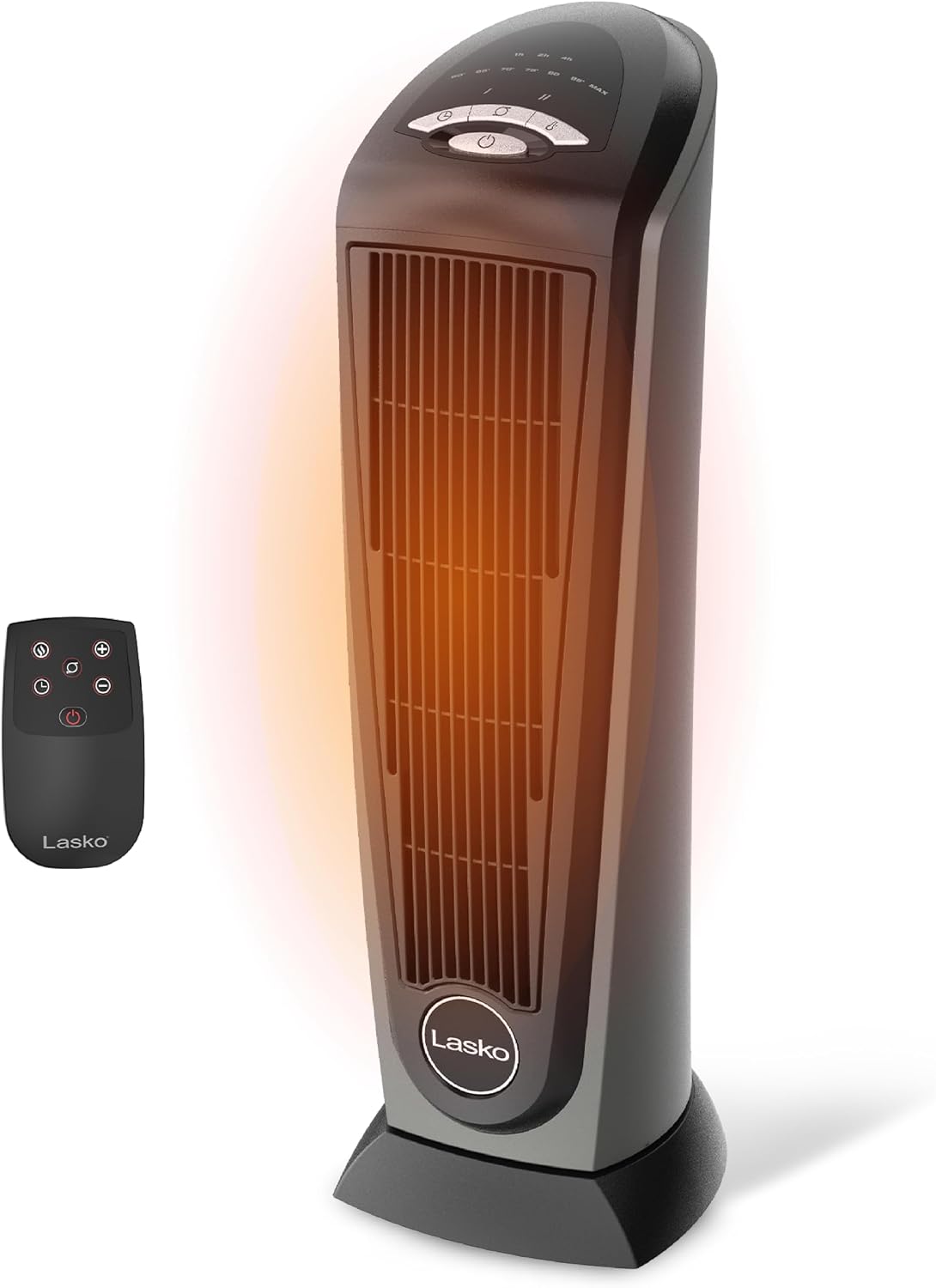
At some point, every mid-range shortlist reaches this point.Important features include a 1500W ceramic element, two heat settings, an adjustable thermostat, wide oscillation, a remote control, an auto-off timer, and a variable element that regulates itself.Critics have noted that the oscillation disperses heat uniformly across a medium-sized living room and that the element maintains its temperature without cycling.
There are a few drawbacks to consider: the thermostat is not a degree reading but a relative dial, so precise temperatures are up to speculation; customers have noted an audible fan whoosh when turned on high; and the plastic body tends to shake on thick carpet.This tower is perfect for medium-sized living spaces and anyone looking for a tried-and-true option with minimal unnecessary fuss. Avoid: if you require a degree readout from your vendors.The least risky option at this level (and I don’t mean that as a disrespect).
4: DREO Whole Room Heater 3D Oscillating

When you stand up, the heat begins to radiate in both directions.Important features include a 1500W PTC, electronic thermostat, three heat settings, three fan speeds, and oscillation angles of sixty degrees vertically and ninety degrees horizontally.The story is that it sweeps vertically, directing warm air upwards to seated height rather than pooling at ankle level.
Reviewers have noted that the top fan level is audible, and being a new product, there is little comment on longevity. Additionally, it takes up more floor space than a slim tower because it is a pedestal.Where heat needs to reach sat height, such as in a living room or open area, this is the best option. For rooms with limited space or floors that are too narrow.The increase is warranted only by the vertical oscillation.
5: Dr Infrared Heater DR-968

And that’s it. This one I’ve chosen on my own.Important features include a thermostat that ranges from 50 to 85 degrees Fahrenheit, a 39 dB blower, caster wheels, a lifetime washable filter, and dual heating (infrared quartz plus PTC).Quartz warms people directly while PTC warms the air, so a chilly room will no longer feel chilly before the thermostat catches up. This is because of the dual element that separates them. Users have said that blower is the quietest one they’ve ever used.
Everything you need to know is that the tower is slim, the cabinet is huge next to it, and that the faux-wood finish looks old. It draws 12.5 amps, so it needs its own circuit, and some purchasers have reported that sharing tripped breakers.Where peace and quiet are paramount, such as in basements and living rooms, whole-room heating is ideal. Avoid: shared circuits and cramped bedrooms.Two infrared elements, almost silent operation, and it can roll.
6: Heat Storm HS-1500-PHX-WIFI Wall Mounted
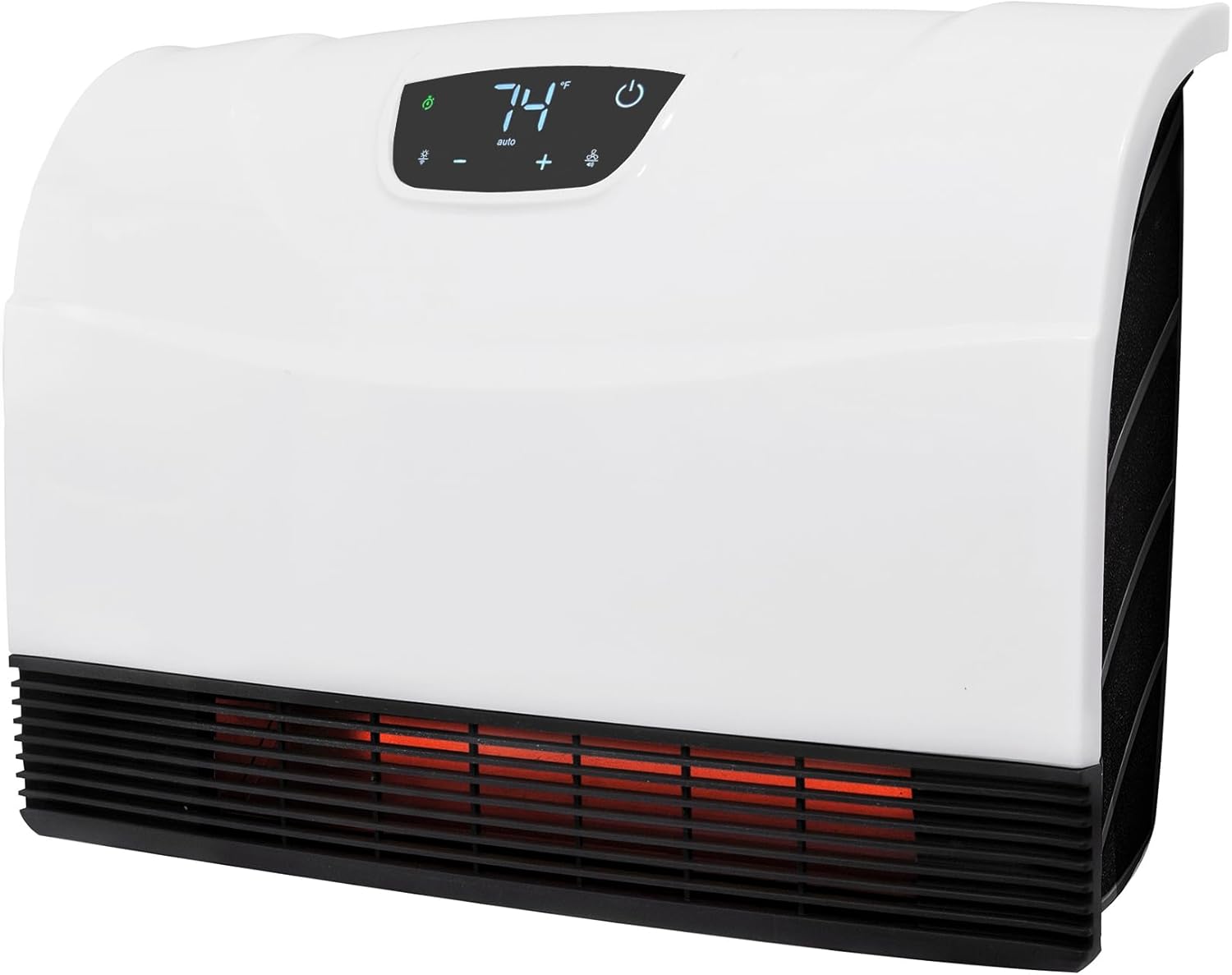
This choice doesn’t require any floor space, which is a major plus.Product details: 1500W infrared wall mount, 5,200 BTU, Wi-Fi app control, touchscreen thermostat, washable filters.Buyers choose cabinet heaters for rental properties, nurseries, and bathrooms because of the little footprint they take when mounted on the wall. The room will be heated when you come thanks to the app.
Truthfully, you’ll need to buy the feet separately to make it portable; installing it requires drilling into studs; and reviewers have complained about the app being laggy and going out sometimes.Ideal for: small bathrooms, nurseries, and houses with limited floor space. People who aren’t handy with tools shouldn’t rent this.The sole option here that will keep your floor perfectly flat.
7: DeLonghi Dragon Digital Oil Filled Radiator

Up until this point, every heater has had a fan operating. Not this one.Notable features include an oil-filled radiator with a 1500W power output, an electronic panel with an LED display, a 24-hour programmable timer, an increased radiant surface area of 75%, and fanless operation.Homes with allergies often opt for oil radiators since, without a fan, there is no way to move allergens like dust, pollen, or dander. Even after the element cycles off, the temperature remains constant because the sealed oil retains heat.
The negatives include the following: the oil radiator is slow (it takes around twenty to thirty minutes for a chilly room to change), the radiator is heavy even when on wheels, and there is no remote control, so you have to adjust it all at the panel.Bedrooms, nurseries, homes with allergies, and overnight heating are the best places to put it. Warning: this room will not warm up in under five minutes if you’re in a hurry.Provided you can be patient, this place has the calmest, most consistent heat.
8: EdenPURE CopperPLUS Infrared Heater

Besides copper, nothing else here is constructed.Notable features include a lifetime washable filter, wheels, a copper PTC heating system with a surface area of more than 3.5 square feet, a rating of 1,000 square feet, and 24 heat settings.Copper has a faster heat transfer rate than the ceramic elements used by all other materials, and the benefit is a constant output without straining the element. As a zone heat system, customers have reported turning off the main thermostat and heating only the rooms that are actually being used.
The hitch is that it’s a big cabinet, more akin to a piece of furniture than an appliance; it has twenty-four settings, which is more precision than most people would ever need; and customer reviews are sparser than those for more established brands.Ideal for: all-day heating, main floor zone heating, and open floor plans. Those looking for a space heater that they can conceal should look elsewhere.A room fit for real zone-heating hardware.
Things to Consider Before Buying a Space Heater:
Choosing a space heater requires careful consideration of various factors to ensure comfort and safety in your home. With numerous options available, it’s essential to understand which features best meet your heating needs. Assessing energy efficiency, safety features, and room size can significantly influence your decision-making process.
Convection and Ceramic Models
Convection and ceramic heaters work primarily by circulating warm air, making them popular choices for many households. Convection heaters, often installed on walls, distribute heat evenly over a larger area, whereas ceramic models are designed for quick and efficient heating of smaller spaces. Both types utilize fan assistance to maximize airflow. With energy-efficient features, these heaters can lower your overall electricity usage while maintaining warmth, particularly in rooms that receive considerable foot traffic.
Radiant and Infrared Technology
Radiant and infrared heaters focus on direct heating rather than warming the air. Radiant heaters emit heat through infrared waves, targeting objects and individuals in their vicinity. These models are particularly effective in spaces where immediate warmth is desired, such as living rooms or workshops. Infrared technology takes it a step further by providing faster results, ideal for larger, open spaces. The primary advantage lies in their ability to generate instant warmth without waiting for the entire room to heat up.
Benefits of Supplemental Zonal Heating
Utilizing supplemental zonal heating can lead to significant energy savings by allowing you to maintain lower temperatures in unoccupied areas of your home. Targeting heat precisely where needed enhances comfort levels while reducing reliance on your central heating system. For instance, heating a single room during daytime hours can result in less energy usage overall. Thus, investing in a portable unit offers both convenience and potential cost effectiveness.
Common Drawbacks and Operational Limitations
Considering operational limitations is vital when weighing your options. Portable units generally struggle to heat large, open areas, which can lead to an uneven temperature distribution. Additionally, many models require regular maintenance to ensure optimal performance, such as periodic cleaning to prevent dust buildup. Over time, their reliance on electricity can also inflate monthly utility bills, especially if used extensively during colder months.
Heating Capacity and Square Footage Requirements
Heating capacity must align with the square footage of your room for optimal results. A general rule is that a heater requires about 10 watts of power for every square foot. If your room measures 300 square feet, a heater with at least 3,000 watts will be necessary for effective heating. Larger or poorly insulated spaces may benefit from high-capacity units, which can maintain warmth more efficiently, reducing energy costs over time.
Noise Levels and Digital Control Features
Noise levels vary significantly among space heaters, impacting comfort in spaces like bedrooms or offices. Some models operate quietly, making them suitable for nighttime use or concentrated work environments. Digital control features, such as programmable thermostats and remote access options, add convenience and precision to temperature regulation. Selecting a heater with these capabilities can enhance user experience and support a more energy-efficient operation.
Assessing Specific Room Requirements
Evaluating the specific needs of your room can greatly influence the effectiveness of your space heater. Take into account factors such as room insulation, the number of windows, and the height of ceilings. For example, a small, well-insulated room may require a heater with lower wattage, while a larger space with many windows will need a more powerful model to maintain comfort levels. Each room varies, making individual assessment key to effective heating.
Comparing Manufacturer Warranties and Certifications
Understanding manufacturer warranties and certifications offers insights into product reliability. Look for brands that provide comprehensive warranties, typically ranging from one year to several years, covering defects and malfunctions. Certifications from recognized safety organizations, like UL (Underwriters Laboratories) or CSA (Canadian Standards Association), ensure that the device meets established safety standards. Prioritizing these factors helps safeguard against poor-quality purchases.
Safe Placement and Clearance Guidelines
Positioning your space heater correctly is a fundamental aspect of safety. Always place the unit on a flat, stable surface away from flammable materials, such as curtains, bedding, and furniture. Ideally, maintain a clearance of at least three feet around the heater to prevent overheating. Never use a heater in a confined space without adequate ventilation, as this could lead to dangerous carbon monoxide buildup. Proper placement reduces fire hazards significantly.
Routine Cleaning and Seasonal Storage
Cleaning your heater regularly is necessary for optimal operation and air quality. Dust and debris can accumulate in grilles and vents, which may hinder performance. A monthly wipe-down with a damp cloth helps maintain cleanliness. Prior to storing for the off-season, ensure the heater is completely turned off and unplugged. Storing the unit in a dry, cool area protects it from moisture and significantly extends its lifespan.
Final Words
Considering various factors before purchasing a space heater can make a significant difference in your comfort and energy efficiency. Assessing room size, energy source, and safety features ensures that you select a model tailored to your needs. Always check for energy ratings and customer reviews to gauge reliability. Investing time in understanding the specifications can lead to a more satisfying and efficient heating experience, ultimately contributing to a cozy and welcoming environment during cold months.
Leave a Reply