
Best Smart Thermostats can cut your energy bills and keep your home comfy, but choosing the right model feels overwhelming. Our expert-tested picks focus on smart home ease and real energy savings, so you get simple setup, reliable Wi‑Fi control, and big cost wins. Imagine the joy of lower bills and cozy rooms-it’s a game-changing relief. Ready to find the top options that fit your life? Read on.
Top 8 Smart Thermostats:
1: Sensi Lite Smart Thermostat ST25
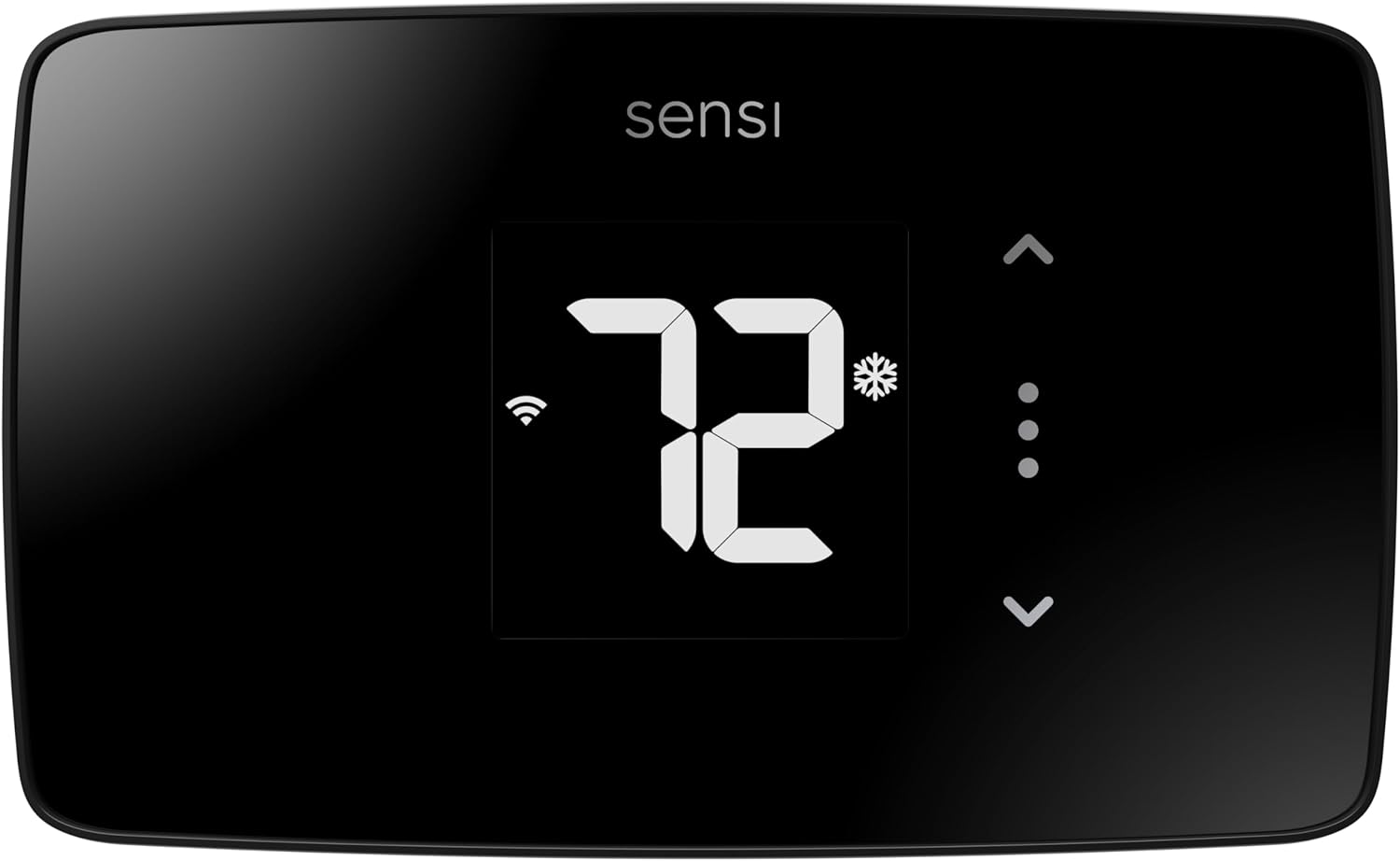
This list kicks off with the Sensi Lite, which is a reliable brand.Important features include: an integrated level for do-it-yourself mounting, support for Alexa, Google, and SmartThings, geofencing, and a 7-day scheduling feature. Most systems do not require a C-wire.Buyers have reported a fifteen-minute app-guided installation, and as your phone leaves the house, geofencing lowers the temperature back.
Secrets include: a lack of compatibility for HomeKit or room sensors, a simple non-touch screen, and the continued use of a C-wire for heat pump installations.This single-zone furnace is ideal for first-time purchasers. Avoid if you’re dealing with an icy bedroom or an Apple house.Basic, done with integrity.
2: Amazon Smart Thermostat

When you take it to the next level, the Amazon does something that no one else can.Features that are important to consider include being Energy Star certified, having home, away, and sleep routines, being able to automatically operate it with Alexa+, and being able to pair with Echo devices to serve as location and temperature sensors.The owners rave about the Echo trick as the product’s standout feature; for example, they turned a Dot in the bedroom into a secondary temperature sensor, allowing them to break free from the control of a cold room.
The downsides include an inconvenient C-wire that older homes are need to install, the absence of a touchscreen, and Alexa’s exclusion of Google, HomeKit, and IFTTT.For homes with existing Echo speakers and Alexa, this is the best option. Home of Google or Apple not included.The most cost-effective option if you’re already familiar with Alexa.
3: Google Nest Thermostat

Most people will be familiar with the Nest. Also, it’s the one that would make me give it the most serious consideration.Features that are important to consider include a mirrored display with a side touch strip, the ability to schedule tasks quickly, a savings finder, warnings when the HVAC system is not running, and the fact that most homes do not require a C-wire.At this price point, nothing beats the mirrored finish for walls, and HVAC alerts will let you know if your furnace is having trouble before it stops working altogether.
The hitch is that the strip in question does not have a touchscreen, the model in question is unable to construct a schedule on your behalf, and geofencing has a reputation for being problematic.Ideal for: Google-designed houses with basic forced-air heating and cooling systems. Do not expect the Nest to learn from this.The most exquisite hardware in this tier is also the least productive.
4: ecobee Smart Thermostat Essential

What the ecobee offers that the Nest does not is as follows.Notable features include a full-color touchscreen, a model from 2025, 85% system compatibility, the ability to use Alexa, Siri, or Google Assistant, an annual savings of up to 23%, and free software upgrades.According to reviewers, the touchscreen is what sets it apart; instead of sliding a strip, you tap a specific temperature, and it responds to all three helpers.Checking in with reality: room sensors are available for purchase separately, the Wi-Fi is limited to 2.4GHz, there is no occupancy radar, and either a C-wire or the adaptor kit is required.
Good for: homes with a combination of smart home systems that want a physical touchscreen. This model isn’t up to the task of detecting issues with comfort in multiple rooms.This lineup’s best mid-range purchase.CTA In the Middle of the RollAbout halfway through, if this is preventing a botched installation, please like and comment with your system type. I will respond.
5: Sensi Touch 2 Smart Thermostat ST76
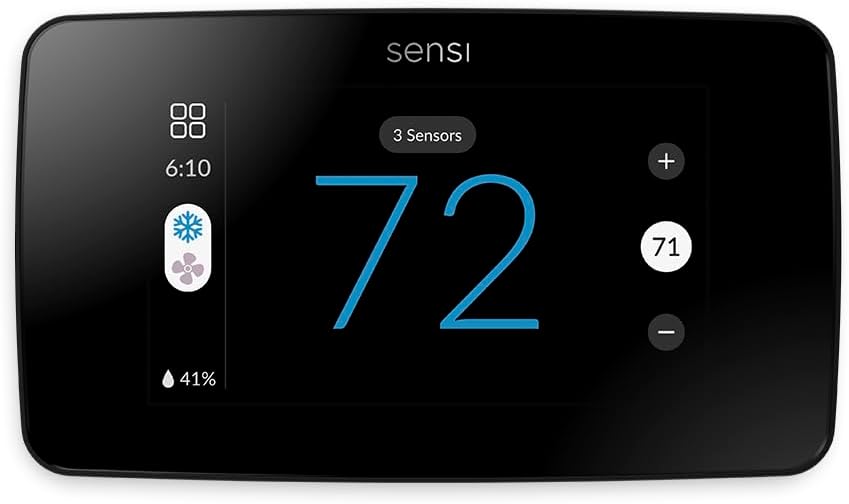
At the third tier, dealing with a single cold room becomes manageable.Notable features include a full-color touchscreen, dual-band Wi-Fi, compatibility for Sensi room sensors, a Bluetooth-guided installation process, smart maintenance warnings, and information on both energy use and equipment status.Instead of heating to the temperature in the hallway, it can balance the temperature in the room, so it’s comfortable even in a cold bedroom and warm in the living room. One helpful early warning when a system runs long is the maintenance warnings, which reviewers also highlight.
Downsides: no room sensors, no support for HomeKit, Matter, or IFTTT, no way to detect when someone is nearby, and the C-wire is an absolute must-have.Greatest for: Google Home or Alexa homes with a single problematic room. Not recommended for Apple homes or those who prefer a thermostat with independent thought capabilities.The most affordable solution to even heating.
6: ecobee Smart Thermostat Enhanced

What makes the Enhanced a smart thermostat instead than a programmable one is its ability to anticipate your arrival.Notable features include integrated radar occupancy monitoring, significant annual savings of up to 26%, compatibility with 90% of systems, support for Matter, and the inclusion of a Power Extender Kit and a trim kit.The radar starts heating up the moment you step foot in the door, instead of responding when you’re already chilly. A no-C-wire home can install it without the help of a professional thanks to the provided extender kit.
Just so you know, the item in question does not come with any SmartSensor, built-in speaker, or air quality monitor. Those features are found in the previous phase.Ideal for: schedules that aren’t regular and where no one ever returns home at the same time twice. Those looking for room sensors are not going to find them here.Efficacious automation that truly merits advancement.
7: Google Nest Learning Thermostat (4th gen) + Nest Temperature Sensor

And that’s it. This one I’ve chosen on my own.Important features include a 31% reduction in energy costs, the ability to avoid running a C-wire in the majority of homes, the inclusion of a Nest temperature sensor, the ability to detect when you are near by and activate the screen accordingly, and support for Matter.Instead of asking you to design a plan, it builds one based on your actual living habits. This is the main reason learning models save more data. Eliminating the largest obstacle to installation in older houses is no-C-wire compatibility.
The truth is that it still doesn’t have a touchscreen; instead, you have to turn it and hit a ring. Its shiny face reflects light, and it uses the Google Home app instead of the previous Nest app.Those looking for savings without programming and older homes lacking a C-wire are the best candidates. Approved users of touchscreens only.This flagship model, which can be installed practically anyplace, boasts the largest savings.
8: ecobee Smart Thermostat Premium

With features beyond simple heating and cooling, the Premium represents the pinnacle of its category.Included in the package is the Power Extender and trim kit, and it comes with a SmartSensor, an indoor air quality monitor, an integrated speaker for Alexa and Siri, and a discount of up to 26%.Voice assistant, music, and timers—it’s like having a smart speaker on your wall. The air monitor will alert you to operate the fan if it detects stale air.
This is where it falls short: the functions are only available with a subscription, the large footprint requires a trim kit, and the savings claim is behind the Nest.Homes with an Apple or Alexa speaker and a need for a single device for air conditioning, voice control, and comfort should consider this option. Excluded: those who want a more modest approach.Among these thermostats, the most capable one.
Things to Consider Before Buying a Smart Thermostat:
You need to assess several factors before investing in a smart thermostat. From compatibility with your HVAC system to exploring various models, understanding your options can lead to smarter energy usage and improved home comfort.
Assessing Voltage and System Type
Check whether your HVAC system operates on low voltage (typically 24V) or line voltage. Most smart thermostats function best with low-voltage systems, while some older models may require specific line voltage types. Testing your current voltage can prevent unnecessary compatibility issues.
Identifying C-Wire Requirements
A C-wire, or common wire, may be needed for many smart thermostats to function correctly. Without a C-wire, your new thermostat could experience power-related issues, and features like Wi-Fi connectivity might be compromised. Thus, inspection of existing wires is vital.
Wiring setups can differ significantly between homes. If your current thermostat lacks a C-wire, an adapter may be available for installation, enabling compatibility. Alternatively, some modern thermostats offer battery options, though these may limit certain smart functions. Be sure to assess your current wiring situation before making a purchase decision.
Learning vs. Manual Smart Models
Learning smart thermostats adapt to your routine, automatically adjusting settings based on your habits. In contrast, manual smart models require you to input temperature preferences, providing less autonomy but often at a lower price point.
Remote Sensor and Multi-Zone Options
Remote sensors can help regulate temperatures in different areas of your home, enhancing comfort. Multi-zone thermostats allow individual temperature settings for distinct zones, making it possible to cater to various preferences throughout your space.
Investing in remote sensor and multi-zone options offers significant potential for energy efficiency. For instance, multiple zones ensure that unoccupied areas are not over-conditioned, reducing overall energy consumption. This can lead to real savings on utility bills, particularly in homes with varying space usage. Consider models that provide compatibility with additional sensors for even greater control.
Energy Efficiency and Cost Savings
Investing in a smart thermostat can lead to significant energy efficiency, reducing heating and cooling costs. Users often report savings on monthly energy bills, sometimes recovering the initial investment within a single heating or cooling season, depending on usage and local climate.
Privacy Concerns and Connectivity Issues
Smart thermostats rely on internet connectivity, raising potential privacy concerns. Data collection for improved performance can sometimes lead to fears about how personal information is stored and used.
Privacy issues may arise from the data collected by smart thermostats, including usage patterns and personal schedules. Without robust security measures, sensitive information could be vulnerable to unauthorized access. Ensuring that your device has strong encryption and privacy settings is crucial to safeguard personal data. Select brands with transparent privacy policies to address these concerns effectively.
Determining Your Feature Must-Haves
Outline the features that are necessary for your needs. Whether you prioritize energy efficiency, remote control capabilities, or learning algorithms, defining these parameters early streamlines your decision-making process.
Features to consider include geofencing, which adjusts temperatures based on your location, or integration with other smart appliances like security systems. A model that offers an intuitive app for remote monitoring and adjustments can significantly enhance comfort and convenience. Prioritize these functionalities to align with your lifestyle, increasing overall satisfaction with your purchase.
Utilizing Geofencing and Scheduling Features
Smart thermostats often include geofencing capabilities, which adjust temperatures based on your location. Setting schedules can also optimize energy savings by aligning temperatures with your routine.
Geofencing tracks your smartphone’s location to automatically adjust settings as you come and go. This technology allows the thermostat to enter energy-saving modes when no one is home, minimizing energy waste. By using scheduling features, you can program temperature changes for specific times, like warming up your home an hour before you return from work, further enhancing comfort and efficiency.
Final Words
Considering your home’s specific needs and the compatibility of your HVAC system is necessary before purchasing a smart thermostat. Evaluate features such as remote access, integration with smart home devices, and energy-saving capabilities. Making an informed decision will enhance comfort and potentially lead to energy savings long-term.
Leave a Reply