
Best Motorcycle Helmets protect your head and give you peace of mind on every ride. Struggling to find a safe, comfy, full-face or DOT-certified helmet that fits? We tested dozens with real riders and lab checks to deliver top-rated picks that are life-saving and feel great-fast. Read on for clear safety ratings, comfort tips, and honest reviews that help you ride with confidence.
Top 8 Motorcycle Helmets:
1: ILM Full Face Motorcycle Helmet DOT Model ILM-313

Wearing this helmet, nearly 10,000 riders embarked on their road lives.Notable features include an ABS shell, smoked and clear visors, a detachable winter neck scarf, a quick-release clasp, a washable liner, a weight of around three pounds, and DOT FMVSS-218 certification.This entry-level helmet weighs only three pounds, and with its second shield, you won’t need any additional grip on your bike before hitting the open road.
Things they don’t tell you: it doesn’t have an ECE rating and is only DOT approved; there’s no sun visor, so you have to swap out the shields every time the light changes; and customers say the sizes run small.Ideal for: shorter commutes and first-time riders. Highway miles or those seeking an ECE-rated shell should not be used.The straightest route to getting on a bike.
2: GLX GX11 Compact Full Face Motorcycle Helmet w/ Tinted Visor

The underlying structure undergoes a transformation as one ascends a single notch.Specifications: DOT FMVSS-218; multi-density EPS liner; three adjustable intakes; four exhaust outlets; venting that has been wind tunnel tested; a quick-change shield; an included tinted visor; and so on.The true improvement is the multi-density EPS, which uses two layers to manage impact instead of one. Reviewers have noted that it is quieter than typical entry lids due to the venting.
Cons: it’s DOT only, the crown is snug on bigger heads, the size runs small, and there’s no interior sun shield.Who it’s best for: riders on a tighter budget who nevertheless want a realistic impact structure and less turbulent airflow. Riders requiring an ECE-rated helmet or those with larger heads should not use this.The most astute purchase on a budget.
3: BELL Qualifier Full-Face Motorcycle Helmet

At this point, you are no longer purchasing a helmet, but rather a brand.Features: DOT FMVSS 218 certification, 4.9-pound construction, washable lining, Bluetooth speaker pockets, NutraFog II anti-fog shield, Velocity Flow ventilation, and polycarbonate shell.Features were culled from Bell’s premium Star series, and the molded speaker pockets accommodate a communications unit without squeezing your ear.
Checking in with reality: it’s the heaviest helmet here at 4.9 pounds, made of polycarbonate instead of composite, and riders say it’s loud when riding on the highway without earphones.Passengers looking for a reliable brand with ample communication area might choose this option. These days aren’t for riders who are sensitive to weight or those who have long days of touring.The initial serious helmet that is defaulted.
4: AGV K1 S Solid Gloss Full Face Motorcycle Racing Helmet
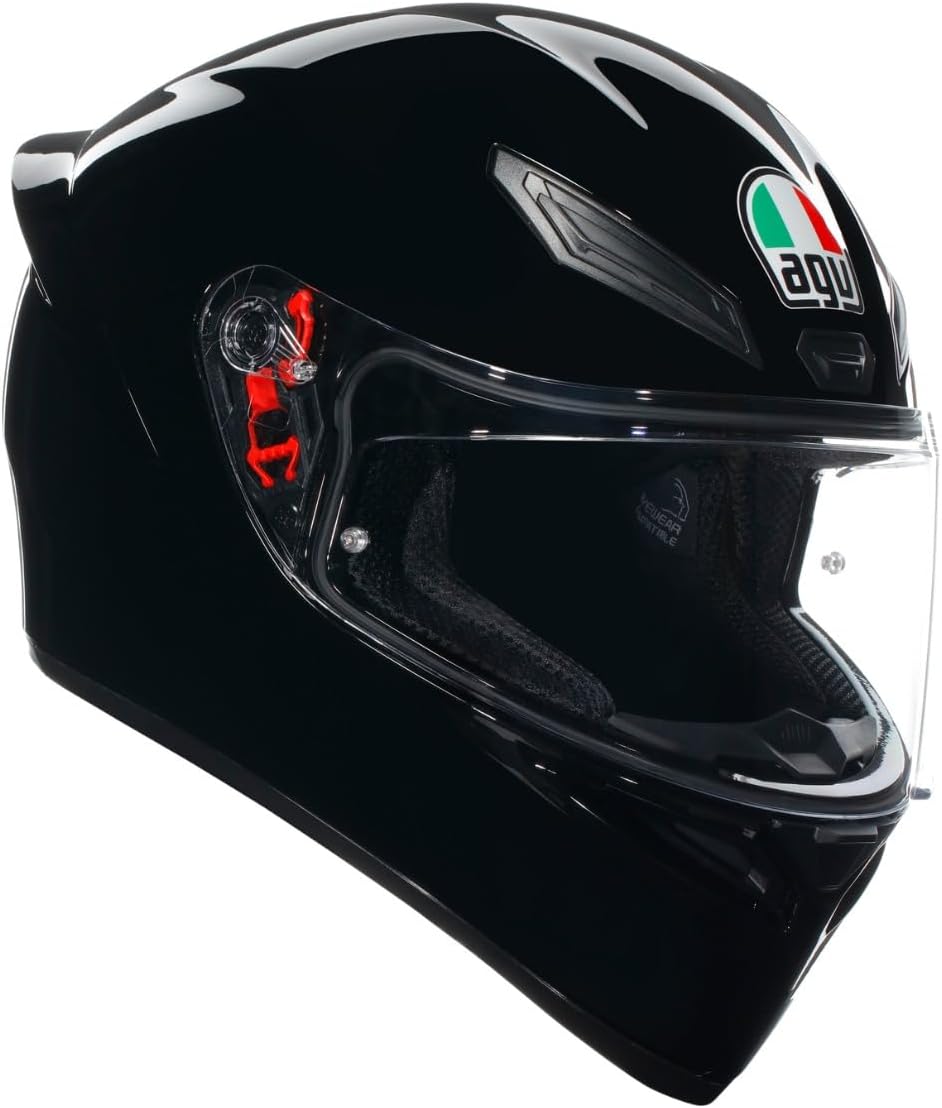
This company’s first helmet to be constructed from actual racing DNA is the K1 S.Specifications: DOT FMVSS 218 certification, two sizes of thermoplastic shells, rear extractors for crown vents, a Pinlock MaxVision-prepared GT4 visor, a double-D ring chinstrap, and a weight of 1,580 grams.True fit is determined by two shell sizes, not one, but two, because smaller heads stop donning oversized shells, contrary to what the specs sheet implies.
The catch is that it doesn’t come with the Pinlock insert, it doesn’t have a sun visor that you can lower, and it takes longer to clasp the double-D ring than a micrometric buckle.Ideal for: horse riders seeking a fit inspired by racing. Not recommended for riders looking for a built-in sun visor.A family tree lacking a flagship dedication.
5: ScorpionEXO Covert FX Full Face Motorcycle Helmet

With the Covert FX, you get three helmets in one.Notable features include a TCT-Ultra composite shell, DOT and ECE 22.06 certification, a detachable chin bar and mask, aero-tuned ventilation, and compartments for speakers.Here we have the first composite shell with ECE 22.06, a far broader test standard than its predecessor. It opens up when you pull off the chin bar and mask.
The lack of a Pinlock or sun visor, the difficulty in swapping out the mask, and the increased wind noise caused by the convertible design are its major flaws.For riders who prefer a single helmet for both indoor and outdoor riding, this is the best option. Those looking for peace and quiet should not attempt this.This is the most adaptable helmet we have.
6: Sei RF-SR Full Face Motorcycle Helmet

This is the entrance of Shoei, and it doesn’t feel like anything is on the lower level.Important details: 3.5-pound construction, Snell M2020D with DOT FMVSS 218 protection, organic fiber and fiberglass AIM shell, and emergency quick-release cheek pads.The first helmet here to have the voluntary Snell M2020D standard, which is far higher than the DOT minimum, is this one. As an alternative to removing the helmet by hand, the emergency release allows medical personnel to slide the cheek pads out in a lateral motion.
The facts are that this is a more vintage model from Shoei’s lineup, it has an integrated sun visor, and you may buy the Pinlock insert independently.Who these are ideal for: riders looking for a Shoei fit and Snell certification. Not for those who are interested in sun visors or who are driven by a desire for technology.Toward the end of the list, the safety jump.
7: Shoei RF-1400 Full Face Motorcycle Helmet

And that’s it. This one I’ve chosen on my own.Specifications include an AIM+ multi-composite shell that is Snell certified, the lightest full-face helmet from Shoei that is also Snell rated, an air-tight shield system, emergency quick-release cheek cushions, and a range of shell sizes.The shell’s airtight shield and window beading make it run quieter than anything below it. No vent can remedy the noise that’s sealed into the shield edge. With a range of shell sizes, even a little head may find the perfect helmet.
The lack of an integrated sun visor, the fact that you have to buy the Pinlock insert separately, and the fact that you require a strong hand to seat the shield mechanism are all drawbacks.Those who seek a quiet, Snell-rated helmet are the best for bikers who log lengthy days. Not suitable for riders who require a sun visor or chin bar that flips up.The standard by which all other metrics are evaluated in this context.
8: LS2 Helmets Advant X Carbon Modular Helmet
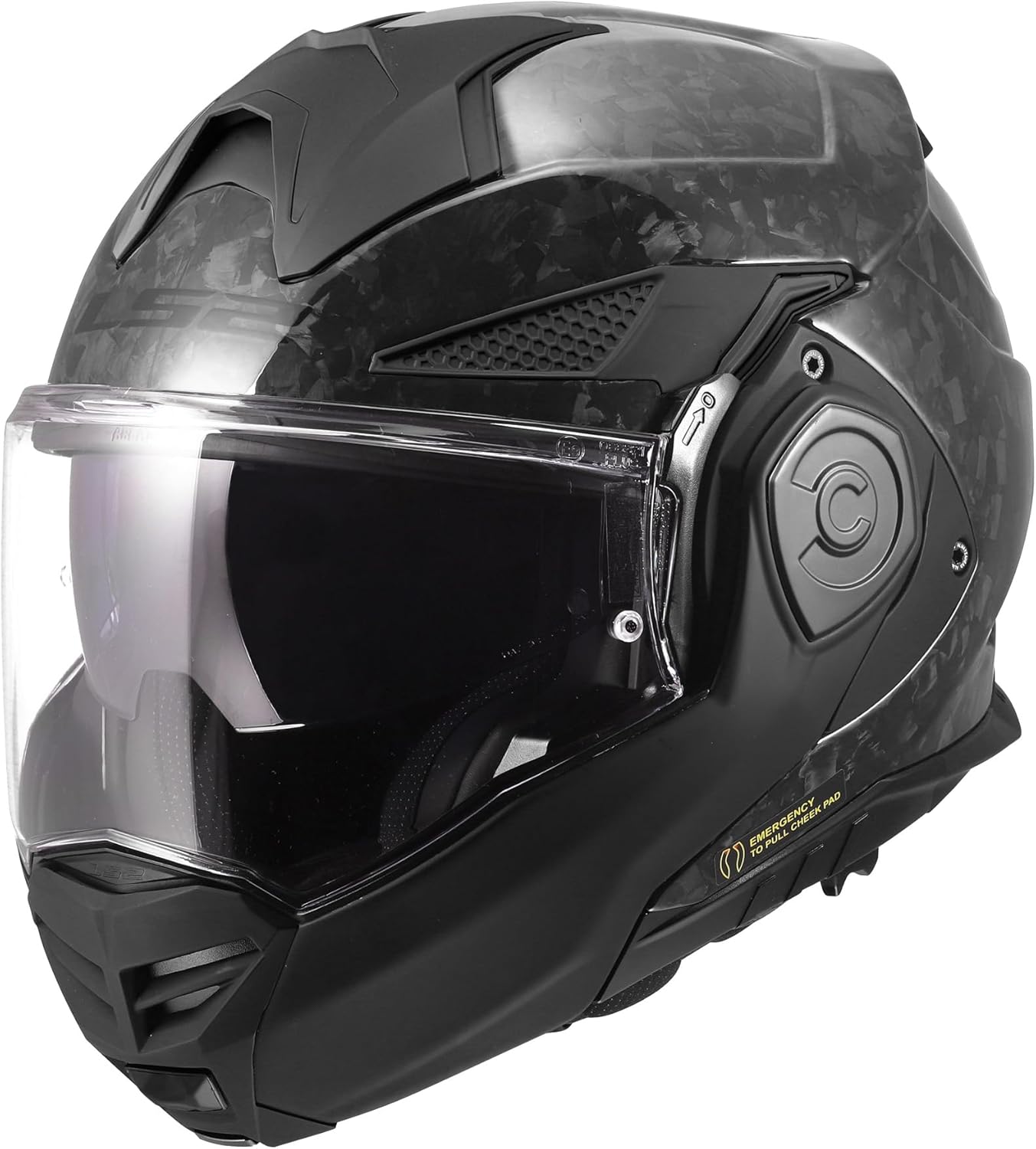
Only the Advant X can be considered a dual-helmet helmet in this context.Included features include a drop-down sun visor, an ECE P/J dual homologation system, a 9K carbon shell with a full carbon chin bar, a weight of 1,470 grams, and a 180-degree flip-back.The chin bar retracts to rest behind your head rather than your forehead, and it is certified to ride fully open or closed according to P/J homologation. By the way, it’s the lightest helmet on this site.
You should be aware that modular shells are noisier and carry more mechanisms than one-piece designs, that the hinges and seals need cleaning, and that carbon cannot be repaired after a drop.The ideal choice for touring riders who prefer to keep their face exposed when stopping is that option. Avoid if you’re looking for the most silent shell for track days.Flagship weight, two helmets, and one carbon shell.
Things to Consider Before Buying a Motorcycle Helmet:
Full-face helmets offer comprehensive protection, ideal for high-speed road riding. On the other hand, modular helmets combine the features of full-face and open-face designs, making them flexible for different conditions. Opting for a modular can be especially beneficial for long journeys that may require quick adjustments.
Open-Face and Dual-Sport Specialized Designs
Open-face helmets excel in providing visibility and airflow, making them suitable for relaxed cruising. Dual-sport helmets cater to adventurers, combining features that accommodate both on-road and off-road conditions. Each design serves distinct functional needs, enhancing rider experience.
Open-face helmets typically feature a wide field of vision and greater comfort, making them popular among urban riders. Models tailored for dual-sport activities often incorporate visors and better ventilation, addressing the requirements of diverse terrains. A well-chosen open-face or dual-sport helmet can significantly increase enjoyment during both leisurely rides and challenging journeys.
Understanding DOT, ECE, and SNELL Ratings
Familiarize yourself with the various helmet ratings. DOT is the minimum standard for street-legal helmets in the U.S., while ECE is recognized in Europe and is generally more stringent. SNELL ratings often denote helmets designed for competitive use, providing additional tests beyond DOT and ECE standards, which indicates higher performance levels.
Impact Absorption and Rotational Force Protection
Focus on materials and design that enhance impact absorption and reduce rotational forces during a crash. High-quality helmets usually integrate expanded polystyrene (EPS) foam, crucial for dissipating energy, while innovative helmet designs may include MIPS technology, aimed at minimizing rotational forces upon impact.
Impact absorption is crucial for reducing potential injury levels during an accident. High-density foam and multi-layered construction can dramatically enhance a helmet’s ability to absorb shock. New technologies, such as MIPS (Multi-directional Impact Protection System), add an extra layer of protection by allowing for slight helmet movement during an oblique impact, which can minimize brain injuries. Aim for a helmet that combines these features to maximize your safety on the road.
Conducting the Shake and Retention Tests
Test the helmet’s fit by shaking your head gently after fastening the chin strap. A well-fitted helmet should remain stable without noticeable movement. This confirms that the size is appropriate and secure.
Assessing the helmet’s retention involves shaking your head side to side and up and down. If the helmet shifts significantly, it may be too large. A snug fit should feel secure but not uncomfortable. Ensure the straps are properly adjusted for optimal safety. This simple test is important for effective impact protection while riding.
Lightweight Carbon Fiber and Composites
Carbon fiber helmets are known for their exceptional strength-to-weight ratio, making them an excellent choice for avid riders. These helmets typically feature layers of carbon fiber woven together, allowing for maximum safety without excessive bulk. Riders often appreciate the blend of performance and comfort, especially during long-distance journeys.
Budget-Friendly Polycarbonate Options
Polycarbonate helmets offer an attractive entry-level option for riders concerned about affordability. Despite being less robust than composite materials, these helmets provide decent protection at a lower price point, making them ideal for occasional use or new riders.
Manufactured from a type of plastic known for its impact resistance, polycarbonate helmets are lightweight and often designed with basic features for comfort. While these helmets may lack the high-end performance characteristics of more expensive models, they serve well for short trips and urban riding. Many entry-level riders find that polycarbonate offers a practical solution, balancing protection and cost-effectiveness effectively.
Ventilation Systems and Noise Reduction
Effective ventilation systems in helmets help regulate temperature by facilitating airflow. Helmets equipped with multiple vents allow heat and moisture to escape, keeping you cool during warm rides. Similarly, noise reduction features will keep irritating wind chatter to a minimum, allowing you to focus on the road.
Visor Quality and Anti-Fog Technologies
Choosing a helmet with a high-quality visor is important for clear visibility. Anti-fog technologies prevent condensation build-up, especially in variable weather conditions. A reliable visor enhances your overall riding safety by ensuring unobstructed views.
Most modern helmets incorporate advanced anti-fog technologies, such as dual-layer visors and built-in ventilation systems, to minimize fogging effectively. Some visors also include special coatings that repel water and prevent dirt accumulation, further enhancing clarity. Investing in a helmet with these features can significantly reduce the frequency of stopped rides due to visibility issues, allowing for longer, safer journeys.
Identifying Signs of Structural Fatigue
Spotting signs of structural fatigue ensures your helmet remains protective. Examine for cracks, dents, or unusual wear. If the helmet feels loose, even when secured, it may be time for a replacement.
Frequent inspection enhances safety measures. Look for fading graphics or discoloration, as these can indicate wear from UV exposure. If any padding becomes compressed and no longer holds its shape, a replacement is necessary to maintain proper fit and protection. Ensure the helmet passes the safety tests every time you assess its condition, emphasizing that a visual check can save lives.
Final Words
Choosing the right motorcycle helmet demands attention to various factors, including safety ratings, fit, and comfort. An informed decision not only enhances your riding experience but also significantly impacts your safety on the road. Prioritize features that align with your personal needs and preferences to ensure an optimal fit and protection.
Leave a Reply