
Are you tired of soaring cable bills? Finding the best indoor TV antennas lets you reclaim your freedom and save hundreds every year. You deserve a crisp HD signal and access to all your favorite local channels without those sneaky hidden fees. It feels truly wonderful to stop overpaying for television and start enjoying high-quality shows for free. We’ve tested the most reliable options to help you choose perfectly. Let’s explore your options.
Top 8 Indoor TV Antennas:
1: GE Ultra Edge Indoor HD Digital TV Antenna

The Ultra Edge is the pinnacle of antenna reception technology; it is non-amplified, ultra-thin, and reversible.The following are some of the most important specifications: a 6-foot coax wire, a 25-40 mile range, an ultra-thin reversible black/white design, and ATSC 3.0.Locking channels neatly with zero cords beyond the coax is possible in a strong-signal metro area.
Things they don’t tell you include: that there is a real ceiling of 25–40 miles and that topography cuts that even more; that the 6-foot cable is the shortest in this group; and that weak-signal houses won’t receive results because there is no amplifier.Optimal for: city dwellers within 35 miles of TV towers. Discontinued: cord-cutters in rural or suburban areas.A stripped-down introduction to strong-signal marketplaces.
2: GE Hover Amplified HD Digital TV Antenna

An ultra-compact bar that doesn’t require a wall attachment, the Hover rests atop your television.Features include an AC adaptor, a 5-foot coax cable, directional tuning via twist, PureAmp Technology with a 4G LTE filter, an amplified range of 50-60 miles, and ATSC 3.0.In crowded suburban regions, the 4G LTE filter can be a lifesaver because it blocks off cellular interference.
Downsides include an additional cord to manage (the AC adapter), a limited location (the 5-foot cable), and the potential for over-amplification in areas near broadcast towers.Who it’s best for: cord-cutters living 40-60 miles away from towers who wish to use the TV’s antenna. People who live within twenty miles of a television tower should not watch.Optimal budget-friendly amplifier solution.
3: Channel Master FLATenna Indoor Digital HDTV Antenna
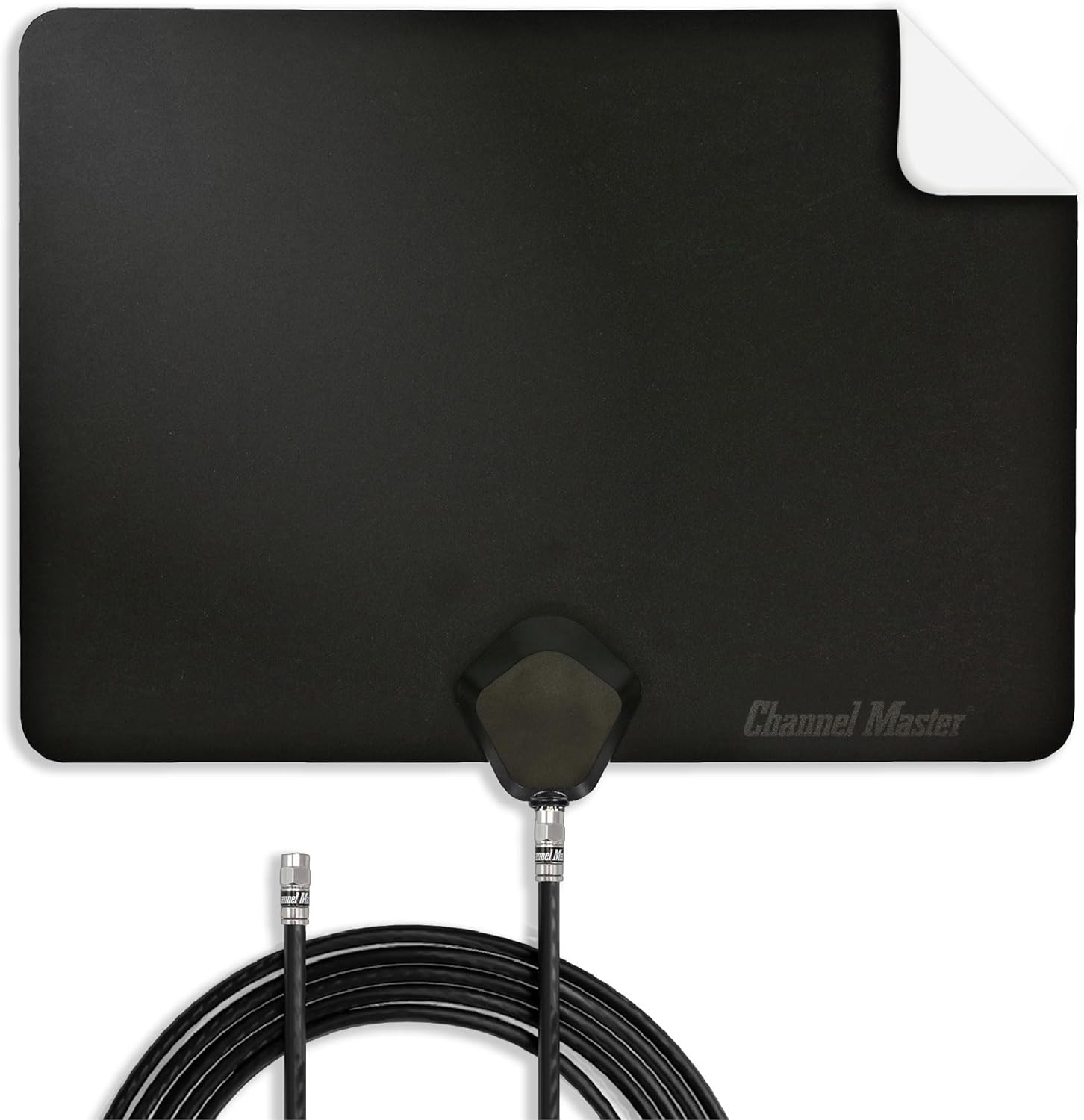
The FLATenna lives up to its name, which Channel Master earned through providing accurate specifications.Specifications: ultra-thin reversible design, 12ft coax cable, UHF/VHF, 4K compatibility, ATSC 3.0 NextGen TV, and 35 miles of unamplified range are key features.Channel Master’s specifications are realistic and not exaggerated; reception is clear and predictable within its range window.
Here’s the catch: it’s unamplified, so there’s no way to get past the 35-mile limit; there’s no way to upgrade in case your signal requires boosting down the road; and other than the 12-foot cable, it’s identical to other designs.Ideal for: those who want a well-known brand to support their antenna and are viewing from a close distance. The area beyond 35 miles of towers is off-limits.A trustworthy selection from a company that has been in the antenna business for many years.
4: Mohu Leaf Plus Paper-Thin Indoor TV Antenna

An important distinction is that the Leaf Plus locates the amplifier at the antenna head rather than inline.Important features include a reversible, paper-thin design, an amplifier at the antenna head rather than inline, a 12-foot detachable coax cable, compatibility with 4K and 8K, a 60-mile range, and ATSC 3.0.An obvious advantage over inline-amplified devices within the same range class is the elimination of cable-run signal deterioration, which is achieved by positioning the amplifier at the source.
The drawbacks include an inflexible detachable cable, an amp that cannot be turned off even when in close proximity to towers, and a 60-mile range that presumes a clear-path line of sight.For those living 40–60 miles away who are looking for the best flat-panel performance, this is the ideal option. No one who needs to turn off the amplification should use this.This flat antenna is best-engineered, and the reason for it is the placement of the amplifier.
5: Winegard FL5500A FlatWave Amped Indoor TV Antenna

A true amplifier in a flat-panel design—that is the Winegard FlatWave Amped.Among its most notable features are the following: a 6 foot reversible cable; dual-band UHF/High-VHF; USB power; 4K; ATSC 3.0; 60 miles of range; and American manufacturing.Thanks to Clear Circuit Technology, the amplifier won’t distort the signal it’s amplifying. Where signals are weakest is shown by that edge at range margins.
Important information: the shortest cable in this tier is 6 feet; a free port is required for USB power; and flat panel form factor lags behind loop-element designs at the same distance.Ideal for: those looking for a high-quality flat-panel amplifier in a suburban setting, 40-60 miles away. Discontinued for use in installations necessitating cables longer than 6 feet.Built in the USA—and that honor is due to the innovative amplifier technology.
6: Antennas Direct ClearStream MAX-V Indoor Outdoor TV Antenna

Disrupting the flat-panel norm, the ClearStream MAX-V features a double-loop element design that can be installed indoors, outdoors, or in an attic.Important features include a 17.4″H x 27″W x 3.5″D dimension, a range of 60+ miles, an ATSC 3.0 rating, a rating for use indoors, outdoors, and in attics, a wall bracket that is provided, and a design that uses two loop elements.Outperforming all of the flat panels in this array, the double-loop element captures signal more effectively. With the wall bracket, you may mount from a height without leaving your house.
The 17.4 x 27-inch dimensions necessitate specific wall space, and the lack of an integrated amplifier necessitates the purchase of an additional one. Additionally, stock is limited.Ideal for: cord-cutters who live 50 to 70 miles away from towers and are open to installing a larger antenna. Apt for those with more modest decor or who rent.Get a step above any flat panel with the added benefit of versatile mounting options.
7: ANTOP AT-800SBSJ HD Smart Booster Panel Antenna

The ANTOP HD Smart Booster is unique among its competitors since it can link two TVs at once without the need for an additional splitter.Important features include an 85-mile range, a multi-directional design, an adjustable gain dial, a built-in splitter, a 4G LTE filter, and a J Pole mount.Whether you’re up at the periphery or down near the towers, you can optimize for distance with the adjustable gain slider.Do not need any additional hardware—two TVs can be fed by the built-in splitter.
Truthfully, there isn’t a ton of real-world data due to the low review count, drilling is necessary for the J Pole installation, and there isn’t an official product video, so it’s impossible to evaluate before purchasing.This antenna is ideal for homes that desire to get signal from two TVs located 80 miles or more away. Buyers relying on a large review basis for confidence should not purchase this.Nothing else here can match the two-TV functionality.
8: Antennas Direct ClearStream 4V Indoor Outdoor TV Antenna

The most meticulously designed antenna in this series is the ClearStream 4V, which features four patent-pending loops enhanced by reflectors to provide true forward gain.Features: dimensions of 17.4″H x 27.8″W x 6″D; four patent-pending loops with reflectors; multi-directional UHF/VHF; included 20-inch mast; rated for use indoors, attics, and outdoors; ATSC 3.0; 4K/8K resolution; and a range of 70 miles or more.No flat panel can match the directional gain built with four loops and reflectors. When mounted in an attic, the supplied mast can receive signals that aren’t receiving well indoors due to a lack of clear sky exposure.
The bad news: the 17.4 x 27.8-inch frame is 6-inches deep, so it will need a specific wall or attic area to be installed. It also doesn’t come with an amp built in, so you’ll need to buy one if you plan on running long cables.Who this is ideal for: cord-cutters who live within 60 to 80 miles of towers and have suitable wall or attic space to dedicate. Apartment dwellers and renters should not use this.The range-engineered signal architecture that is the strongest in this class.
Things to Consider Before Buying a Indoor TV Antenna:
Buying an indoor TV antenna requires careful consideration of several factors to ensure optimal performance. Assess your location, the channels you desire, and the antenna type that best suits your needs. Understanding these elements will enhance your viewing experience and maximize signal quality.
Distance and Direction of Broadcast Towers
Understanding the proximity of broadcast towers to your location is key. Closer towers generally yield stronger signals. Aligning your antenna in the direction of these towers further improves reception, maximizing your channel options.
Physical Obstructions and Building Materials
Obstructions like walls, furniture, and trees can disrupt signals. Materials such as metal, concrete, or even thick glass amplify this effect, leading to weaker reception. It’s vital to identify these potential hindrances.
Evaluating physical obstructions and building materials in your environment will help you choose the right antenna placement. For instance, antennas placed near windows may perform better than those deep inside the home. Conducting a quick test by moving the antenna around can reveal the best spots for optimal signal capture.
Proper Connection and Initial Placement
Attach the antenna to your TV’s coaxial input firmly. Consider placing it near a window or a higher location to enhance signal reception. Adjust the placement as needed to find the optimal position for crystal-clear picture quality.
Executing the Digital Channel Scan Process
Access your TV’s menu to initiate the channel scan. This process allows your television to detect all available over-the-air channels within range.
Scanning for channels usually involves navigating to the settings menu of your TV. Select the option for channel setup or antenna setup, then choose ‘Scan’ or ‘Auto-Tune.’ This will take a few moments as your TV searches and saves the available channels, allowing you to enjoy your favorite shows without interruption.
Strategic Positioning for Line-of-Sight Reception
Positioning your antenna for optimal line-of-sight reception is imperative. Elevate the antenna as much as possible and keep it in an open area, away from electronic devices that could obstruct signals. Experiment with various locations to discover where you’ll receive the best channels.
Methods to Minimize Electronic Noise and Interference
Minimizing electronic noise and interference will enhance your antenna’s performance. Choose a location away from devices like microwaves, Wi-Fi routers, and cordless phones, which can disrupt signals. Use high-quality coaxial cables, and keep connections secure to further reduce issues.
Shielding your antenna from electronic noise involves several techniques. Position the antenna away from common household appliances that emit interference, such as refrigerators or laptops. Use ferrite beads on cables to suppress high-frequency noise, and invest in quality coaxial cables for minimal signal loss. Experimenting with different placements can make a significant difference in signal clarity.
Compatibility with ATSC 3.0 Standards
Choosing an antenna compatible with ATSC 3.0 ensures you can receive the latest broadcasts. This next-generation standard offers better picture quality and additional features, enhancing your viewing experience. Select an antenna designed to adapt to upgrades in broadcasting technology.
Understanding Gain and Noise Figure Ratings
Gain and noise figure ratings directly impact signal quality. High gain indicates better reception, while a low noise figure denotes clarity in the picture. Both specifications contribute to the overall performance of your antenna, making these factors crucial in your decision-making process.
Gain refers to the ability of the antenna to amplify received signals, measured in decibels (dB). Higher gain translates to improved performance, especially in areas with weak signals. Noise figure, on the other hand, measures the antenna’s contribution to signal degradation. A lower rating indicates minimal interference, resulting in clearer reception. Balancing both gain and noise figure will help you choose the best antenna for your needs.
Conclusion
To wrap up, consider your location, the channels you want, and the antenna type before purchasing an indoor TV antenna. Evaluate signal strength, design, and price to ensure it meets your needs. A well-chosen antenna can enhance your viewing experience and keep you connected to your favorite shows.
Leave a Reply