
Best Hearing Aids can restore clear sound and confidence-this audiologist-approved guide helps you overcome frustrating hearing loss fast. We test and compare top-rated models so you can pick a comfy, reliable solution with less guesswork. You’ll feel a life-changing burst of freedom and joy when conversations become clear again. Read on to see our picks and simple buying tips that save time and money.
Top 8 Hearing Aids:
1: Audien Atom One

The Audien Atom One is here to show that high-quality hearing aids don’t have to cost a small fortune.Crucial features: over-the-counter (OTC) product that has been registered with the FDA, rechargeable, with analog controls for volume and frequency, no app, and a practically undetectable fit.According to studies and reviews, those twist knobs make it one of the easiest running aides for those who don’t like cellphones.
What they don’t tell you is that it only works on mild to moderate loss, that the shell doesn’t fit every canal, and that the dials can’t be fine-tuned like an app.Ideal for: complete beginners on a shoestring budget who desire a barebones control scheme. Do not use if you require assistance with severe loss, Bluetooth, or app tuning.Step one towards effective hearing aids.
2: EarCentric EasyCharge

Most low-cost aids fail when their power goes out while you’re away from home, but the EarCentric EasyCharge fixes that.Notable features include a 20-hour battery life, a design that fits behind the ear, noise suppression, and a combination of domes and tubes for dual charging.Critics have praised the all-day battery and two-charger configuration for keeping it going when cheaper alternatives go out by dinnertime.
The downsides include a lack of a Bluetooth or app, the need to manually control the volume, and the fact that the behind-the-ear design is less covert than in-canal models.Who it’s best for: thrifty shoppers in search of a long-lasting battery, a spare charger, and a snug fit. Not for: those who insist on a covert appearance or control of the app.The budget tier’s wise money pick.
3: Audien Atom Pro 2

The Atom Pro 2 practically disappears as you enter the mid-range.The most important features include the charging dock and case, four hearing modes, background noise reduction, and the tiniest, practically undetectable shell from Audien.The mode switching and noise cancellation features are seen by buyers as a significant improvement over basic budget aids.
Reality check: these don’t have Bluetooth streaming, they’re small and may be difficult to handle for those with smaller fingers, and they have a sealed fit that may feel constricting at first.The ideal suit for those who value discretion while using actual listening modes. Not for: Streaming phone calls or music from a mobile device.Hard to hear, yet a genius amidst the din.
4: ELEHEAR Beyond

Integrating your smartphone with your hearing aid is possible with the ELEHEAR Beyond.Notable features include VocClear AI, a boost of up to 50 dB, a reduction of noise of 24 dB, a 100-hour battery life, auto on/off, and support for remote audiologists with Bluetooth 5.3 and a comprehensive app.One of the most popular features, according to evaluations and customer feedback, is the ability to adjust the sound from the comfort of your own home using the app and remote care.
However, in order to get the most out of it, you’ll need a smartphone, make sure the receiver domes fit properly, and be patient while the app learns your preferences.Apt for: elders who are mobile-savvy and interested in streaming content and making modifications from a distance. Avoid at all costs if you refuse to utilize a mobile app.Our app-driven hearing system sets the standard for value.
5: ELEHEAR Beyond Pro
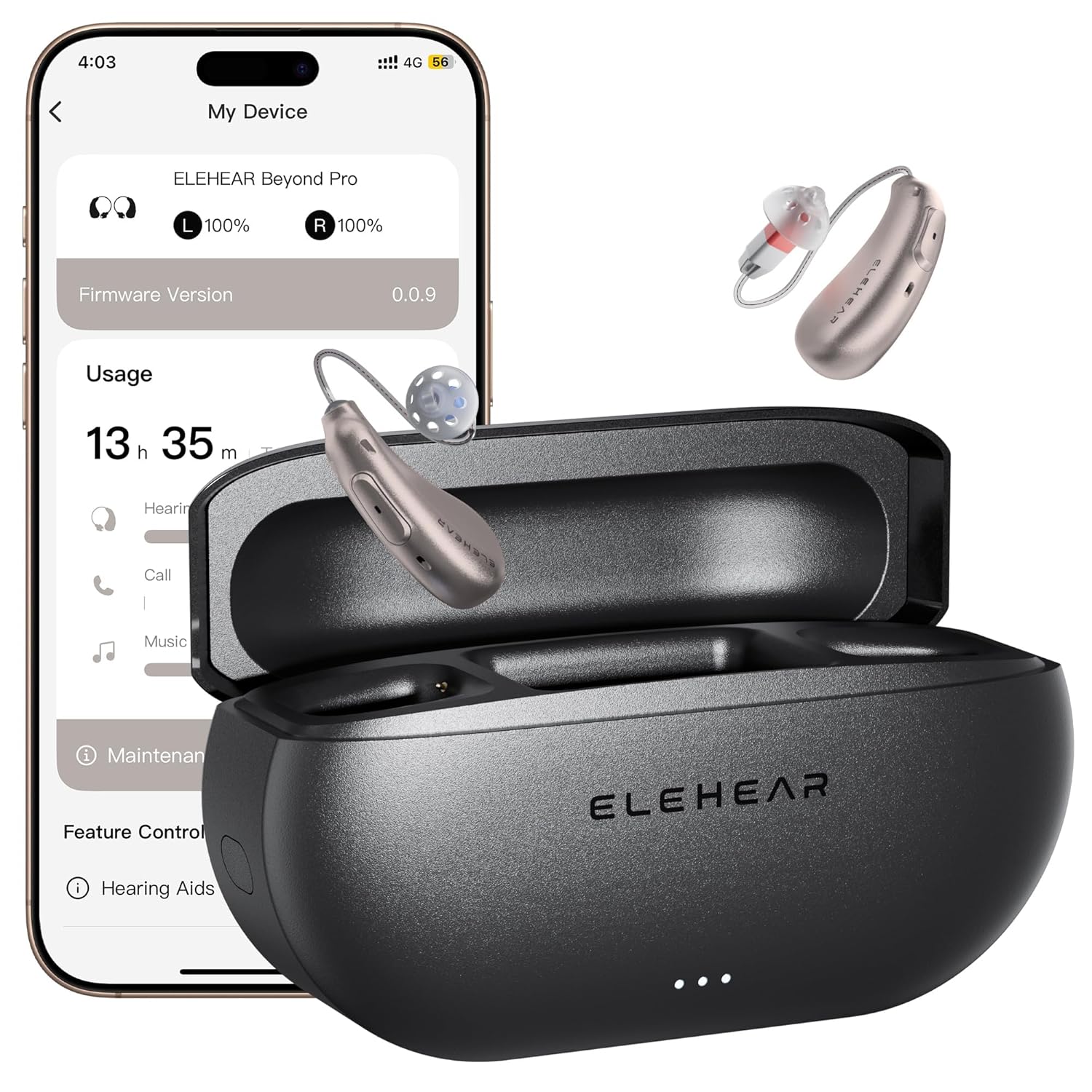
Here it is. This one I’ve chosen on my own.Features: VocClear 2.0 AI, 30% improved speech clarity, 50 dB, Bluetooth 5.3 with a revamped app, 100-hour battery life, quick charging in 15 minutes for six hours, music mode.Compared to the first Beyond, reviewers found that the second-generation speech engine did a better job of amplifying diners’ voices. If you ever forget to charge it overnight, the fifteen-minute rapid charge will come in handy.
Just so you know, it’s not cheap for an over-the-counter aid, the app is still your best bet for optimal results, and listening to a lot of music will quickly deplete the battery.When you want crystal-clear audio without making an appointment at the clinic, this is the way to go. Avoid if you’re on a strict budget or don’t have an app.Clear as a lens, no go to the doctor needed.
6: Audien ION Pro 2

When compared to other aids in its category, the ION Pro 2 is unique in that it cleans itself.Important features include app-integrated Bluetooth, built-in UV cleaning while charging, guided Sound Check, user-defined profiles, a streamlined interface with intuitive buttons, enhanced streaming capabilities, and a long battery life.The physical buttons are more comfortable to use than small toggles, and the UV-sanitizing case is a welcomed hygiene feature, according to buyers. If you prefer to use a button instead of opening an app, this is for you.
Because it is newer and has less experience, it is expensive for a basic assist, and its competitors offer faster charging.For customers who value cleanliness and who prefer products with real buttons and self-cleaning capabilities, this is the excellent choice. Attention all bargain hunters and history buffs: this one is not for you.Cleanliness with a twist, simple tune.
7: Sennheiser All-Day Clear

When you enter the world of high-end headphones, a familiar brand appears: Sennheiser.Features such as automatic scene adjustment, Bluetooth calls and music, app tuning, a 24-hour battery life, and self-fitting customizable sound are all important aspects of this product. It has also been authorized by the FDA.The self-fitting app adjusts the aids in a matter of minutes based on research and professional reviews, and automatic scenario modification takes care of the transition from a peaceful den to a bustling street.
The sound can be carried by a reputable audio brand thanks to the covert receiver-in-canal design.Downsides: it’s an expensive purchase, there’s no live clinic for setup or support, and the battery life is just average.Beneficial for: consumers seeking a reliable brand that offers rapid self-fitting. Who it isn’t for: minimalists on a tight budget or those seeking real-time expert assistance.A reliable name that sounds good to you.
8: Jabra Enhance Select 700

Among these hearing aids, this one is the most comprehensive.The most important features are licensed audiology support, Bluetooth LE Audio, the tiniest rechargeable receiver-in-ear shell ever made, SoundScape auto adjustment, the ability to make calls without using your hands with TapControl, and an almost imperceptible fit.Deep study and expert reviews have led to this: remote sessions with licensed pros who fine-tune your hearing over time—the closest thing an over-the-counter aid comes to a clinic.
Rather than a medical equipment, the small casing and tap-to-answer feature make them feel more like high-quality headphones.The reality is that it’s too much for moderate loss, it’s an ongoing care ecosystem, and it’s a significant investment.Ideal for: those looking for a home healthcare solution that rivals that of a clinic. Not recommended for: thrifty consumers or those seeking an easy plug-and-play experience.The premier mobile clinic.
Things to Consider Before Buying a Hearing Aid:
Many factors influence the decision to purchase a hearing aid, from personal lifestyle to budget. Understanding these elements can help ensure that you select a device that not only meets your auditory needs but also enhances your overall quality of life.
Behind-the-Ear and In-the-Canal Models
Behind-the-ear (BTE) models rest comfortably behind the ear, making them suitable for a wide range of hearing losses. In-the-canal (ITC) models are more discreet and fit directly inside the ear canal, appealing to those seeking a less noticeable option.
Digital Features and Connectivity Options
Digital hearing aids offer advanced sound processing capabilities. Features like Bluetooth connectivity allow direct streaming from smartphones, enhancing audio experiences.
Digital technologies make it easier than ever to customize sound settings according to specific environments, such as crowded spaces or quiet rooms. Moreover, some models provide mobile apps for intuitive adjustments. Such connectivity enhances flexibility, allowing users to manage their hearing experience directly from their devices, leading to improved satisfaction overall.
Assessing Degree of Hearing Loss
Understanding your specific hearing loss is paramount. Consult with an audiologist to get a professional evaluation that identifies the severity and type of loss, guiding your hearing aid choice.
Lifestyle Requirements and Environmental Needs
Defining your lifestyle and common environments is vital in selecting a hearing aid. Consider how often you engage in conversations, attend social gatherings, or spend time in noisy settings.
Assessing your lifestyle ensures the hearing aid complements your daily activities. For instance, those frequently socializing may require features for enhanced speech recognition, while individuals often in quiet settings might prioritize battery life. Furthermore, outdoor enthusiasts might need devices resistant to moisture and dust. Tailoring your hearing aid to your environment can significantly enhance usability and satisfaction.
Maintenance and Cleaning Best Practices
Taking the time to clean your hearing aids daily will keep them functioning at their best. Use a soft, dry cloth to remove earwax and moisture, and avoid using water or cleaning solutions that may damage the components.
Maximizing Battery Life and Performance
Proper habits can significantly extend battery life. Always turn off your hearing aids when not in use, remove batteries during prolonged storage, and keep them in a dry, cool environment.
Over time, battery performance can diminish due to factors such as humidity and temperature. Opt for high-quality batteries designed for your hearing aid model. When traveling, carry a spare set to prevent unexpected issues. Always check the battery compartment for corrosion and clean it regularly to ensure optimal contact.
Understanding Pricing Tiers and Value
Prices for hearing aids can vary significantly, often based on features and technology. Basic models may start at lower price points, while advanced devices with Bluetooth connectivity can be more expensive. Evaluating which features are necessary for your lifestyle can help in determining the best value.
Evaluating Trial Periods and Repair Policies
Trial periods allow you to experience hearing aids before committing to a purchase. Consider options that include a risk-free trial, ensuring you’ll have time to adjust and evaluate performance. Detailed repair policies further enhance peace of mind, as unexpected issues can arise.
Reviewing trial periods is necessary, as many manufacturers offer varying lengths, typically ranging from 30 to 90 days. During this time, adjustments can be made to optimize comfort and performance. Knowing the repair policy becomes critical, especially for more expensive models; many reputable brands include coverage for accidental damage or malfunction, ensuring you won’t face hefty repair costs unexpectedly.
Conclusion
Assessing your unique hearing needs, budget, and lifestyle will help ensure you choose the right hearing aid. Consider factors such as device features, comfort, and support services available. Consulting with a hearing professional can also provide valuable insights and personalized recommendations tailored to your situation.
Leave a Reply