
Choosing the best Dutch ovens can feel overwhelming when every pot promises perfect results. A poor choice may heat unevenly, feel too heavy, or leave you with stuck-on food. This guide cuts through the noise with trusted picks for braising, baking, and everyday cooking, plus clear tips to match a pot to your needs and budget. Get ready to cook richer, more comforting meals with confidence-let’s explore the top options.
Top 8 Dutch Ovens:
1: Umite Chef 5QT Enameled Cast Iron Dutch Oven

To start, there’s the Umite Chef, the self-basting lid, enameled cast-iron skillet that’s the easiest to use.Features: 5 quart capacity, enameled cast-iron exterior, induction ready, oven-safe up to 500°F, cotton potholders provided, and inner condensation nodes on the lid.Braises don’t dry out thanks to the lid seal and even browning, according to buyers.
What they don’t tell you is that the enamel can be cracked by heat, therefore you should wait 45 minutes before cleaning it. The manufacturer even says as much. To cook whole chickens, heat the oven to medium-low. You will only need 5 quarts of water.Ideal for: those who are new to sourdough baking and couples. Do not use if you have a large family or usually sear foods over high heat.A patient-rewarding opening pot.
2: Overmont Enameled Cast Iron Dutch Oven 7QT
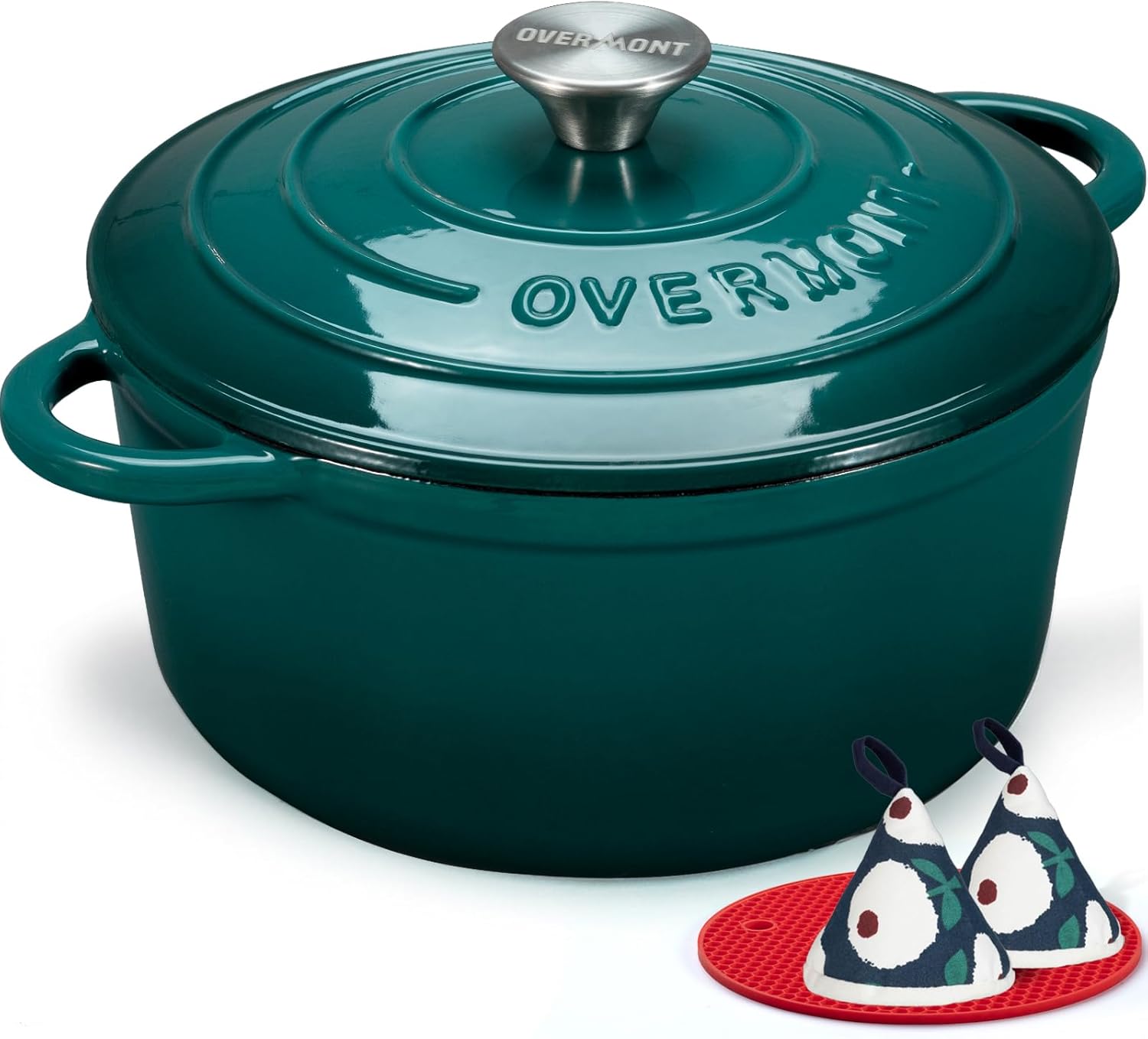
Budget no longer feels like a compromise at the Overmont, thanks to two more quarts and a refresh in 2026.Features: 7 quarts capacity, can withstand temperatures up to 500°F, comes with a cookbook, and has three layers of enamel. The lid self-bastes and has continual condensation bumps.Reviewed appliances have a deep base that maintains a constant simmer, and they are able to accommodate full chickens and pot roasts without crowding.
Buyer beware: the rim of the pot chips with heavy usage, and a full 7-quart pot is a real bear to carry out of the oven.Ideal for: group meals and large-scale cooking on weekends. Not for: those who have problems with their wrists or who have a small oven.There is no better Tier 1 buy than this one.
3: Lodge Essential Enamel Cast Iron Dutch Oven, 6 Quart

When you go to Tier 2, you’ll find a well-known brand that has been producing cast iron since 1896.Important features: moisture-sealing lid, oven-safe up to 500°F, 6 quart capacity, enamel that is PFAS-free.Customers are often raving about how well it cooks sourdough boules and extended braises evenly.
The catch is that high-heat searing eventually damages the light interior, the enamel line is manufactured overseas, and the stock lid lacks self-basting nodes.The brand that has stood the test of time is ideal for bread bakers and regular chefs. Do not use if you are a cook who insists on a perpetually clean kitchen.This is the lineup’s most secure choice.
4: Cuisinart Chef’s Classic Enameled Cast Iron Dutch Oven, 7-Quart

Calling for more space than what the Lodge can provide? A whole quart and a secret trick that the Lodge doesn’t promote are added by the Cuisinart.Notable features include a 7-quart capacity, enamel coating both the inside and exterior, compatibility with induction cooktops, and large cast-iron handles.In addition to finishing gooey casseroles under the broiler, reviewers have noted that it can manage large amounts of chili.
The disadvantages include a lack of variety in colors, a lid fit that is looser than legacy brands, and reports of interior chipping after years of intense heat.Ideal for those who enjoy casseroles and have large houses. Folks in the kitchen who are hoping for enamel worthy of an heirloom should look elsewhere.Among the first half of these, this pot is the largest.
5: Caraway Dutch Oven 6.5 qt

Look at this one; it’s unique. The Caraway is far from indestructible.Features: induction compatible, 6.5 quart capacity, ceramic non-stick coating, and absence of PTFE, PFOA, PFAS, lead, and cadmium. Oven-safe up to 550°F.Pasta and rice rinse off with minimal scrubbing and the product is noticeably lighter than the competition. One of the main selling points is the color scheme.
Important information: the manufacturer suggests using low to medium heat only, therefore avoiding intense searing is not an option.Coatings on aluminum tend to wear off after a few years, and the material itself can’t retain heat as well as cast iron.Ideal for: those who are unable to lift heavy objects. Serious braisers and bread bakers should not use this.Beautiful, airy, and not at all practical for use in a genuine Dutch oven.
6: Staub Round Cocotte 4Qt

Look at this. This is the first genuine French heirloom in the list, and it’s also my favorite.Features: 4 quarts capacity, French craftsmanship, induction and oven readiness, matte black enamel interior, self-basting lid spikes, nickel-plated knob.Not only does the rough matte inside resist acidic tomato and wine sauces, but it is also renowned for deeper browning than shiny enamel. Reviewers noted considerably juicier braises since the spiky lid re-rains moisture onto the meal.
The facts are that it has a 9.1-pound capacity for 4 quarts, a 7.6-inch base that restricts searing batches, and a dark inside that makes precise measurement more difficult.Who it’s best for: Long-term pot holders for couples or small families. For groups of five or more people, this is not the right choice.Crafted with care, this little pot will last a lifetime.
7: Made In Enameled Cast Iron Dutch Oven 5.5 Quart

Made In is bringing French craftsmanship to assert its claim to the heritage table.Features: induction compatible, 8.75-inch cooking surface, 5.5-quart capacity, enameled cast-iron construction, and a Cloud Cover top with steam dimples the size of peas.The dimpled lid’s ability to self-bast short ribs and stews, as well as the smooth, easy-release enamel, are features that buyers love. Its measurements work for both weekend soups and bread loaves.
Cons: the total width increases to 14.5 inches due to the handles, the cooking bottom is narrow and forces batch searing, and the track record is significantly shorter than that of Staub or Le Creuset.Those looking for a contemporary brand of French-made cast iron should look no further. Do not purchase if you place a premium on long-term reliability.A formidable adversary that is still building its reputation.
8: Le Creuset Signature Round Dutch Oven 7.25 qt

Every other pot on this site is compared to the Le Creuset.Important features include a 7.25-quart capacity, a light sand interior, a tight steam-circulating lid, a resistance to dulling, stains, chipping, and cracking in the enamel, a maximum temperature of 500°F, and the fact that it is dishwasher safe.Because of the bright interior, you can see the fond cooking down, ensuring that the onions and roux are never scorched. Fewer spills occur when the sidewalls are tall.
The 7.25-quart pot is too big for one or two people, the light enamel discolors after years of scorching, and it’s weighty. These are the areas where it falls short.Ideal for households with multiple cooks, those who host holidays, and those who want to invest in a single pot for many years of use. Not for: tiny homes or those looking for a lightweight pot.A standard. All other things are evaluated in relation to it.
Things to Consider Before Buying a Dutch Oven:
Choosing the right Dutch oven can transform your cooking experience, making it essential to understand what sets each model apart. Prioritize features like material, size, and design to match your culinary needs. A well-informed decision not only enhances your cooking but also ensures a purchase you’ll appreciate for years to come.
Enameled and Bare Cast Iron
Enameled cast iron offers a non-stick surface and vibrant colors, appealing to those who seek both functionality and aesthetics. In contrast, bare cast iron requires seasoning to create a protective layer, enhancing its non-stick properties over time. While both types distribute heat well, enameled versions tolerate acidic ingredients without reacting, making them favorable for dishes like tomato-based stews. Assessing your cooking habits and the types of cuisine you enjoy can provide clarity on which option suits you best.
Shapes, Sizes, and Lid Styles
Size and shape play a critical role in determining a Dutch oven’s versatility. Round models are the most common and typically work well for batch cooking and baking, while oval options are better suited for larger cuts of meat. Sizes can range from petite 2-quart pots for small households to expansive 8-quart versions ideal for entertaining. Lid types also vary, with some featuring heavy, tight-fitting lids that promote moisture retention, while others have a unique design that allows for customized ventilation. Choosing the correct dimensions ensures that your Dutch oven meets your culinary needs.
Choosing Capacity and Weight
When selecting a Dutch oven, consider both capacity and weight to ensure it meets your cooking needs. Sizes typically range from 2-quart to 8-quart, accommodating different recipes and serving sizes. A smaller oven might suffice for individual meals or side dishes, while larger versions are ideal for family gatherings and batch cooking. Weight plays a significant role as well; heavier models retain heat better but can be cumbersome for some users. Balance between your cooking style and your comfort level when lifting and handling.
Checking Heat Compatibility and Price
Heat compatibility is essential; check if the Dutch oven can be used on various heat sources, including gas, electric, induction, and even in the oven. Many models offer versatility, allowing you to create a wide range of dishes without limitations. Pricing varies significantly, often reflecting brand reputation and material quality. While cheaper options exist, investing in a well-crafted model can enhance durability and performance over time, providing a better cooking experience in the long run.
Match the Oven to Your Cooking Needs
Identifying the correct size and style of Dutch oven can significantly impact your culinary experience. For daily meals, a 5 to 7-quart capacity typically suits most families, while smaller options work well for couples or individuals. Consider what types of dishes you plan to prepare. If bread-making or braising is on your agenda, a heavier option with a tight-fitting lid may be more effective. Prioritizing your cooking habits ensures you choose an oven that truly meets your requirements.
Check Construction, Handles, and Warranty
Inspecting the construction quality is essential for ensuring longevity and performance. Choose an oven made from enameled cast iron, which offers excellent heat retention and durability. Pay particular attention to the handles; larger, ergonomic ones allow for easier lifting, especially when heavy. Evaluate the warranty offered by manufacturers, as many provide a lifetime guarantee. A well-constructed Dutch oven combined with reliable support can make a significant difference in your satisfaction over time.
Advantages for Everyday Cooking
One substantial benefit of a Dutch oven is its adaptability in the kitchen. From slow-cooked stews to artisan bread, the possibilities are nearly endless. You can easily transition from stovetop to oven without changing cookware. Many find that preparing meals in them not only saves time but also enhances flavor, creating deeper, more robust dishes. Chefs appreciate how well they distribute heat, ensuring even cooking for meats and vegetables alike.
Common Drawbacks to Consider
Weight is often a primary concern for those considering a Dutch oven. Lifting a heavy pot can be challenging, particularly when full, posing issues for individuals with limited strength. Upkeep is another aspect to weigh; while enameled versions require less maintenance, traditional cast iron needs careful seasoning and cleaning. Such considerations may influence your decision, especially if ease-of-use is a high priority in your cooking routine.
Key Checks
Assessing the essential features before finalizing your purchase can prevent buyer’s remorse. Focus on the oven’s size and weight, ensuring it fits comfortably in your kitchen and aligns with your cooking needs. Compatibility with your cooktop-whether gas, electric, or induction-also matters, as not all Dutch ovens work on every surface. Examine warranty options; a longer warranty often indicates manufacturer confidence in the product’s quality.
Summing up
Evaluating essential factors prior to purchasing a Dutch oven can significantly enhance your cooking experience. Consider material and size based on your culinary needs and available storage space. The versatility of a Dutch oven is one of its most appealing qualities, capable of handling a variety of cooking methods. Budget also plays a role, with various price points offering different levels of quality and durability. Investing time in research leads to a choice that complements your cooking style and lifestyle.
Leave a Reply