
Finding the best drones can feel overwhelming when every model promises stunning footage and easy controls. Our expert picks cut through the noise to help you choose a drone that fits your budget, skill level, and goals. Whether you want smooth aerial photography or a simple first flight, you’ll find options that make every takeoff feel exciting-not risky. Let’s explore the top choices and what makes each one worth considering.
Top 8 Drones:
1: DJI Neo 2 (Drone Only)
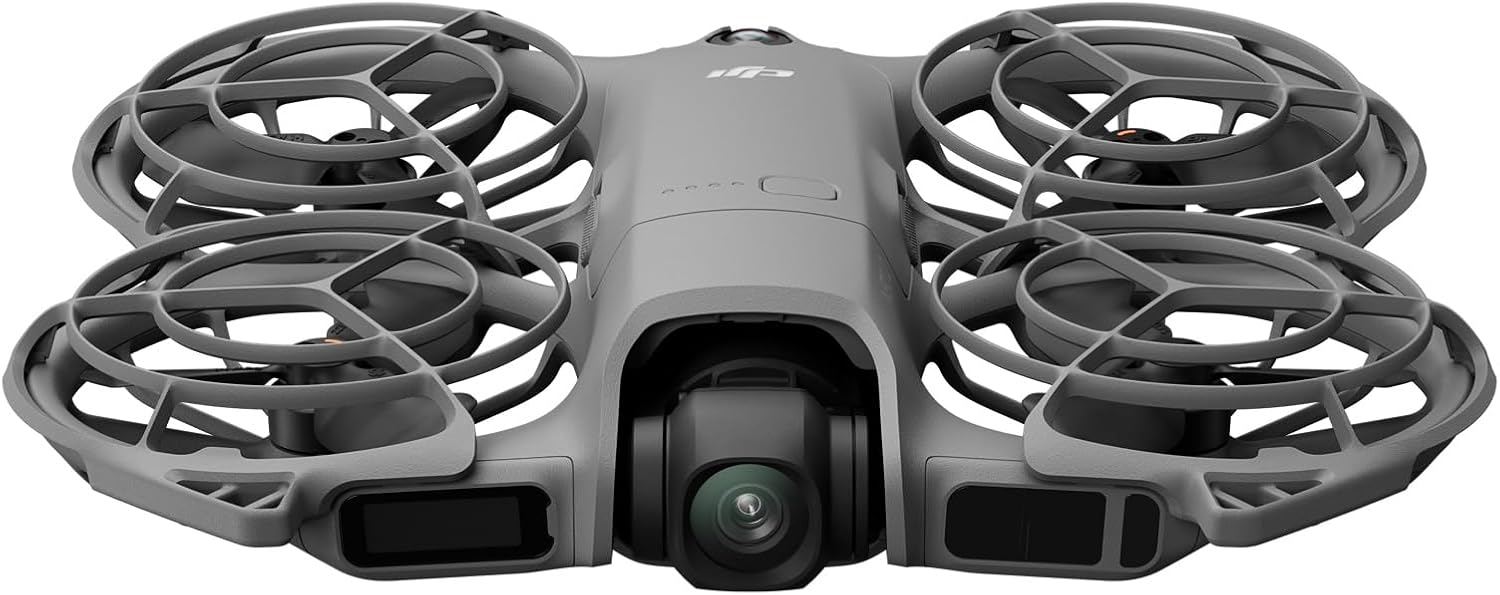
A palm-launched drone that records footage autonomously—the Neo 2—is up first.Notable features include a light weight of 151g, the ability to take off and land with the palm of your hand, the ability to manage the device with gestures, anti-obstacle detection technology that works in all directions, a video resolution of 4K, and full guards for the propellers.Compared to the original Neo, this one has much improved obstacle sensing and locks onto riders and hikers with much more reliability, according to reviewers.
What they don’t tell you is that there’s only one battery, so sessions are brief, that you can’t use your phone to manage it, and that it struggles in strong gusts because there is no remote.Who it’s ideal for: vloggers who wish to film without using their hands, solo riders, and hikers. Avoid on windy coastlines or long-distance scenic flights.At last, an aerial selfie camera that can avoid obstructions.
2: DJI Mini 4K

Are you looking for a genuine drone camera rather than a flying selfie stick? It all begins here.Features: lightweight (less than 249g), 4K ultrahigh definition, a three-axis mechanical gimbal, 31 minutes of flying time, a 10-kilometer transmission, and GPS Return to Home.The gimbal footage is dependably smooth and the hovering is rock solid, even in windy situations, according to buyers.
On the downside, editors don’t have much leeway to grade because the footage can only reach 4K/30 with a single color profile and there is zero obstacle detecting or subject tracking.Those looking for realistic airborne scenery as a first-time pilot would love this. Avoid if you want to avoid flying too close to trees or if you want follow-me pictures.Authentic drone photography’s genuine admission ticket.
3: Potensic Atom 2 Fly More Combo (RC PTD 1)
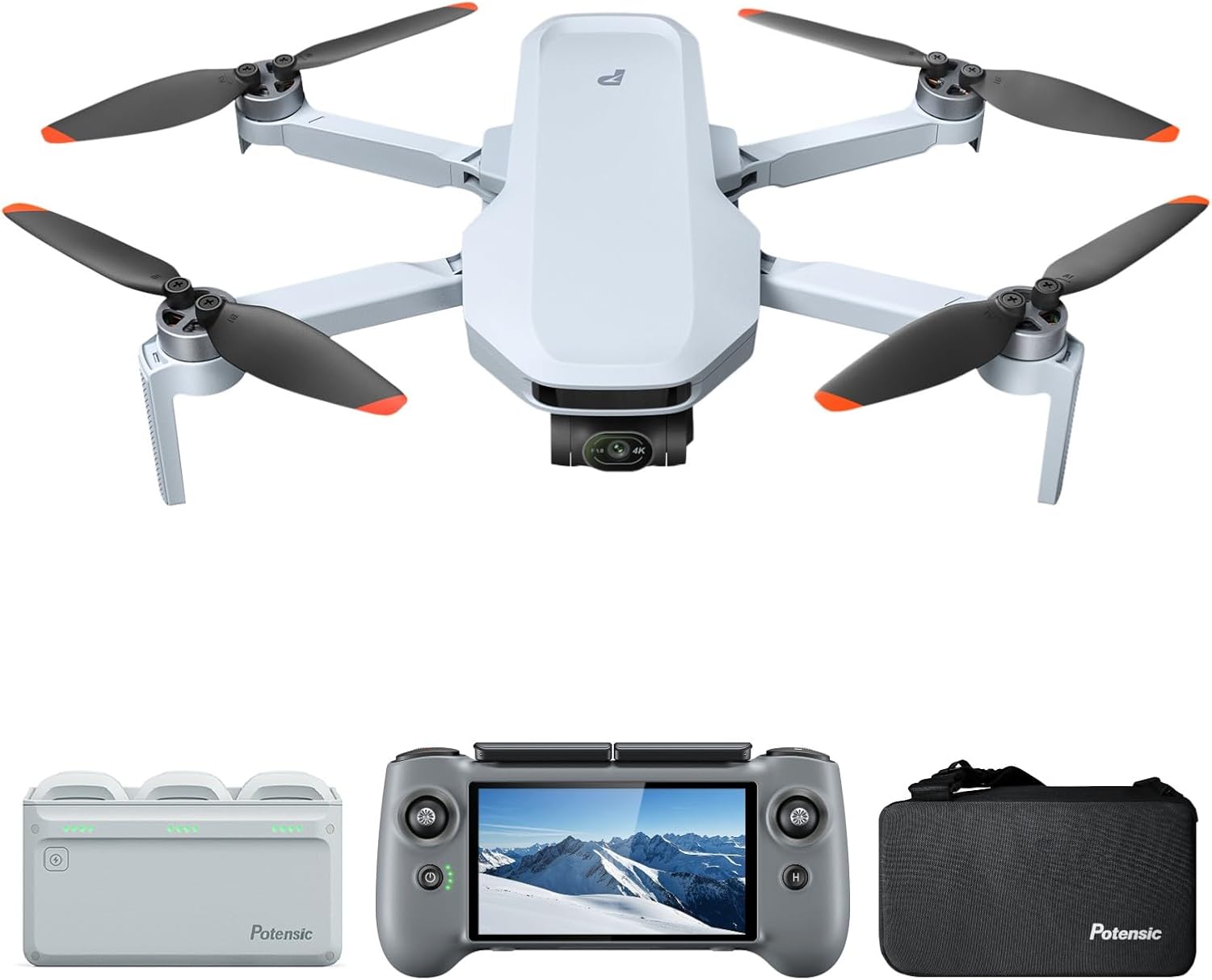
This is the one non-DJI drone that managed to secure a spot, and it packs some significant endurance.Notable features include a 1/2-inch Sony sensor, 48 megapixel images, 4K/30 HDR, a 3-axis gimbal, a range of 10 km, a screen remote control, 96 minutes of runtime on three batteries, and AI tracking.Critics have lauded the camera’s crisp stills and the battery pack that allows you to fly for a whole golden hour.
Truthfully, it lacks obstacle avoidance, requires a microSD card for storage, and has lighter-grade plastics that don’t seem as high-end as DJI produces.For those who like to work outside of the DJI environment and have extensive exposure time, this is the best option. Avoid flying near populated areas, trees, or buildings.Amazing endurance, but it takes flight unprotected.
4: DJI Flip Fly More Combo (RC 2)

As soon as you get up to the Flip, flying will feel completely at ease.Among its notable features are its light weight (less than 249g), high dynamic range (4K/60 HDR), number of megapixels (48MP), subject tracking, two-screen remote control (RC), and three batteries.With 10-bit color for those interested in grading footage, experts rank its image quality among the finest for a beginning drone.
The caveat is that it doesn’t support rotation for real vertical video like the Mini series, has just 1.9 GB of internal storage, and doesn’t have Remote ID, which means that commercial work is out of the question.Flying around people and first-timers who are anxious about flying are the best candidates. Not for: authors with paid contracts that require Remote ID compliance.A certain way to get cinematic quality video.
5: DJI Avata 2 Fly Smart Combo (3 Batteries)

Now let’s go on to something entirely new. Flying the Avata 2 is like being a pilot.Notable features include three batteries, a 155-degree field of vision, a 4K/60 resolution, an RC Motion 3 controller, DJI Goggles N3, and a 1/1.3-inch sensor.With the one-tap flip, roll, and 180-degree drift capabilities, even beginners can accomplish acrobatics without months of practice. Just point your palm and the drone will follow. Critics have praised the ducted frame for its exceptional crash resistance.
The bad news is that you have to register it with the FAA, an eyewitness wearing goggles is required under US law, and the flights are substantially shorter than those of foldable camera drones.Who it’s best for: extreme runners and point-of-view filmmakers capturing quick, low-altitude action. Those who are easily frightened or who fly alone without a spotter should not attempt this.Endurance packed inside a shell that can withstand crashes.
6: DJI Mini 5 Pro Fly More Combo (RC 2)

Look at this. This is my preferred choice based on the available evidence.Important features include a 1-inch CMOS sensor, 4K/60 HDR video recording, a 225-degree gimbal for precise control, ActiveTrack 360° for enhanced tracking, 42GB of storage space, a 36-minute flying time, RC 2, and ND filters.A far larger drone was originally needed to capture low-light footage, but now a palm-sized body with a 1-inch sensor can do the trick. With LiDAR sensing, flying at nite is much safer.
Important details: the weight is just over 249 grams (on paper), so be sure to verify the registration restrictions; strong winds can knock the light frame around; and unfortunately, there is no telephoto lens.The ideal users for this small drone are artists and tourists who value top-notch image quality. This is not for pilots who frequently fly in strong winds.This drone is the best all-arounder of the bunch.
7: DJI Air 3S Fly More Combo (RC 2)

When compared to the Mini 5 Pro, the Air 3S offers a second lens, while the former does not.Some important specs are a 1-inch wide-angle camera and a 70-mm telephoto lens; 4K/60 HDR; 14 stops of dynamic range; LiDAR omnidirectional sensing; 45 minutes of flying time; 20 kilometers of transmission; three batteries; and RC 2.Both cameras capture 10-bit D-Log M, and the telephoto lens compresses mountain and metropolitan skylines to an extent that wide-only drones just cannot. Winds that would otherwise ground a Mini are no match for its heftier structure.
Cons: it’s bigger than all of the drones listed that weigh less than 249 grams, you have to buy the battery charger separately, and you have to register it with the FAA.Perfect for: filmmakers capturing landscapes or traveling with a desire for two focal lengths. Avoid if you’re a casual flier seeking a hassle-free registration process.The ideal location for all drone sales.
8: DJI Mavic 4 Pro Fly More Combo (RC 2)

Although it is the most powerful drone in the series, the Mavic 4 Pro is unnecessary for the majority of users.Crucial details: 100MB A Hasselblad 4/3 main camera, dual telephoto cameras, a 360° Infinity Gimbal, nite obstacle sensing with a 0.1-lux sensitivity, a transmission range of 30km, three batteries, and a 51-minute flight time are all part of this drone.This drone is the only one of its kind that can take rotating images thanks to its spinning gimbal, and its three cameras let you get wide, medium, and long shots all in one flight. The 4/3 sensor captures the clearest low-light footage available.
Here are some of its drawbacks: it’s cumbersome and heavy to transport, editing 6K files requires powerful gear, and, similar to the Air 3S, it requires FAA registration.Those looking for the highest possible image quality should choose this product. People who value portability or who fly infrequently should not use this.The flagship ceiling is stunning, but it’s designed for professionals.
Things to Consider Before Buying a Drone:
Exploring the world of drones can be fascinating, yet choosing the right one involves careful thought. With numerous models available, each boasting unique features, aligning your requirements with what the market offers is essential. Understanding the nuances can prevent costly mistakes and ensure that you invest wisely in this technology.
Camera Drones
Camera drones are specifically designed for aerial photography and videography, enabling users to capture stunning visual content from unique angles. These drones often feature high-resolution cameras with gimbals for stabilization, making them ideal for cinematic shots or real estate photography. Popular examples include the DJI Phantom and Mavic series, each equipped with intelligent flight modes. With their enhanced payload capacities, they allow for versatility in professional applications, which is a significant advantage over lower-end models.
Choose Your Primary Use
Your primary use for the drone will significantly determine the model best suited to your needs. For instance, enthusiasts focused on aerial photography should prioritize drones with high-resolution cameras and stable flight capabilities, while those interested in racing require lightweight, agile designs. Surveying professionals often seek drones with enhanced GPS and mapping functions. Clearly defining your main use case will streamline the selection process and ensure that you get a drone tailored to your specific needs.
Set a Realistic Budget
Establishing a realistic budget is central to narrowing down your options effectively. Drones can range from under a hundred dollars for basic models to several thousand for professional-grade equipment. Consider not only the initial purchase but also potential accessories like extra batteries, carry cases, or software. An overarching budget should account for both immediate needs and possible future upgrades. For example, mid-range drones often offer a balance of features and price, suitable for many hobbyists.
Battery life, range, and control
Battery life significantly influences flight experience, with many drones providing anywhere from 20 to 30 minutes of flying. The range also affects your usage, as some models allow for distances of several kilometers, while others serve best in smaller areas. Control mechanisms vary; beginner-friendly designs may include simplified remote controls, whereas professional models often require more intricate handling. Understanding these aspects will help you select a drone that matches your flying style.
Camera, stability, and portability
Camera quality can vary widely, impacting your decision based on your needs. Basic models may only offer low-resolution video, while higher-end ones can capture 4K footage or even 360-degree views. Stability features play a role in image quality; drones equipped with gimbals will provide smoother footage, essential for videography. Portability is also crucial, as some drones fold up compactly for easy transport, ideal for on-the-go photographers or adventurers.
Feature trade-offs
While more features might seem appealing, trade-offs often arise. Investing in drones with advanced cameras usually results in reduced battery life or increased weight, which can affect portability. High-performance models promise excellent stability but may come with a higher price tag and necessitate more complex electronics. Assessing these trade-offs can help you prioritize what matters most in your aerial experience.
Shortlist drones for your needs
Creating a shortlist of drones tailored to your needs simplifies the decision-making process. Assess factors like intended use, flight time capabilities, and camera quality. For example, if you’re a hobbyist mainly interested in photography, focus on models with high-resolution cameras and stable flight characteristics. Conversely, if you’re looking for racing drones, speed and maneuverability should be your priority. Having a targeted list helps in efficiently comparing models later on.
Check specifications, reviews, warranty, and accessories
Specifications provide critical insights into a drone’s performance capabilities. Look for detailed reviews online that highlight pros and cons from actual users. Pay attention to the warranty offered, as it varies by manufacturer and can indicate the reliability of the product. Additionally, consider what accessories are included, such as extra batteries or carrying cases, as these can significantly enhance your overall flying experience.
Compare total ownership costs
Calculating total ownership costs guarantees that you understand the financial commitment involved. Factor in initial purchase price alongside potential expenses like replacement parts, extra batteries, insurance, and maintenance. Some models may seem budget-friendly upfront but can incur high costs over time due to frequent repairs or upgrades. By evaluating these aspects, you gain a clearer view of your long-term investment.
Check regulations and registration
Researching and understanding local regulations should be among your first tasks when considering a drone purchase. In many countries, drones exceeding a certain weight require registration with aviation authorities. Familiarize yourself with any specific local ordinances governing drone use, particularly in community-heavy areas where recreational flying may be restricted. Complying with these regulations not only ensures responsible flying but also enhances your overall experience while operating your drone.
Plan for training, repairs, and replacement parts
Investing in training to enhance your piloting skills can significantly elevate your flying experience. Numerous online courses and local workshops offer valuable insights into safe drone operation. Beyond initial training, budgeting for repairs and replacement parts is essential due to the potential for crashes or component wear over time. Anticipating these costs will help you avoid unexpected expenses, ensuring that your drone remains in optimal flying condition while you enjoy your aerial adventures.
Summing up
Considerations before purchasing a drone encompass various factors such as your intended use, budget constraints, and regulatory requirements. Understanding features like camera quality, battery life, and flight range directly impacts your experience and satisfaction. Comparing different models and reading user reviews can clarify performance expectations. Thorough research and planning ensure that your investment aligns with your needs, leading to better enjoyment and utility. A well-informed choice will enhance your overall flying experience, making it both enjoyable and purposeful.
Leave a Reply