
Finding the best budget TVs shouldn’t feel like a compromise that leaves you with a blurry, laggy picture. You deserve stunning 4K resolution and smooth smart features without draining your entire savings account. It’s truly frustrating to settle for less when you crave a cinematic experience at home. Luckily, we’ve tested several top models to find your perfect match. Let’s dive into the top picks that offer incredible value for your living room.
Contents
- Top 8 Budget TVs:
- 1: Hisense 55″ E6 Cinema (55E6QF)
- 2: Samsung 55″ QLED Q7F (55Q7F)
- 3: Roku Plus Series 55″ Mini-LED
- 4: TCL QM6K 55″ QD-Mini LED (55QM6K)
- 5: Hisense 65″ U6 Series Mini-LED (65U65QF)
- 6: TCL QM7K 55″ QD-Mini LED (55QM7K)
- 7: Hisense U7 55″ Mini-LED PRO (55U75QG)
- 8: LG B5 OLED 55″ (OLED55B5PUA)
- Things to Consider Before Buying a Budget TV:
- Standard LED vs. Budget QLED Options
- Understanding Backlighting and Dimming Zones
- Resolution Standards and HDR Compatibility
- Refresh Rates and Input Lag for Gaming
- Cost Efficiency and Modern Feature Accessibility
- Compromises in Peak Brightness and Build Quality
- Measuring Viewing Distance and Space Requirements
- Setting a Realistic Price Ceiling for Your Needs
- Essential Port Configurations for External Devices
- Evaluating Built-in Operating Systems and App Support
- Identifying Seasonal Discount Cycles and Sales
- Decoding Manufacturer Specifications vs. Real-World Use
- Summing up
Top 8 Budget TVs:
1: Hisense 55″ E6 Cinema (55E6QF)

First up, we have the Hisense E6, a budget-friendly Hi-QLED Fire TV that offers authentic streaming quality.Important features include a 60Hz native QLED screen, Dolby Vision and HDR10+, an Amazon Fire TV with Alexa, Dolby Atmos, and an AI Light Sensor.The AI Light Sensor intelligently changes the brightness throughout the day, Fire TV is fast, and colors are brilliant because of the quantum dot layer.
Things they don’t tell you: 60Hz is a hard ceiling, Motion Rate 120 is software interpolation and not native, brightness around 350 nits looks washed out in bright settings, and blooming in dark scenes is caused by a lack of local dimming.Optimal for: secluded viewing areas and light-hearted viewers in bedrooms. Caveat emptor: 120 Hz gamers, very light environments, and HDR aficionados.Find out what it is; it’s a good streaming TV service.
2: Samsung 55″ QLED Q7F (55Q7F)

You can get Samsung’s name, Vision AI, and 2,700+ free channels for an additional .Important features include a 60Hz native QLED VA screen with rudimentary local dimming, 400-450 nits, HDR10+, and Tizen OS with Vision AI.The Tizen operating system is responsive, bright content has vibrant colors, and Samsung TV Plus provides access to thousands of free live channels without a subscription.
But there’s a catch: without Dolby Vision, Apple TV+ and Disney+ won’t be able to access dynamic metadata, and without HDMI 2.1, the maximum refresh rate for PS5 and Xbox is 60Hz.This is the best option for Samsung customers looking for smart features and free live content. Avoid if you’re a gamer or a subscription to Dolby Vision.Enhanced intelligent functions. The ceiling is also 60Hz.
3: Roku Plus Series 55″ Mini-LED
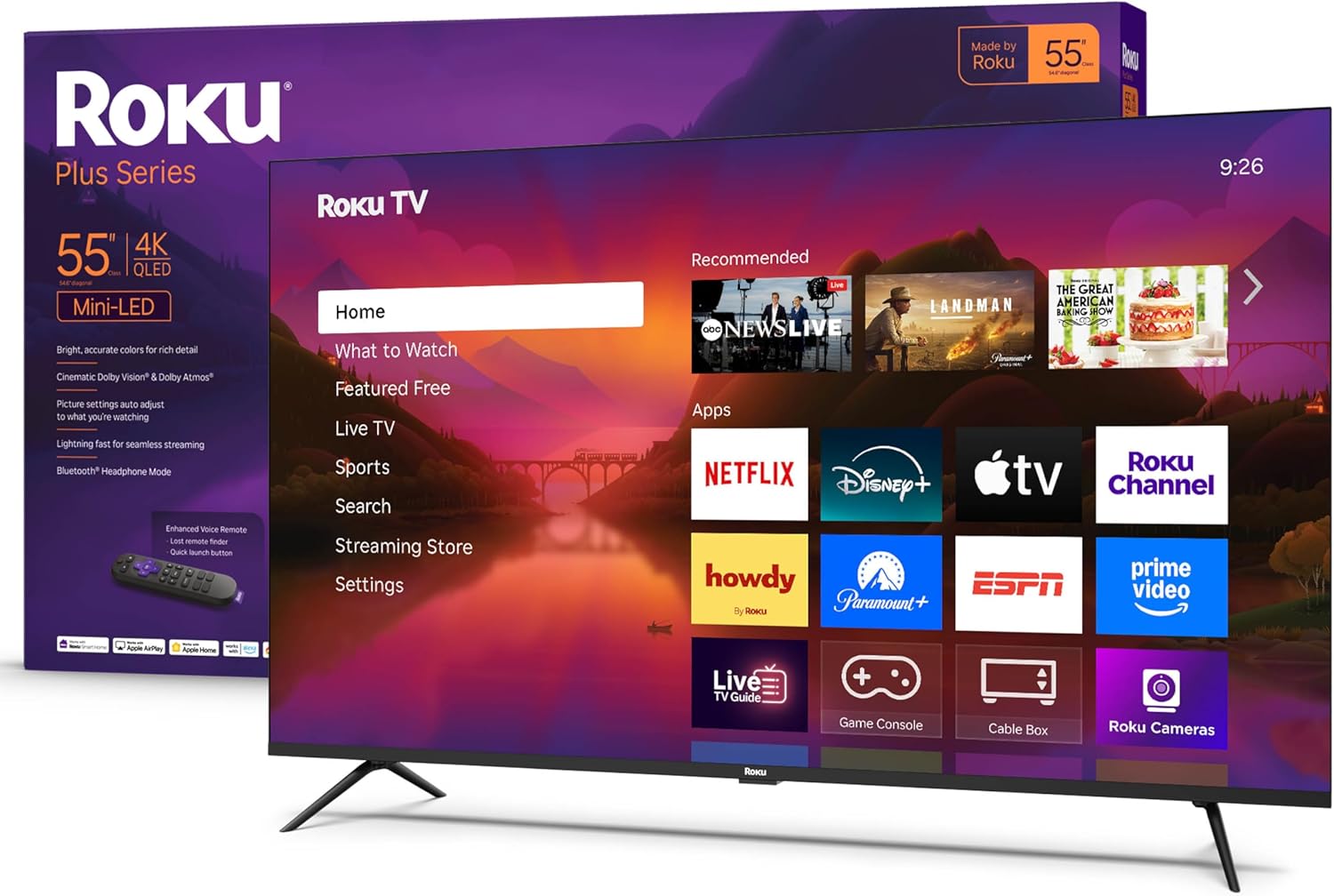
With an additional, you may acquire mini-LED backlighting, an upgrade that neither of the entry-level options offers.Remarkable features include a mini-LED QLED screen, local dimming, Dolby Vision and HDR10+, Roku TV OS, more than 500 free channels, and a voice remote that works with Google Assistant, Alexa, and Siri.Mini-LED significantly enhances contrast, resulting in deeper blacks and better control over highlights.Without any unnecessary distractions and with quick access to all of the main assistants, Roku has the cleanest UI.
Realities include: unconfirmed frame rate (probably 60Hz), lack of HDMI 2.1 or VRR, and a tiny review base compared to competitors.Who it’s best for: Streamers looking for a minimalist UI with high contrast. Avoid if you’re a gamer who requires 120 Hz or who uses HDMI 2.1.We don’t often see mini-LEDs priced this low. It is worth considering just for the Roku OS.
4: TCL QM6K 55″ QD-Mini LED (55QM6K)

At least when it comes to affordable televisions, the TCL QM6K marks the point of no return in terms of value.Features: 2x HDMI 2.1, 144 Hz native, 668 nits measured, QD-Mini LED complete array, Virtual Reality Ready, Google TV, Dolby Atmos with Onkyo audio, and AMD FreeSync Premium Pro.With its controlled blacks, dazzling highlights, and silky smooth gameplay at 144Hz, HDR really pops. For the money, the finest sound is onkyo audio with an integrated subwoofer.
A dose of reality: panel lottery does exist; if you buy from Amazon, you can return it with ease; flowers will sprout around subtitles in dimly light rooms; the default settings are too saturated; to fix this, go to Filmmaker mode.Optimal for: Mini-LED purchasers, HDR streaming, and PS5 and Xbox gamers. Not for: customers who aren’t going to adjust the default settings.Under , mini-LED, 144 Hz, two HDMI 2.1 connections. The rest of this tier is completely lacking.
5: Hisense 65″ U6 Series Mini-LED (65U65QF)

With 65 inches of Mini-LED at a price point where the majority of TVs are still 55 inches, here is where the picture quality tier begins.A few important specs: 144 Hz native, 600 LDWs, 1,000 nits peak, Dolby Vision IQ, HDMI 2.1, and AMD FreeSync Premium.Nothing in this price range offers better black control than 600 dimming zones. The lighting in a room can be instantly adjusted via Dolby Vision IQ.
The downsides are as follows: color accuracy goes off-axis, real-world brightness falls short of specs, and for some users, Fire TV lags behind Google TV.For large living rooms who want Mini-LED quality without paying a premium, this is the best option. Not for: those who value portability more than gaming specs or 55-inch displays.Features 65 inches, 600 zones for dimming, and Dolby Vision IQ. The name of this level is correct.
6: TCL QM7K 55″ QD-Mini LED (55QM7K)
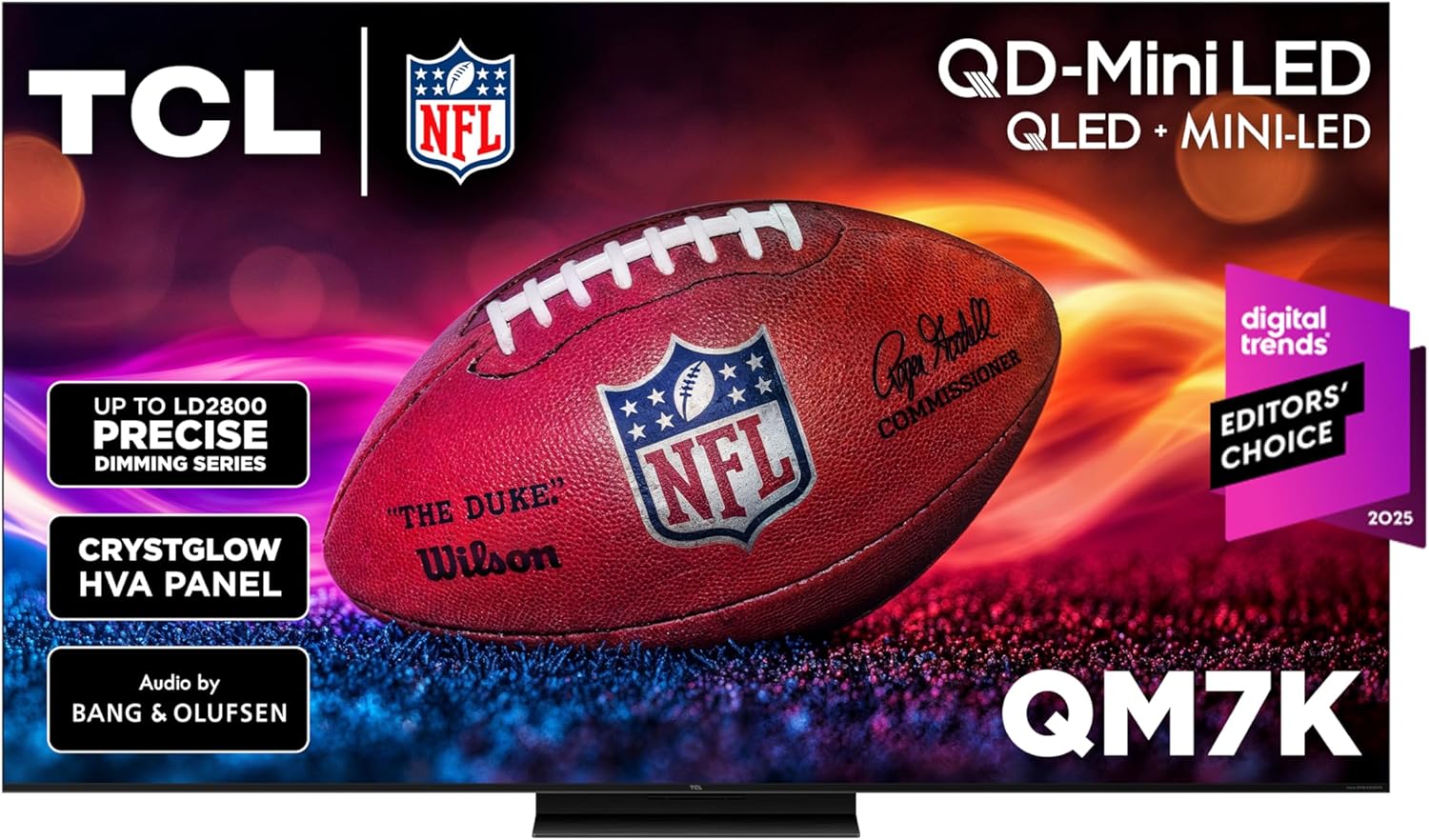
If picture accuracy is more important than screen size, the QM7K is the best option among these models from a technical standpoint.Features: 144 Hz, 2x HDMI 2.1, Dolby Vision, Google TV, CrystGlow HVA anti-reflective screen, 2,500 accurate dimming zones, 2,600 nits peak, and QD-Mini LED.The 2,500 zones keep the blooming limited, and the dark settings are really regulated. A peak brightness of 2,600 nits is measured.
This is where it falls short: the screen is 55 inches instead of 65 inches (yes, there is a size trade-off), the HVA panel causes color shifting beyond 20 degrees off-axis, and there are only 2 HDMI 2.1 connectors.Who this is ideal for: shoppers in well-lit rooms who value HDR accuracy above all else. Buyers requiring a larger screen or additional than two HDMI 2.1 ports should not purchase this.The optimal image quality here is 2,600 nits, with 2,500 zones and an anti-reflective screen.
7: Hisense U7 55″ Mini-LED PRO (55U75QG)
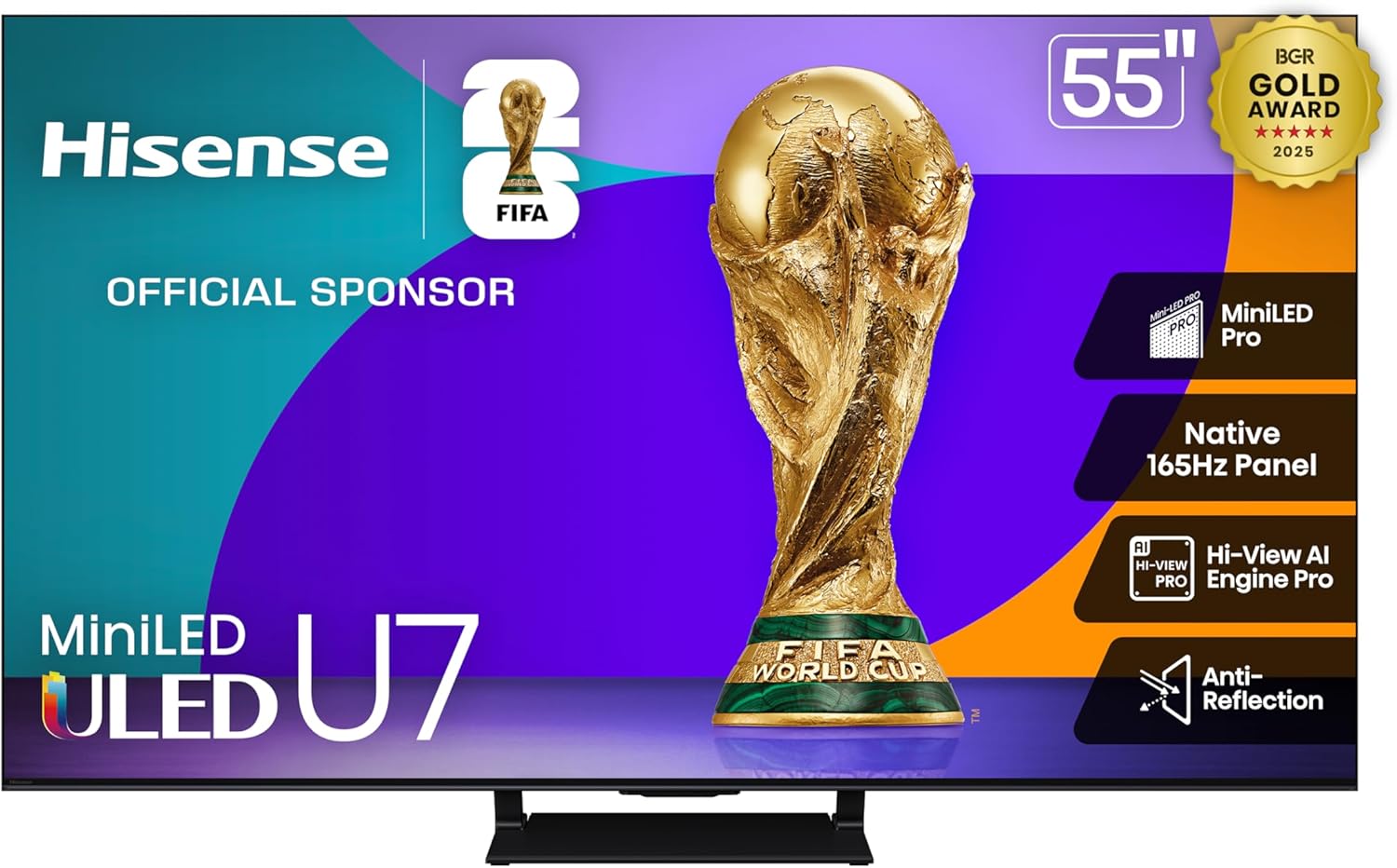
The Hisense U7 is the entry-level gaming monitor with specifications that can hold its own against screens costing twice as much.Important features include: anti-reflection coating, 165 Hz native, VRR up to 288 Hz, 3,000 nits peak, and Mini-LED PRO ULED.This is a gaming monitor, what with its 165 Hz display and VRR support up to 288 Hz. Dark gaming situations may be effectively handled with 3,000 dimming zones.
The truth is that we are still gathering data on the uniformity of our newer model’s panels.Most suited for: PC and console gamers looking for top-tier hardware. For those who value speed or a larger screen, this is not the right choice.Three thousand nits, 165 Hz, and three thousand zones below. Nothing here comes close in terms of gaming per dollar.
8: LG B5 OLED 55″ (OLED55B5PUA)

Finally, at a price that would have been unthinkable even a year ago, you can get the single organic light-emitting diode (OLED) on this list—the last option.Important features include: 120Hz native, OLED self-lit pixels, perfect blacks, 800 nits peak, 4x HDMI 2.1 all ports, virtual reality (VR), 0.1ms response, Dolby Vision IQ, Filmmaker Mode, and webOS.Dark scenes appear true to the filmmakers’ intentions thanks to self-lit pixels, which produce blacks that Mini-LEDs cannot. With four HDMI 2.1 connectors, all of your devices can work at their best. VRR’s 0.1 ms responsiveness is noticeable.
Let me tell you the truth: 800 nits trailing LED burn-in from static content necessitates controlled behaviors; 120 Hz is the ceiling for PC gaming; and mini-LEDs in bright spaces make HDR highlights less dramatic.The ideal choice for cinephiles, dark-room streamers, and gamers with multiple consoles who want four HDMI 2.1 ports. Avoid in highly lit areas or when watching news with continuous on-screen visuals.At this pricing point, an OLED display was previously unattainable. Right now, that’s all somebody needs to spend.
Things to Consider Before Buying a Budget TV:
Understanding the differences in display types and panel technologies is vital when shopping for a budget TV. Each technology offers unique benefits and drawbacks, impacting your viewing experience. Consider the following key points.
Standard LED vs. Budget QLED Options
Choosing between Standard LED and Budget QLED involves evaluating brightness and color reproduction. While LED TVs are often more affordable, QLED TVs provide richer colors and higher brightness levels, making them better for varied lighting conditions.
Understanding Backlighting and Dimming Zones
Backlighting and dimming zones directly affect contrast and overall picture quality. With edge-lit backlighting, brightness is focused around the perimeter, while full-array local dimming allows zones to adjust individually, enhancing dark scenes.
When considering backlighting options, it’s important to recognize that not all backlighting techniques achieve the same level of performance. Full-array local dimming generally offers superior quality, allowing specific areas of the screen to dim while others remain bright, fostering deeper blacks and improved contrast. While edge-lit models save space and may be cost-effective, they often fall short in delivering an immersive viewing experience, especially in darker settings. Prioritize what matters most for your viewing habits when making a decision.
Resolution Standards and HDR Compatibility
Resolution impacts the clarity of your viewing experience. Aim for at least 1080p, though 4K is preferable for sharper images. HDR (High Dynamic Range) compatibility enhances color and contrast, making images more vibrant. TVs with these features provide a significantly better viewing experience.
Refresh Rates and Input Lag for Gaming
Refresh rates and input lag play a major role in gaming performance. Higher refresh rates contribute to fluid motion, while lower input lag ensures timely response in fast-paced action. Look for refresh rates of 60Hz or higher and input lag below 20ms for optimal gaming experiences.
Specifically, a 120Hz refresh rate is ideal for console gaming and fast-paced titles. Lag times under 10ms greatly enhance your responsiveness, allowing for quick reactions to in-game actions. Investing time in researching these metrics can lead to a satisfying gaming setup that meets performance expectations.
Cost Efficiency and Modern Feature Accessibility
Affordability gives you access to current smart technology without breaking the bank. Budget TVs often include popular streaming apps and features like Wi-Fi connectivity, making them a convenient choice for most viewers.
Compromises in Peak Brightness and Build Quality
Budget TVs typically fall short in peak brightness and durability. While they may deliver decent performance, the lack of premium materials and lower brightness can impact overall viewing experiences. Compromises in peak brightness affect how well the TV performs in bright rooms, making it challenging to see details. Lower build quality often leads to issues like weaker stands or poorer screen finishes, which can shorten the lifespan of the TV. Investing in a higher-quality model can enhance your viewing experience.
Measuring Viewing Distance and Space Requirements
Calculating the ideal viewing distance is important for a comfortable experience. Sit at your usual spot and measure the distance to where the TV will be placed. Use this measurement to choose a screen size that enhances your viewing pleasure without straining your eyes.
Setting a Realistic Price Ceiling for Your Needs
Establish a budget that reflects your viewing habits and desired features. Consider what functionalities are most important to you, like smart capabilities or picture quality, to avoid overspending on unnecessary extras.
Setting a budget requires reflection on both your viewing habits and long-term satisfaction. Determine which features are important and how often you plan to use them. By prioritizing needs over wants, you can efficiently allocate your budget and ultimately find a TV that suits your lifestyle without breaking the bank.
Essential Port Configurations for External Devices
Prioritize TVs featuring multiple HDMI ports, particularly HDMI 2.1 for future-proofing. Additional USB ports for memory devices can enhance usability, allowing easy access to your digital media.
Evaluating Built-in Operating Systems and App Support
Check which operating system comes pre-installed on the TV to ensure app availability. An intuitive interface and comprehensive app library will enhance your viewing experience significantly.
Consider the operating system’s updates and app support before making a purchase. Certain platforms may offer more popular apps and regular updates, which ensures longevity and improved performance as new features and services emerge. Flexibility in app choices means you can tailor your content options to your preferences, keeping your entertainment current and diverse.
Identifying Seasonal Discount Cycles and Sales
Timing your purchase can significantly impact the price. Major sales events, such as Black Friday or post-holiday clearances, often feature substantial discounts on budget TVs.
Decoding Manufacturer Specifications vs. Real-World Use
Understanding specifications can be misleading. Often, the numbers provided by manufacturers don’t translate into a better viewing experience in everyday settings.
Focusing solely on spec comparisons can lead to overlooking factors like display quality and user experience. Reviews from real users often highlight practical issues, such as picture clarity in various lighting conditions and the actual performance of smart features. Look beyond the advertised numbers to grasp how well the TV will function in your home environment.
Summing up
Hence, considering resolution, screen size, smart features, and brand reputation are vital when purchasing a budget TV. Assess your specific viewing habits and room setup to ensure the best viewing experience. Comparing models within your price range can lead to an informed decision that balances quality and cost effectively.
Leave a Reply