
Best Blood Pressure Monitors for home use can end the stress of uncertain readings. If you need accurate readings and easy setup, our expert-tested reviews of automatic BP monitors and cuff-style models cut through confusing specs. We promise clear, trusted picks that deliver reliable results and peace of mind-because your health deserves no guesswork. Ready to find the right monitor? Let’s dive into the top choices and buying tips.
Top 8 Blood Pressure Monitors:
1: Alcedo Blood Pressure Monitor for Home Use
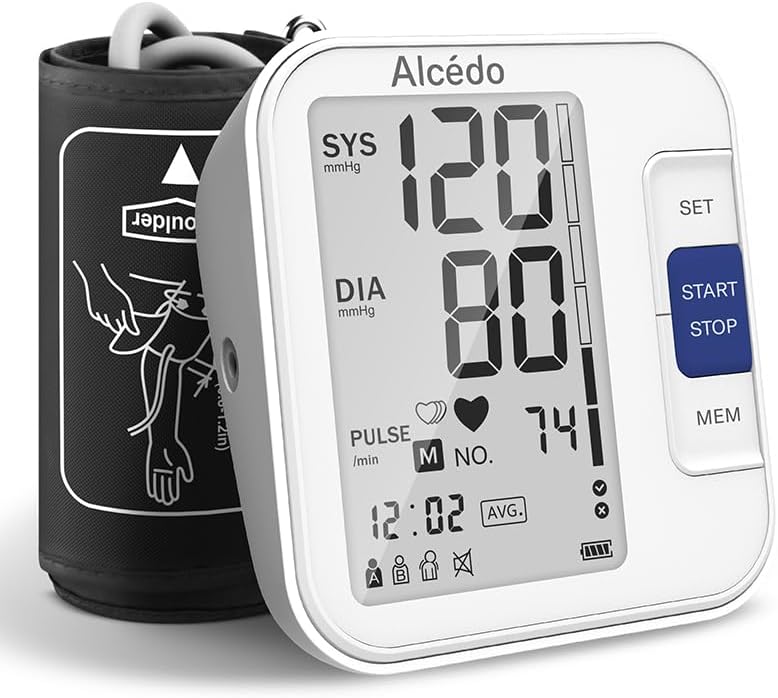
You can only hear your numbers read aloud on the Alcedo screen.Notable features include automated three-reading averaging, two user profiles, 120 readings per profile, a voice broadcast with customizable loudness, and a cuff that fits 8.7 to 16.5 inches.At this level, averages are more important than individual measurements because a single inaccurate measurement causes unnecessary concern.
The cuff stops at 16.5 inches, the memory caps at 120 readings, and there is no app or Bluetooth, so the figures reach your doctor on paper. This is something they don’t tell you.Recommended for: those who have never done it before and want to have the readings read out loud. Neither phone-based trackers nor arms longer than 16.5 inches are suitable.The most affordable method to begin doing things correctly.
2: OMRON Iron Blood Pressure Monitor

If you want the brand that your pharmacist recommends, you need to step up your game.Among its most notable features are its one-touch operation, wide-range D-ring cuff that fits arms 9–17 inches in circumference, and its clinically confirmed accuracy in detecting abnormal heartbeats and body movements.The important part is the 9–17 inch cuff, since a reliable reading is different from a useless number if the cuff doesn’t fit.
The downsides include shallow on-device memory, no second user profiles, and no app connection, which means nothing syncs.The ideal choice for those with bigger arms or those looking for affordable, verified accuracy. Disregard app-based trackers and couples using a single monitor.Verified precision at the market’s base.
3: Greater Goods Bluetooth Smart Blood Pressure Monitor

This is where your readings go from a small screen to your phone.Important features include: wireless connection to the Balance Health app, 60 readings per user, limitless storage within the app, a cuff with a guide for arterial alignment, a big backlit display, an AC converter, and a case.With that alignment guide, the most common mistake in home readings—a cuff that is wrapped incorrectly—is corrected.
Here are some facts: in order to sync, the app needs to be open, having to repair is the most common complaint, and the XL cuff is available separately.For two-person homes and those sending medical records, this is the best option. Disqualified: app rejectors.Located in the center of this lineup is the most comprehensive kit.
4: OMRON Evolv Wireless Blood Pressure Monitor

The Evolv eliminates the tube and table box, two components that are universally disliked.Features: compatibility with Apple Health and Google Fit, a one-piece tubeless design, 100 readings on the device, and unlimited in the OMRON connect app. The ComFit cuff is available in sizes 9 to 17 inches.You can carry it all in a jacket pocket and never have to take anything out of your bag because it all fits on your arm.
The catch is that you can only use batteries and not plug it into an outlet, there is only one user profile, and the screen is angled such that you view it sideways because it rests on your arm.Those on the go or with limited counter space will appreciate this. People who have trouble understanding on-arm displays or those living in two-person households should not use this.Without a doubt, the most transportable screen in this whole film.
5: OMRON Platinum Blood Pressure Monitor

And that’s it. My favorite of the eight is this one.Notable features include atrial fibrillation (AFib) detection, a high morning average indicator, the ability to connect via Bluetooth to the OMRON connect app, and a D-ring cuff that fits wrists ranging from 9 to 17 inches.Additionally, there are two users who can take 100 readings.When combined with excessive blood pressure, atrial fibrillation (AFib) detection screens for an abnormal rhythm with every measurement, which is something clinicians want to highlight early.
The morning indicator keeps an eye on the riskiest window that opens early in the day.Key points: the device is cumbersome, app connection on the first try could be a pain, and an AFib indicator is just a screening tool, not a diagnostic.Those with hypertension and couples using a shared device will benefit the most. Avoid if you’re a minimalist looking for a compact device.
6: OMRON Complete 2-in-1 Blood Pressure Monitor + EKG
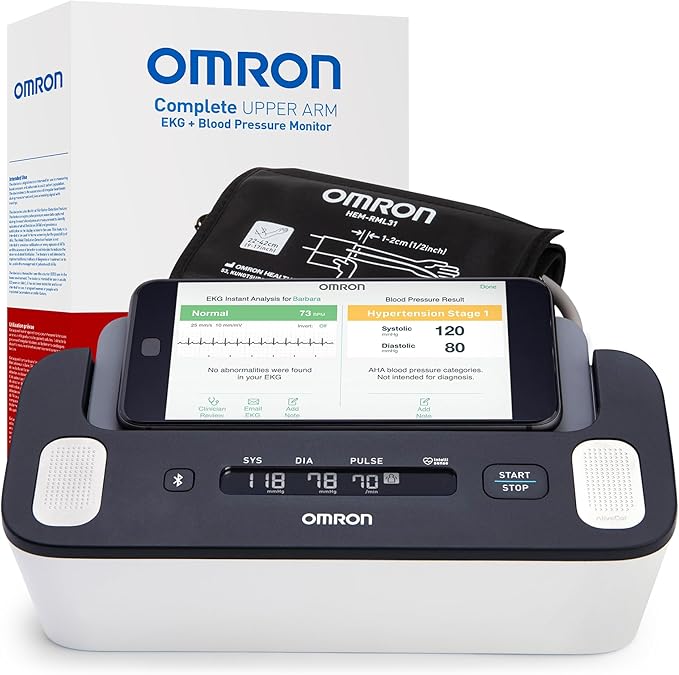
Now this one can accomplish something that none of the others can.Specifications: integrated blood pressure and single-lead electrocardiogram (EBG) recording for 30 seconds, Bluetooth connectivity to the OMRON connect app, and PDF export of findings.When you take your blood pressure and electrocardiogram (ECG) at the same time, you’ll get a single result.
The amount of information gathered from the kitchen table is equivalent to an appointment for someone whose doctor monitors their heart rate and blood pressure.It takes practice to record neatly, the app is necessary to export it, and the EKG is single-lead, so it screens rather than diagnoses.Ideal for: those following a doctor’s directions to monitor heart rate and blood pressure. Those seeking a simple numerical value twice day should not use this.
7: Withings BPM Vision

The Vision is designed for those who like to avoid using their phones.Salient features include a 2.8-inch screen, color-coded feedback compared to American Heart Association levels, automatic Wi-Fi and Bluetooth sync, a case that also functions as a stand, and a battery life of one year.On the gadget itself, you can see the number, the color band it falls within, and a lesson on how to put on the cuffs. The app is available if you desire it, but it is not necessary to open it.
The manufacturer says it won’t work with pacemakers, it won’t let two people use the same phone, and the cuff doesn’t go beyond 16.5 inches.Ideal for: Persons who aren’t comfortable using phones yet would need some instructions on how to utilize the gadget. Pacemaker patients or couples using a shared phone should not use this.
8: Garmin Index BPM

And the crown jewel, designed to accommodate a whole family instead of just one.Specifications: all-in-one design with an integrated display, automatic Wi-Fi syncing to Garmin Connect, clinical validation and FDA clearance, support for up to 16 users with individual accounts, and PDF reports available for 7, 4, and 1 year.If a household has sixteen accounts, it signifies that multiple generations use the same cuff without the numbers merging. What doctors really want are those PDF reports, which compile a year’s worth of readings into a single file rather than a notebook.
On the negative side, it’s exclusively for adults (i.e., those over the age of 18), it’s connected to the Garmin Connect ecosystem, and the manufacturer says it’s not available everyplace.Ideal for: homes with several users and current Garmin owners. Users without any Garmin equipment should not use this.Designed for families, not people on their own.
Things to Consider Before Buying a Blood Pressure Monitor:
Monitor your health effectively by choosing the right blood pressure device. An informed decision involves understanding the types of monitors available, their accuracy, and key features that suit your lifestyle. This guide will help you make a confident purchase that aligns with your health needs.
Upper Arm Cuff Oscillometric Devices
Designed for home use, these devices utilize an inflatable cuff to measure blood pressure effectively. They offer accuracy by automatically detecting arterial vibrations. Many models include digital displays, making it easy to read the results.
Wrist-Based Digital Monitoring Systems
Compact and convenient, wrist-based monitors suit users seeking portability. These devices are easier to wear but may be influenced by wrist position for accurate readings. Wrist-based digital monitoring systems have become increasingly popular due to their sleek design and ease of use. Featuring automatic inflation and digital displays, they provide quick and accessible results. However, improper wrist positioning can lead to inaccurate readings, making it necessary to follow instructions carefully.
Clinical Validation and Regulatory Approval
Choosing a blood pressure monitor requires attention to clinical validation and regulatory approval. Devices with FDA clearance or equivalent certifications have undergone rigorous testing to ensure their reliability and accuracy in measuring blood pressure.
The Critical Importance of Proper Cuff Sizing
Accurate blood pressure readings depend heavily on cuff size. Using an incorrectly sized cuff can lead to erroneous measurements, affecting diagnosis and treatment decisions.
Using the appropriate cuff size is central to obtaining reliable results. Cuffs designed for specific arm circumferences ensure that the pressure is applied evenly during the measurement process. For example, a mid-sized cuff may be ineffective on a large arm, leading to lower-than-accurate readings. Conversely, a small cuff on a slender arm can yield inflated readings. Ensuring that your cuff fits properly is therefore imperative for effective monitoring and management of blood pressure levels.
Benefits of Automated Health Tracking
Automated health tracking offers convenience, allowing users to monitor blood pressure without frequent healthcare visits. Data can be easily stored and accessed, enabling better trend analysis over time. Many digital monitors provide alerts for irregular readings, which can facilitate timely medical interventions.
Potential Limitations of Home Units
Home units can lack the accuracy of professional devices, leading to misleading readings. Variability in user technique, such as incorrect positioning or cuff size, also affects results. These factors contribute to the necessity of regular professional evaluations.
Home blood pressure monitors may display inconsistencies, especially if they are not calibrated correctly. Users might encounter issues like improper cuff fitting, which can cause higher or lower readings than expected. Additionally, emotional state or body position during measurement can further skew results. Consider the impact of such variables on your health monitoring for optimal accuracy.
Comparing Budget and Technical Feature Sets
Understanding budget limitations and necessary features can streamline your purchasing process. Some monitors offer advanced features like multiple user settings or Bluetooth connectivity, which increase functionality but may raise the price. Investing in features that genuinely enhance monitoring accuracy and ease of use often proves worthwhile.
Device Maintenance and Periodic Calibration
Regular maintenance of your blood pressure monitor typically includes checking for battery life and ensuring the cuff is clean and undamaged. Calibration should be performed as recommended by the manufacturer to maintain measurement accuracy.
Calibration frequency often depends on device usage; some monitors may require recalibration every six months, while others can last a year or more. Following manufacturer guidelines ensures the readings remain precise, and neglecting this may lead to significant discrepancies, especially if the monitor experiences physical stress or prolonged inactivity. Routine checks, such as comparing readings against a professional device, can provide reassurance about your monitor’s accuracy.
Smartphone Integration and Wireless Syncing
Many modern blood pressure monitors support smartphone integration, allowing you to sync measurements directly to your mobile device. This feature often includes user-friendly apps that provide graphs and reporting tools to help track trends effectively.
Multi-User Memory and History Functions
Multi-user memory settings allow several individuals to store their readings on one device. This feature is particularly beneficial for families or caregivers who need to monitor multiple people regularly, ensuring personalized data management.
Consider models with extensive memory functions for each user, as they often include detailed histories of past readings. Some devices not only store the last few metrics but can also categorize records, making it easier to identify patterns over time. Look for features that allow you to export data, enhancing your ability to share comprehensive histories with healthcare providers during consultations.
Final Words
Evaluating your needs is imperative before purchasing a blood pressure monitor. Consider factors such as accuracy, ease of use, and whether you prefer a manual or digital model. Compatibility with smartphone apps may also enhance your tracking experience. Taking these elements into account will lead you to a monitor that best suits your health management goals.
Leave a Reply