
Searching for the best over-ear headphones to finally escape the noise? It’s frustrating when poor sound quality or an uncomfortable fit ruins your listening experience. We’ve rigorously tested the top models for phenomenal noise-canceling and immersive audio. This guide reveals the headphones that deliver breathtaking sound and all-day comfort, helping you discover your perfect match. Let’s dive into the top contenders that truly stand out from the crowd.
Contents
- Top 5 Over-Ear Headphones:
- 1. Sony WH-1000XM6 – Best Over-Ear Headphone Overall
- 2. Apple AirPods Max – Best Over-Ear Headphone for iPhone Users
- 3. Bose QuietComfort Ultra – Best Noise Cancelling Over-Ear Headphone
- 4. Beats Studio Pro – Best Over-Ear Headphone for USB-C Lossless + Cross-Platform Use
- 5. Anker Soundcore Life Q30 Wireless – Best Budget Over-Ear Headphone
- Things to Consider Before Buying a Over-Ear Headphone:
- The Role of Frequency Response and Range
- Decoding Impedance and Sensitivity Measurements
- Cushion Type and Material: What Matters Most?
- Weight and Design: Balancing Style and Comfort
- The Advantages of Each: When to Choose Which
- Understanding Battery Specifications and Longevity
- Materials That Stand the Test of Time
- The Impact of Aesthetics on User Experience
- Noise Cancellation and Ambient Sound Technologies
- Connectivity Options: Bluetooth Versatility and Beyond
- Final Words
Top 5 Over-Ear Headphones:
1. Sony WH-1000XM6 – Best Over-Ear Headphone Overall

If you’re truly serious about drowning out the noise of the world, the Sony WH-1000XM6 is the reigning king of the over-ear headphones. Equipped with Sony’s most advanced noise-canceling technology, these headphones put noise in its place while boasting extraordinary sound quality, and with 30 hours of battery life, you can enjoy your tunes even longer. And you don’t need to worry about planes, trains or chatty co-workers; they have nothing on this show.
However, the XM6 isn’t just quiet—it’s damn near perfect-sounding. Developed with mastering engineers, the sound quality here is ludicrously refined. A custom driver featuring a lightweight carbon fiber dome ensures vocals shine and every note hits with detail and accuracy. Whether you are rocking out to your favorite jam or immersed in a blockbuster, the music is rich, vibrant and true to what the artists intended.
Calls? Crystal clear. Your voice sounds clear and vibrant, even in a noisy environment, thanks to the six-microphone beamforming technology that screens out exterior sound. Throw in a foldable design, a premium carry case and a headband that feels as though it was tailored exclusively for you, and suddenly comfort and convenience become part of the package.
Thirty hours of battery life plus quick charging (for three additional hours after just three minutes of charging) cover it all from long-haul flights to marathon business hours. If you’re in the market for headphones that drown out the racket, blast your tunes and look slick doing it, the WH-1000XM6 is primed to stake its place on your skull.
2. Apple AirPods Max – Best Over-Ear Headphone for iPhone Users

If you’re an iPhone owner desperate for the ultimate over-ear headphone experience, the Apple AirPods Max are your golden pass. These are not headphones, they are headphones into which music enthusiasts will be sucked, and emerge two hours later stupider than before. Featuring a custom 12mm dynamic driver, Active Noise Cancellation, and a Transparency mode, these in-ear headphones have a rich, detailed sound you won’t find in any other wireless earbud so you can hear things as they were meant to be heard.
Noise? Forget it. When you do need to hear the world, long-press the outside of your earcup to pause your music, change the volume or start a new track. When you want to stay aware, Transparency Mode does exactly that by letting outside sound in, without kicking you out of your rhythm. Throw in customizable Spatial Audio with dynamic head tracking and your audio experience doesn’t just sound great — it feels like it’s all around you, so Dolby Atmos tracks sound like they do at the movies.
Design-wise, Apple went all in. The lightweight knit-mesh canopy and the plush memory foam ear cushions let you play for hours and hours while providing open and airy design blocks out outside noise. You also have the choice of five brilliant color options, so your headphones don’t just work, they make a statement.
Pairing? Effortless. Only to jump back and forth on your iPhone, iPad and Mac? Automatic. AirPods Max The magic of AirPods Max is not just in the sound, but also in the relationship they have with you and how they integrate into your life.
3. Bose QuietComfort Ultra – Best Noise Cancelling Over-Ear Headphone
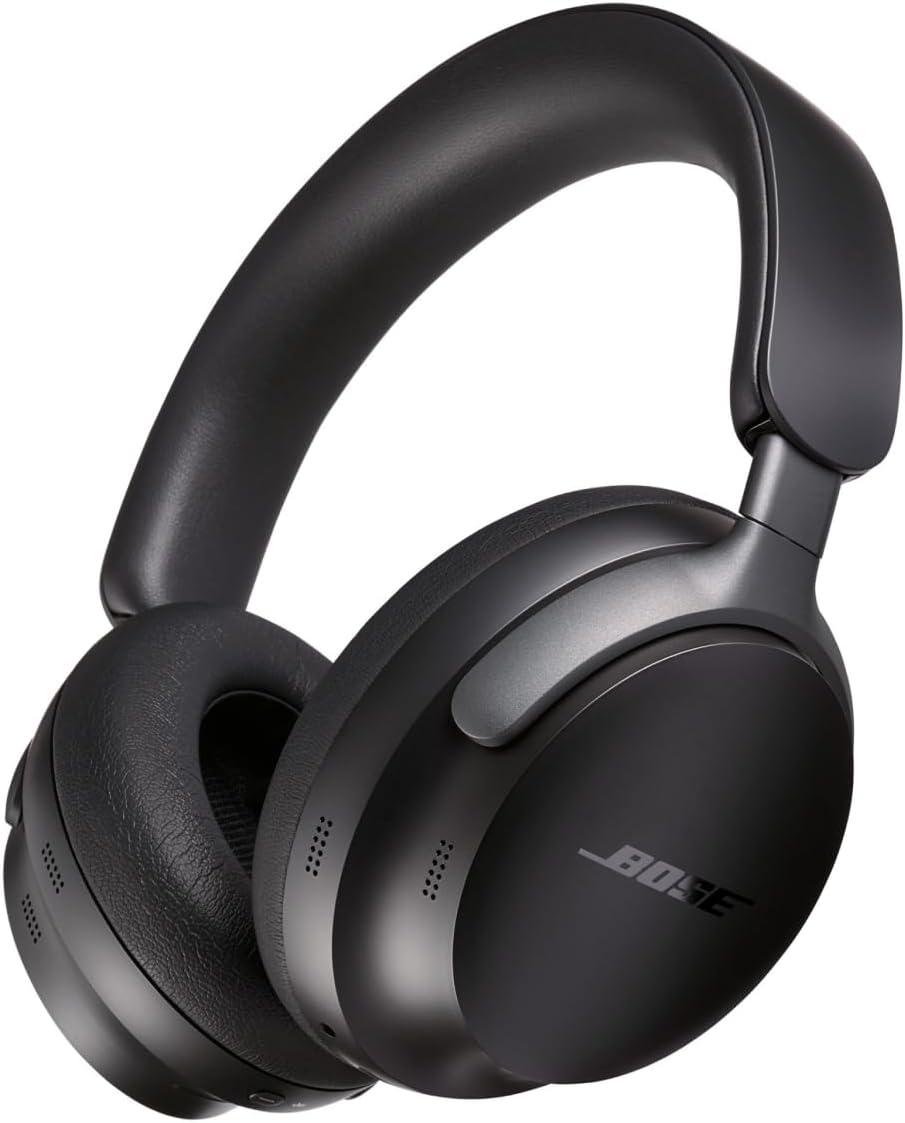
If you’re ready to take your listening game to the next level, the Bose QuietComfort Ultra headphones are going to be your new go-to accessory. These are not just headphones, they’re a front-row ticket to every playlist, podcast and movie you enjoy. With spatial audio and Bose’s CustomTune technology, your sound isn’t just reproduced — it’s shaped for your ears, so every note, voice and sound feels like you’re tuning in to hear it from your own personal sound engineer.
Distractions? Not a chance. Whether you want complete silence in Quiet Mode, full ambient awareness of your surroundings in Aware Mode, or a mix including our immersive, layering sound, your own settings are at your command. And when the day is done, it makes epic headphones for taking calls, thanks in part to the built-in microphone system, which takes aim on your voice and puts a muzzle on ambient noise so you can come through crystal clear, even in a noisy environment.
Comfort is equally dialed in. Featuring pillowy ear cushions and a headband that evenly distributes pressure, you can wear them all day without a second thought. And they’re sleek enough to bring out an elegant edge while you’re at it. Throw in Bluetooth 5.3 for rock-solid connectivity and SimpleSync, so you can connect any Bose soundbar, and you’ve got a setup as versatile as it is powerful.
The cherry on top? 24 Hour battery life so the music never stops even when you do, plus 10 minute quick charge can give 1 hour of play time motive in one app/play time and may vary depending on usage. Rapid charge 10 minutes = 2 hours of listening; battery life: 22 hours of music and 19 hours of talk time. All with easy on-ear touch controls that, with touch control on your earbuds, make your world sound like magic.
4. Beats Studio Pro – Best Over-Ear Headphone for USB-C Lossless + Cross-Platform Use

If you are in the market for some headphones that will play nice with Apple and Android and deliver studio-quality sound, the Beats Studio Pro is calling your name. Equipped with Beats custom acoustic platform, these earbuds feature a great and balanced sound, with compelling sound in every details just like artists intended, whether you’re listening to your favorite songs or discovering new music.
For those audiophiles, USB-C lossless audio gives you access to your music in every sonic detail. What’s more, you can cycle through three sound profiles to tailor your listening experience—because sometimes you want chest-thumping bass and other times you only want such clean-cut clarity that you feel like the band’s playing in your living room.
Need control over your environment? You have two listening modes: full-on Active Noise Cancelling to block out life, and Transparency mode to let anyone in when you’re listening. Pairing is seamless, and now integrated cross-platform support means you’ll have native features whether you’re team iPhone or Android.
Battery anxiety? Not here. You can get up to 40 hours on a charge, and if you’re running low, a quick 10-minute Fast Fuel charge provides 4 hours of playback. Combine with custom spatial audio with dynamic head tracking, and every moment feels larger than life. The Beats Studio Pro not only tags along — it keeps you ahead.
5. Anker Soundcore Life Q30 Wireless – Best Budget Over-Ear Headphone
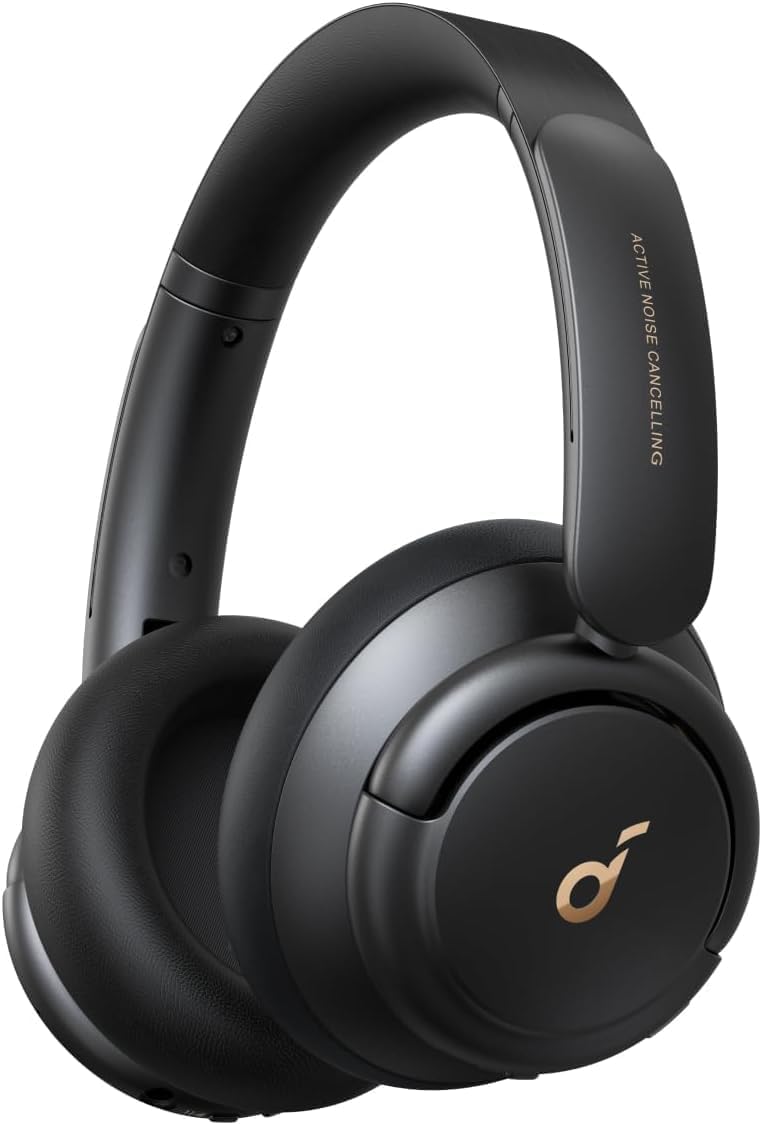
AN OVERR-LOOKED BARGAIN: If you want the big features without the big price, the Anker Soundcore Life Q30 might be your new favorite over-ear companion. These headphones are not shy: They offer a hybrid active noise cancellation feature that blocks up to 95% of low frequency background noise. Translation: planes, traffic and office chatter receive turned to silence while you focus on your playlist — or your podcast obsession.
But it doesn’t stop there. With three ANC modes of Transport, Outdoor and Indoor, you’re in effect towing around your own little noise-and-control switchboard. Whether jet-setting, city-hopping, or sofa surfing, the Q30 fits the way you live.
Sound quality? Surprisingly premium. With 40mm drivers featuring silk diaphragms, you can get thumping bass, clear treble and a Hi-Res quality sound that extends up to 40kHz. And your favorite songs won’t just sound great — they’ll sound like live music.
And then there’s the battery. An incredible 50 hours with noise cancellation on, or 70 with it off. Forgot to charge? Give your life a quick 5-minute charge and you get 4 more hours of non-stop music even your longest to-do lists can’t outlast.
Comfort gets top billing as well, with plush protein leather earcups and memory foam padding — intended to make marathon listening sessions less of a pain (literally). For those who desire high-end performance and are looking for a pair of affordable wired or wireless headphones, the Soundcore Life Q30 proves you can get over-the-top quality without the high-end price.
Things to Consider Before Buying a Over-Ear Headphone:
Buying an over-ear headphone means comparing sound signature, comfort, battery life, connectivity, noise isolation, and build quality against your listening habits and daily use. You should prioritize fit and features that suit your commute, workspace, and preferred music genre to ensure long-term satisfaction.
The Role of Frequency Response and Range
Frequency response charts tell you where energy sits: 20 Hz–20 kHz is the audible baseline, but sub-bass extension to 10–30 Hz matters for impact. Expect vocal presence around 2–4 kHz and sibilance risk at 5–8 kHz; a 3 dB peak in the lower mids can make vocals feel forward, while a 5–6 dB treble hump may cause fatigue. Use measured curves plus listening tests to judge musical fit.
Decoding Impedance and Sensitivity Measurements
Impedance (ohms) and sensitivity (dB SPL per mW or dB/V) dictate how loud and clean headphones play from your source. Low-impedance units (≈16–50 Ω) run easily from phones, whereas high-impedance cans (≈250–600 Ω) often require a dedicated amp for full dynamics. Sensitivity between about 90–110 dB SPL is common—higher numbers mean louder output for a given power but can also reveal source noise.
Practical rule: if you rely on a smartphone or laptop, target ≤50 Ω and sensitivity above ~100 dB SPL for usable volume without an amp; if you have a headphone amp or DAC, you can choose 250–600 Ω for tighter control and lower distortion. Low-sensitivity headphones (<95 dB) need more power, and ultra-high sensitivity (>110 dB) can expose hiss from poor sources—match spec ranges to your gear before buying.
Cushion Type and Material: What Matters Most?
Memory foam cushions with densities around 40–60 kg/m³ offer comfort and long-term shape retention, while protein (synthetic) leather provides a tight seal for deeper bass but traps heat; velour or mesh breathes better and suits long studio sessions—examples include Sennheiser HD600’s velour pads versus Sony’s synthetic-leather pads. You should factor pad replaceability, cleaning ease, and how material affects isolation and frequency response.
Weight and Design: Balancing Style and Comfort
For commuting and travel you’ll likely prefer 200–300 g models like the Bose QC35 II (~235 g) or Sony WH-1000XM4 (~254 g), which balance portability and active noise canceling; studio and audiophile closed or open-back models often weigh 260 g–600 g (Audeze planars can exceed 450 g) and prioritize soundstage and drivers over compactness. You should match weight to session length and whether you need foldability or a robust metal frame.
Assess weight distribution and headband ergonomics beyond raw grams: a well-padded, 30–40 mm-wide headband spreads load so a 350 g headphone can feel lighter than a poorly balanced 280 g model. Check swivel mechanics—180° rotatable cups aid single-ear monitoring—and examine hinge durability and materials (aluminum vs ABS plastic) if you travel frequently; test for pressure points in a 1–2 hour trial whenever possible.
The Advantages of Each: When to Choose Which
You should pick wireless for commuting, travel, and hands-free calls where 20–30 hours of battery plus quick-charge features (e.g., 10 minutes for several hours) outweigh tethered constraints. Opt for wired if you need absolute reliability, the lowest latency for gaming or studio work, or lossless fidelity—USB-C/Lightning digital wired connections can deliver high-resolution audio without battery limits.
Understanding Battery Specifications and Longevity
Manufacturers usually quote hours-per-charge rather than mAh; pay attention to whether specs are measured with ANC on, at 50% volume, or using SBC/AAC/LDAC codecs. Typical charge times run 2–3 hours; many models offer fast-charge boosts. Expect lithium-ion packs to retain roughly 70–80% capacity after 300–500 full charge cycles, so real-world runtime will slowly decline over months and years.
One full charge cycle equals consuming the equivalent of 100% of battery capacity (e.g., two 50% discharges = one cycle). With a 30‑hour battery and 2 hours of daily use, a cycle occurs about every 15 days, so 300 cycles mathematically equal ~9,000 hours of use—roughly 12 years at that daily rate. Environmental factors, charging habits, and fast-charging frequency typically shorten practical lifespan to a few years, so factor replacement cost and warranty into your decision.
Materials That Stand the Test of Time
Look for frames made from stainless steel, aluminum or carbon-fiber composites and ear cups with replaceable memory-foam pads and protein leather or velour; those choices often translate to 2–5 years of comfortable daily use and easier repairs. Braided or detachable cables and gold-plated 3.5mm connectors reduce wear and oxidation. Studio staples like the Beyerdynamic DT series prove that steel headbands plus swappable pads extend service life far beyond most sealed-plastic designs.
The Impact of Aesthetics on User Experience
Visual choices affect how often you wear and show off your headphones: matte finishes hide scratches better than glossy ones, and exposed metal or clean lines communicate durability and professionalism. Foldable hinges and slim profiles increase portability, while bold colors or wood veneers make a statement in public. Brands such as Beats used striking colorways to drive mainstream adoption, whereas Meze’s walnut cups appeal to audiophiles seeking both sound and style.
Design also influences perceived comfort and context of use—sleeker, low-profile black models fit corporate or studio settings, while chunky, colorful styles encourage casual use. You’ll notice tighter clamping forces often paired with minimalist metal frames for secure fit during movement, whereas larger, plush cups paired with wood or textured finishes prioritize long listening sessions. Swappable faceplates or modular parts let you refresh aesthetics without buying new gear, stretching the value of your investment.
Noise Cancellation and Ambient Sound Technologies
Hybrid ANC combines feedforward and feedback mics to cut 15–30 dB of low-frequency noise, and adaptive systems adjust profiles based on cabin pressure or surroundings; models like Sony’s WH-1000XM series and Bose QC line show real-world reductions on planes and trains. Transparency or ambient modes use external mics and configurable sliders so you control how much outside sound mixes into your audio for street awareness or conversations.
Connectivity Options: Bluetooth Versatility and Beyond
Bluetooth 5.2/5.3 improves range and stability, while codec support (aptX, aptX HD, aptX Adaptive, LDAC, AAC) determines audio quality and latency; Android devices commonly support LDAC/aptX, iOS favors AAC. You’ll want multipoint pairing for two-device switching, a low-latency mode (~40 ms with aptX LL) for gaming, and a wired 3.5mm or USB-C option when battery or absolute fidelity matters.
Expect trade-offs: higher-bitrate codecs like LDAC or aptX HD consume more power, reducing wireless runtime by hours on some models, and not all phones negotiate the same codecs—Apple devices typically default to AAC, limiting LDAC/aptX benefits. Consider USB-C DAC support for desktop use, Bluetooth dongles for consistent codecs on PCs, and verify multipoint implementation—some brands allow seamless two-device audio, others only simultaneous pairing without audio switching.
Final Words
With these considerations in mind, you can confidently choose an over-ear headphone that matches your priorities: sound signature, comfort for long sessions, build quality, noise control, connectivity and battery life, and value for your budget. Test models when possible, read targeted reviews, and weigh trade-offs so your final pick delivers the performance and durability you expect.
Leave a Reply